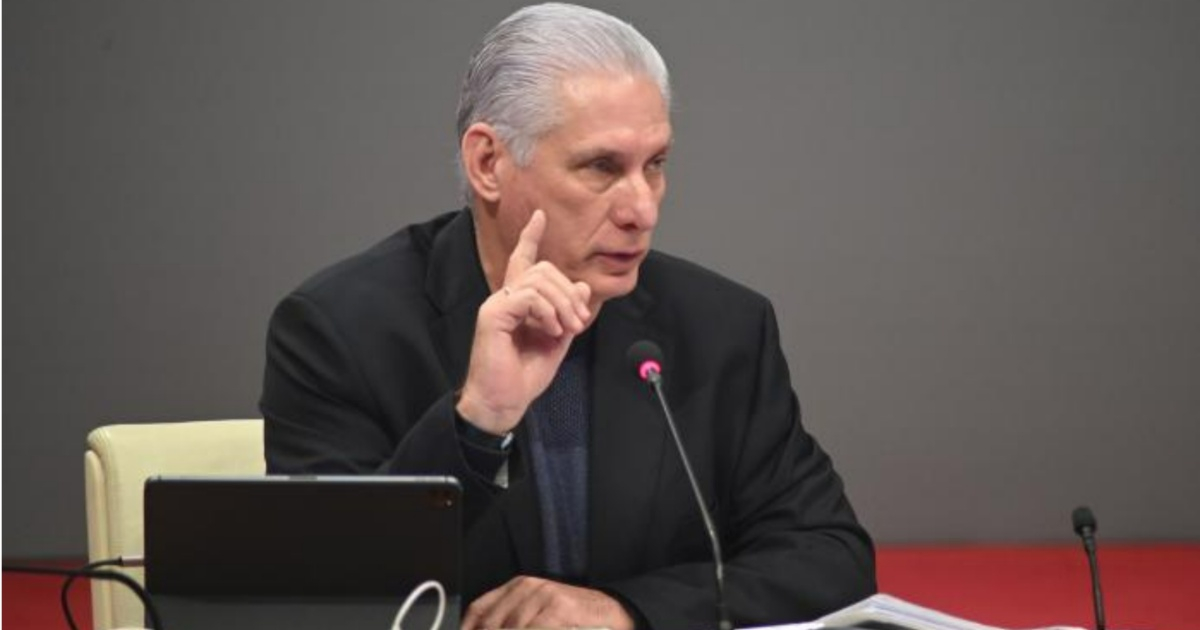
On Monday, Cuban leader Miguel Díaz-Canel emphasized the urgent need for Cuba to revamp its economic and social framework without delay.
“We must focus immediately on implementing the crucial transformations needed for our economic and social model,” Díaz-Canel stated during the monthly Council of Ministers meeting.
He elaborated that the changes primarily involve enhancing business autonomy, municipal independence, downsizing the state apparatus, and boosting national food production.
Moreover, the reforms include municipal budget management, a shift in the energy matrix that goes beyond renewable sources to encompass national crude oil, and improving exports in line with newly approved foreign direct investment flexibility.
Additionally, Díaz-Canel highlighted the importance of capitalizing on economic partnerships between the state and private sectors, particularly at the municipal level, and promoting business ventures with Cubans living abroad.
The aim, according to Díaz-Canel, is to achieve macroeconomic stabilization, increase foreign currency earnings, and enhance national production, particularly in the food sector.
Amid the severe crisis plaguing the island, Díaz-Canel emphasized municipal autonomy as a solution to these challenges: “Municipalities need to be prepared because these processes we are initiating will increasingly take place there,” he remarked.
“Municipalities must manage foreign direct investment; they need to handle their own closed currency systems; they are responsible for economic partnerships between state and non-state sectors; they should design and propose local production systems; and they must manage investments with Cubans residing abroad,” he added.
During the meeting, Economy Minister Alonso Vázquez reported that as of the end of January, prices had risen by 0.67%, with an annual inflation rate reaching 12.5%.
In recent weeks, amidst one of the most challenging periods Cuba has faced in decades, Díaz-Canel has adopted a reformist tone, advocating for “changing everything that needs to be changed” within the country’s institutions.
At the end of February, acknowledging the economic hardships faced by the island, Díaz-Canel vowed to fight, resist, and transform, asserting that the country will “overcome.” “We will fight, struggle, resist, transform, and rise above all adversities and imperial threats, and we will triumph,” the leader declared.
Exploring Cuba's Economic and Social Reforms
What are the key areas of reform suggested by Díaz-Canel?
Díaz-Canel emphasized reforms in business autonomy, municipal independence, state apparatus downsizing, and national food production, along with changes in energy matrices and export strategies linked to foreign investment.
How does Díaz-Canel propose to involve municipalities in the reform process?
Municipalities are expected to manage foreign investments, handle currency systems, foster partnerships between state and private sectors, design local production systems, and engage with Cubans abroad for investments.
What is the economic outlook for Cuba according to the latest reports?
The economy is facing challenges with an inflation rate of 12.5% as of January, indicating significant financial instability.