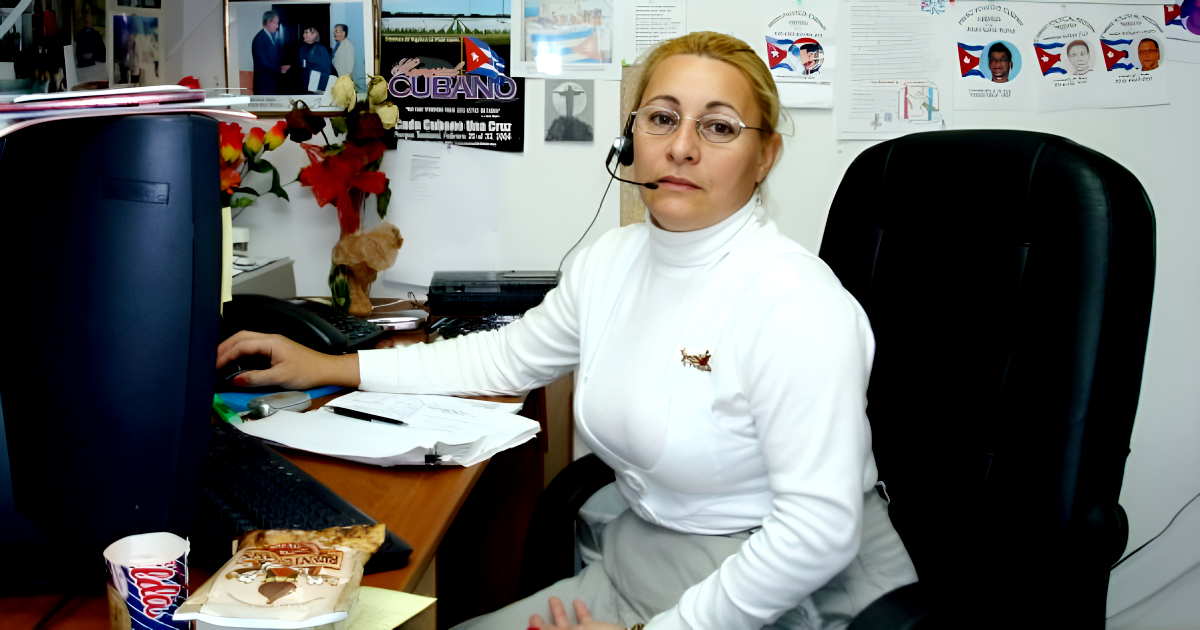
The Cuban Ministry of the Interior's recent allegations against Maritza Lugo Fernández have thrust her back into the political spotlight. She is accused of being the mastermind behind a thwarted armed infiltration off the coast of Villa Clara.
This accusation was brought to light on the state-run program Razones de Cuba, claiming that Lugo Fernández organized and funded the operation from the United States. However, to date, there has been no presentation of concrete evidence to support these claims.
Beyond the current official narrative, Lugo Fernández has a long history of opposition activism and human rights advocacy dating back to the 1990s.
Born in 1963 in Santa María del Rosario, near Havana, Lugo Fernández has shared in interviews her upbringing in a rural setting, as the daughter of farmers. Her family discreetly listened to foreign broadcasts, shaping her early critical view of Cuba's political system.
In a video testimony given to Cuban filmmaker Lilo Vilaplana, known for works like "Plantados," she recounted how her early experiences and martial arts training, particularly in judo, influenced her development. During her teenage years, she claims she was approached by state-affiliated individuals seeking to recruit her, an offer she declined.
Lugo Fernández also highlighted her opposition to the acts of repudiation against those leaving during the Mariel exodus in 1980, which she believes marked her in the eyes of the authorities.
Her organized activism formally began in the early 1990s alongside her husband, Rafael Ibarra Roque. Together, they co-founded the Democratic Party November 30 "Frank País," an opposition group not legally recognized in Cuba.
Ibarra Roque was sentenced to 20 years for sabotage in the 1990s, a trial labeled as irregular by opposition figures. Following his imprisonment, Lugo Fernández took on a more prominent role in the movement.
External profiles from the early 2000s describe her as an activist who faced multiple detentions and incarcerations between 1996 and 2001. She recounted her imprisonment at the Manto Negro women's prison and interrogation centers like Villa Marista, where she engaged in hunger strikes and was penalized for "bribery" by a military court. She linked this charge to her reports on prison conditions sent to international organizations.
One of her most notable actions was the "I Accuse" letter written in prison in 2001, where she exposed abuses against political and common prisoners. This letter gained attention when read by U.S. lawmakers, amplifying her case internationally.
In 2002, she left Cuba for the United States with her daughters, continuing her involvement with the November 30 Movement and activities related to Cuban political imprisonment from exile. In later interviews, she emphasized her commitment to peaceful and symbolic protests, such as impromptu marches to avoid repression.
This biography sharply contrasts with the current portrayal by the Cuban Ministry of the Interior, which depicts her as the orchestrator of a violent destabilization operation. The accusations are grounded in official statements and alleged detainee references, lacking independently verifiable evidence.
The Cuban regime has previously staged media trials where dissidents were portrayed as orchestrators of violent or terrorist acts, often amid heightened political tensions. This historical context frames the current case. However, the investigation's progress and the potential presentation of evidence will be crucial in clarifying the facts.
As of now, Lugo Fernández's story is caught between two conflicting narratives: one of an activist who has long decried abuses and endured imprisonment, and another of a supposed organizer of an armed infiltration, as presented on state television.
This dichotomy remains unresolved, pending transparent and verifiable information. Meanwhile, U.S. authorities have announced independent investigations at both federal and state levels in Florida concerning the maritime incident, aiming to clarify the facts and identify potential culpabilities.
These investigations may prove pivotal not only in determining what truly transpired near Cuban waters but also in shedding light on the accusations against Lugo Fernández. Until conclusive evidence and public proofs emerge, her case will continue to navigate the realm of competing narratives amid intense political strife between the Cuban regime, the Trump administration, and the exile community.
Key Questions About Maritza Lugo Fernández's Allegations
What are the charges against Maritza Lugo Fernández?
She is accused by the Cuban Ministry of the Interior of being the mastermind behind an attempted armed infiltration off the coast of Villa Clara.
Has any evidence been presented against Lugo Fernández?
As of now, no verifiable evidence has been made public to substantiate the claims against her.
What has been Lugo Fernández's role in Cuban opposition?
She has been a prominent activist since the 1990s, co-founding the Democratic Party November 30 "Frank País" and enduring multiple detentions and imprisonments for her activism.
What is the U.S. response to the allegations?
U.S. authorities have announced they will conduct their own investigations into the maritime incident to independently ascertain the facts and responsibilities involved.