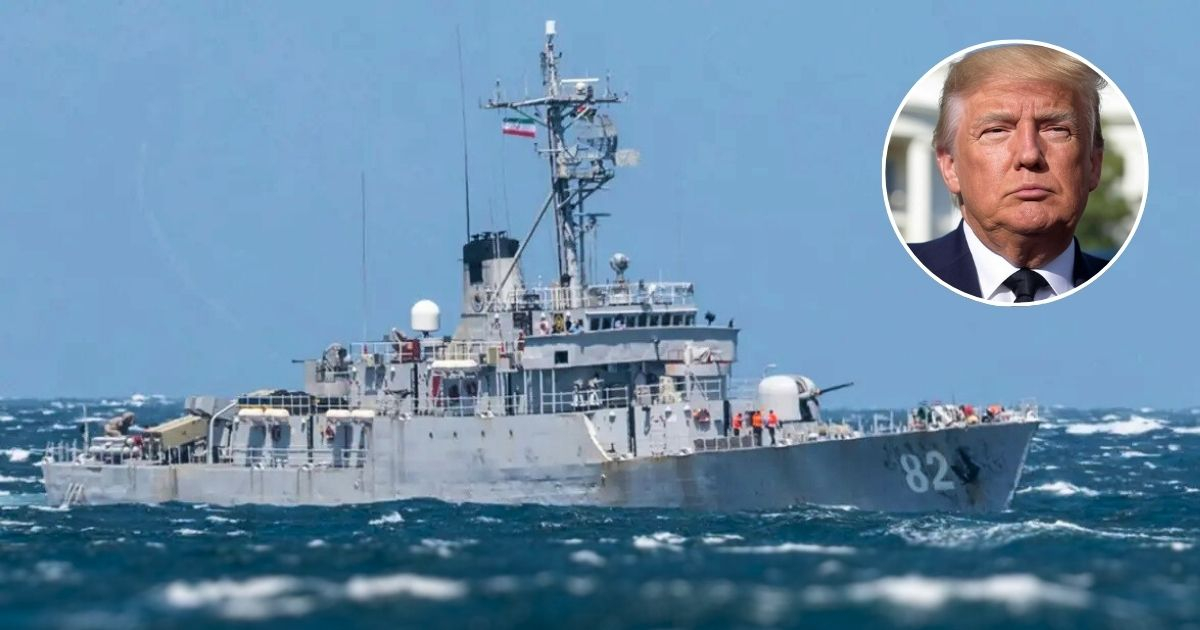
On March 1, 2026, former President Donald Trump announced that U.S. military forces had successfully destroyed and sunk nine Iranian warships as part of a coordinated military effort known as Operation Epic Fury. The operation, which involved both the United States and Israel, commenced on February 28. Trump shared the news via his social media platform, Truth Social, and the information was confirmed by a U.S. defense official, according to reports from Axios and Naval News.
In his statement, Trump boldly declared, "I have just been informed that we have destroyed and sunk 9 Iranian Naval Ships, some of them relatively large and important. We are going after the rest — They will soon be floating at the bottom of the sea, also! In a different attack, we largely destroyed their Naval Headquarters. Other than that, their Navy is doing very well!"
The U.S. Central Command (CENTCOM) confirmed the sinking of a Jamaran-class corvette, Iran's main domestically-built surface vessel. This ship was struck at a pier in the port of Chabahar, located in southeastern Iran. CENTCOM posted on X that "An Iranian Jamaran-class corvette was struck by US forces during the start of Operation Epic Fury. The ship is currently sinking to the bottom of the Gulf of Oman at a Chah Bahar pier." Declassified images showed smoke rising from the Konarak naval base near Chabahar, accompanied by CENTCOM's stark message: "Abandon ship."
The Scope of Operation Epic Fury
Operation Epic Fury launched in the early hours of February 28, targeting over 1,000 sites within Iran in its first 24 hours. The operation hit facilities of the Islamic Revolutionary Guard Corps (IRGC), air defense systems, missile and drone launch sites, and military airfields. Israel contributed approximately 200 aircraft to strike nearly 500 targets. The U.S. dispatched two carrier strike groups—the USS Abraham Lincoln and the USS Gerald R. Ford—marking the largest military show of force in the Middle East in decades. Stealth B-2 bombers were utilized to destroy Iranian ballistic missile facilities with 2,000-pound bombs.
Iran's Response and Escalating Tensions
Iran retaliated with missile strikes against U.S. bases in the Middle East, claiming to have hit the USS Abraham Lincoln with four ballistic missiles. CENTCOM, however, categorically denied these claims: "Iran's IRGC claims to have struck USS Abraham Lincoln with ballistic missiles. LIE. The Lincoln was not hit. The missiles launched didn't even come close." CENTCOM further stated that the Lincoln "continues to launch aircraft in support of CENTCOM's relentless campaign." As of March 1, the U.S. had sustained three military casualties with five others seriously injured.
The operation has precipitated a severe crisis in the Strait of Hormuz. The IRGC issued emergency radio warnings to commercial vessels, declaring the strait closed. This strategic passageway is critical as it facilitates the transit of about 20% of the world's oil and nearly half of China's oil imports. Financial analysts suggest that a complete blockade could cause oil prices to skyrocket from $66 to more than $120 per barrel. Intelligence firm Skytek reported approximately 750 commercial ships were navigating the strait on the morning of February 28.
Implications and Future Talks
Trump monitored the situation from Mar-a-Lago in Palm Beach, Florida, describing the operation's progress as "advancing ahead of schedule." He expressed optimism about ongoing developments and mentioned the possibility of negotiations with Iran while emphasizing the U.S.'s unwillingness to permit Iran to acquire nuclear weapons. When asked about potential future American casualties, he succinctly replied, "That's the way it is."
Key Questions on Operation Epic Fury
What is the significance of Operation Epic Fury?
Operation Epic Fury represents a massive military operation by the U.S. and Israel targeting Iranian military assets, with significant geopolitical implications in the Middle East.
How has Iran responded to the operation?
Iran has responded with missile attacks against U.S. bases and claimed, though unverified, hits on the USS Abraham Lincoln, escalating tensions in the region.
What are the potential economic impacts of the crisis in the Strait of Hormuz?
A blockade of the Strait of Hormuz could potentially double oil prices, significantly impacting global economies due to its critical role in oil transportation.