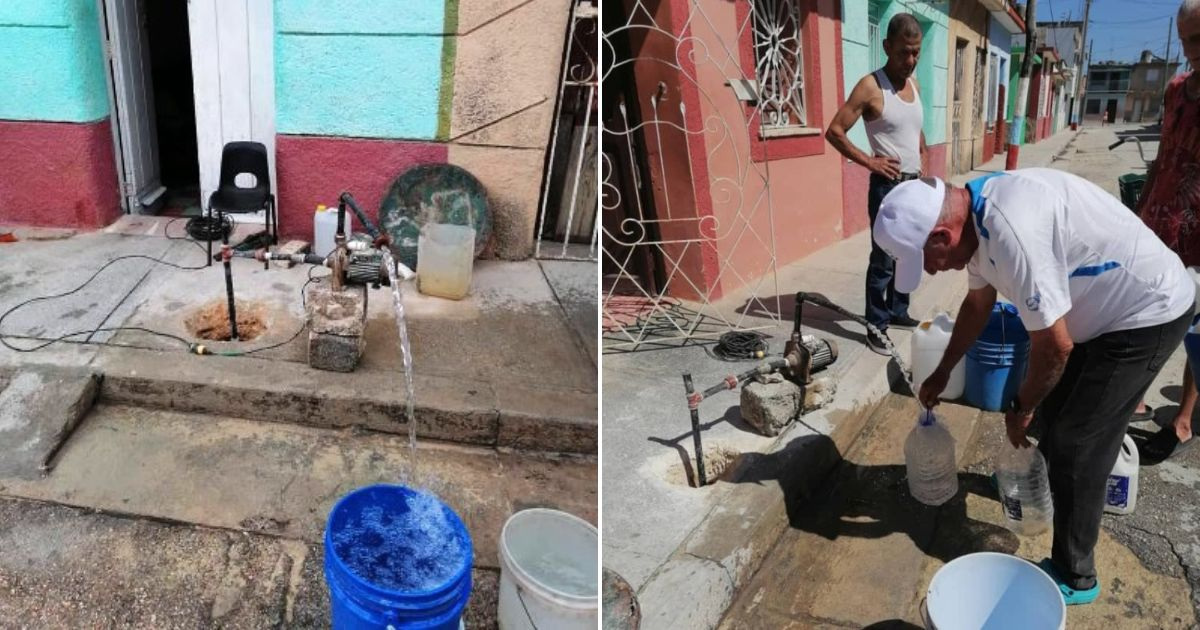
In the neighborhood of La Playa, Matanzas, locals have resorted to digging wells in their yards, sidewalks, and even inside their homes due to the extended lack of potable water, a situation caused by persistent failures in the El Conde water supply system.
Even the state-run newspaper Girón acknowledged in a recent report that in District 43 of the Playa People's Council, the number of wells jumped from 20 in October 2025 to over 40 within just four months. This increase is a direct response to the erratic water pumping and prolonged service outages.
The issue is not new. Since April 2025, the El Conde system has experienced continuous breakdowns. According to local reports, the main motor has failed multiple times, and replacing it with a lower-capacity motor has not stabilized the water supply.
Residents in neighborhoods such as Descanso, Manglar, Levante, Callejón de Collazo, and Logia face days of intermittent water flow, and sometimes no water at all. To tackle this, many have opted to drill into the ground. Some hire experienced individuals to find the right spot, while others dig on their own using basic tools.
These wells can reach depths of up to five meters. However, the cost of constructing a well can exceed 200 dollars, a prohibitive amount for many families with limited incomes. Those unable to afford it resort to manual excavation.
Additionally, others rely on private water trucks, which can charge more than 6,000 or even 8,000 Cuban pesos, despite the official price of water being significantly lower.
Raúl Castillo, the district delegate, admitted that there are times when the valve intended to transport water from Pueblo Nuevo to La Playa is not opened as scheduled. He mentioned personally overseeing the valve's operation to ensure water flow, a responsibility that should fall to the hydrological system's managing entity.
Apart from technical issues, there are health concerns. Dr. Juan Carlos Perdomo Arrier from Matanzas highlighted the risk of cross-contamination due to the unregulated proliferation of wells and septic tanks. A poorly placed well can become contaminated with waste, posing a health hazard, especially with diseases like hepatitis A and arboviral infections circulating.
While the Water Act No. 124 permits the construction of rustic wells for personal use without prior authorization, the extracted water is not always safe for human consumption. Several residents have been informed by Hygiene and Epidemiology analyses that the water is not drinkable but can be used for other household tasks.
On streets like Solís, the daily scene reflects a community that has turned to the subsoil in search of a solution that should come through the plumbing. As long as the El Conde system remains unreliable, the number of wells will continue to rise, along with health concerns and the economic burden of this ongoing crisis.
Understanding the Water Crisis in Matanzas
What is causing the water shortage in Matanzas?
The water shortage is primarily due to failures in the El Conde water supply system, which has suffered from repeated breakdowns and a lack of stable pumping capacity since April 2025.
How are Matanzas residents coping with the lack of water?
Residents have started digging wells on their properties and rely on private water trucks, although these solutions can be costly and may pose health risks due to potential contamination.
Are there health risks associated with the new wells?
Yes, there are significant health risks, including contamination from nearby waste. This can lead to the spread of diseases such as hepatitis A and arboviruses.