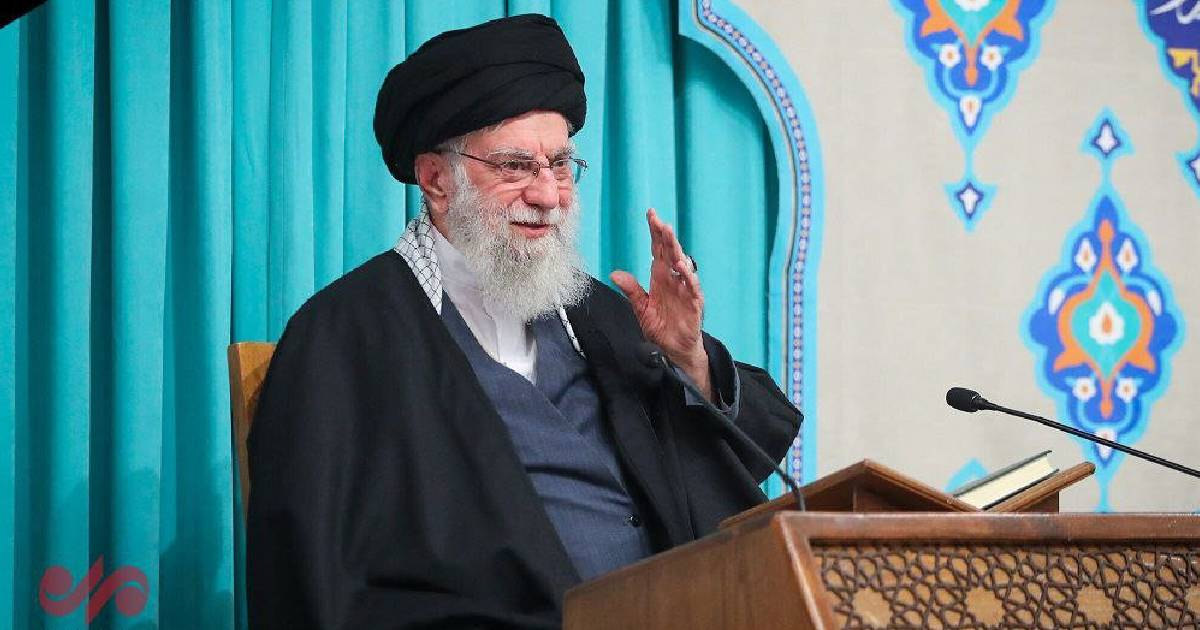
The Iranian government has officially confirmed the death of the Islamic Republic's Supreme Leader, Ayatollah Seyed Ali Khamenei, following recent attacks reportedly conducted by Israel and the United States.
Iranian state media, including HispanTV, reported that Khamenei was "martyred in the Zionist-American aggression," referring to the bombings targeting Iranian regime sites amidst the current military escalation.
In response to the announcement, authorities declared a 40-day period of public mourning and a seven-day suspension of activities nationwide, effectively halting state institutions and official events.
The message released through government-affiliated channels described the death as a "martyrdom," directly blaming Israel and the United States for the demise of the country's top religious and political leader.
Khamenei, who had held the position since 1989, was the highest authority in the Islamic Republic, wielding direct control over the Armed Forces, the Revolutionary Guard, and the main state bodies.
The official confirmation comes amidst an unprecedented regional escalation, following selective airstrikes against Iranian high command and the intensification of military operations in the area.
Previously, U.S. President Donald Trump hinted that Khamenei had been killed in the nighttime attacks.
On Saturday, Israel reported that among those killed in the recent strikes were seven significant regime officials, including Iranian Defense Minister Aziz Nasirzadeh and Revolutionary Guard Commander Mohammad Pakpour.
Other notable figures included Ali Shamkhani, a senior advisor to the Supreme Leader and former Secretary of the Supreme National Security Council; Saleh Asadi, a high-ranking Defense Ministry official involved in strategic planning; and Mohammad Shirazi, head of the Supreme Leader's Military Office.
Additionally, Hossein Jabal Amelian, a senior figure in the Defense Ministry's logistics apparatus, and Reza Mozaffari-Nia, a senior official in the Iranian industrial-military sector linked to defense programs, were also among the deceased.
The death of the Supreme Leader and other key officials creates a scenario of significant political uncertainty within Iran, as the system requires the Assembly of Experts to appoint a successor.
Meanwhile, massive demonstrations of mourning and support are expected across various parts of the country, amid internal tensions and international pressure.
The situation continues to develop and could have profound implications for the political and military balance in the Middle East.
Impact of Ayatollah Khamenei's Death on Middle East Politics
What are the immediate consequences of Ayatollah Khamenei's death in Iran?
The immediate consequences include a 40-day period of national mourning, a suspension of activities across the country, and political uncertainty as the Assembly of Experts will need to appoint a new Supreme Leader.
How might Ayatollah Khamenei's death affect regional stability in the Middle East?
Khamenei's death could lead to significant shifts in the political and military dynamics of the Middle East, potentially escalating tensions or leading to new alliances and conflicts.
Who is responsible for Ayatollah Khamenei's death according to Iranian sources?
Iranian sources have attributed responsibility for Khamenei's death to Israel and the United States, labeling the incident as a result of Zionist-American aggression.