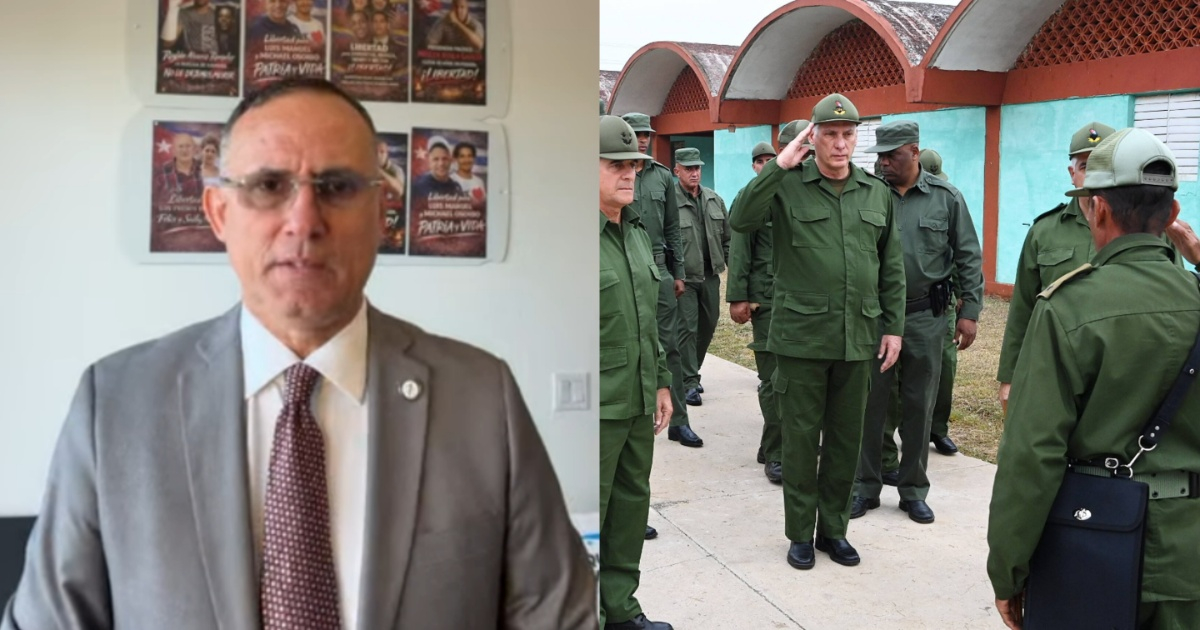
Cuban opposition leader José Daniel Ferrer has called on Miguel Díaz-Canel to step down after the United States launched an attack on Iran.
“I've said it before and I'll say it again, Díaz-Canel: After Iran, they're coming for you, you sadistic criminals. But let me add, they might come for you even before they finish with the Iranian fundamentalists. Trump has the capability to deal with threats in multiple places simultaneously. You better head to Russia now, it's a better option for you than running like Ayatollah Ali Khamenei is now,” Ferrer expressed on Facebook.
On Saturday, U.S. President Donald Trump announced that American forces have initiated “major combat operations in Iran” in coordination with Israel, marking a significant military escalation in the Middle East.
In a video message shared on his Truth Social platform, Trump stated that the mission aims to “protect the American people by neutralizing imminent threats from the Iranian regime.”
The extensive attacks carried out by Israel and the United States against Iran have dealt what could be the most substantial blow to the Islamic Republic's power structure since its establishment in 1979. As explosions continue to rock Tehran and other Iranian cities, initial intelligence assessments highlight a devastating impact on the regime's leadership.
According to Reuters, citing three independent sources—including two familiar with Israeli military operations and one regional source—the Iranian Defense Minister, Amir Nasirzadeh, and Islamic Revolutionary Guard Corps (IRGC) Commander General Mohammad Pakpour have been killed. This information has been confirmed by Axios, Times of Israel, and Asharq Al-Awsat.
Key Questions on U.S. and Israel's Military Actions Against Iran
What prompted the U.S. and Israel to launch military operations in Iran?
The operations were initiated to eliminate imminent threats from the Iranian regime, as stated by President Trump, aiming to protect American citizens and interests.
What has been the impact of these attacks on Iran?
The attacks have significantly damaged Iran's power structure, resulting in the deaths of key figures like the Defense Minister and the IRGC Commander, marking a major shift in the country's leadership dynamics.
How has the international community responded to these developments?
The international response varies, with some countries expressing concern over the escalation of military actions, while others support the measures as necessary for regional stability and security.