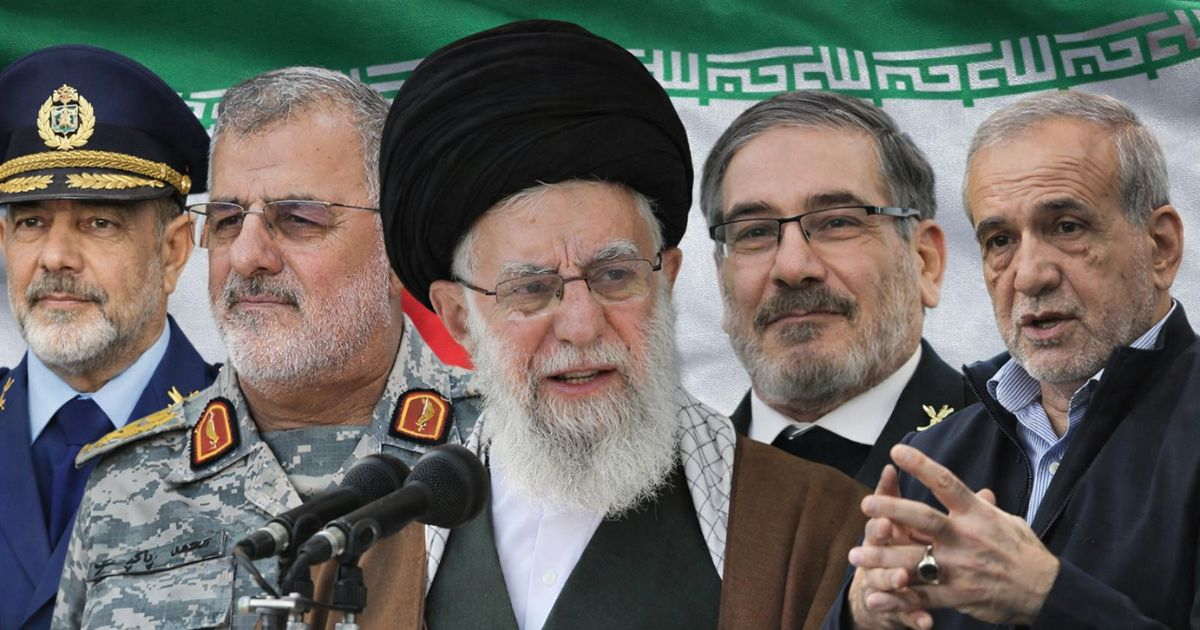
In an unparalleled offensive, Israeli and American forces have launched massive attacks on Iran, delivering what could be the most significant blow to the Islamic Republic's power structure since its establishment in 1979. As explosions continue to rock Tehran and other Iranian cities, preliminary intelligence assessments point to a devastating toll on the regime's leadership.
Iranian Leaders Confirmed Dead
According to Reuters, citing three independent sources familiar with Israeli military operations, key figures such as Iran's Defense Minister, Amir Nasirzadeh, and the commander of the Islamic Revolutionary Guard Corps (IRGC), General Mohammad Pakpour, have been killed. This information has been corroborated by Axios, the Times of Israel, and Asharq Al-Awsat.
Nasirzadeh, a former Deputy Chief of Staff for the Armed Forces and a career fighter pilot, was integral to Iran's military apparatus. Pakpour, who took command of the IRGC in 2025 following the death of his predecessor Hossein Salami during last year's Twelve Days War, had been a central figure in the IRGC's chain of command. His death marks a second consecutive blow to the leadership of the Revolutionary Guard.
Additionally, Ali Shamkhani, a security advisor to Khamenei and former Defense Minister, is also reported dead, according to Israeli sources and various international media, with Wikipedia also listing this information as confirmed.
Uncertain Future for Khamenei
Amidst the chaos, the fate of Supreme Leader Ayatollah Ali Khamenei, aged 86, remains a mystery. Satellite imagery shows his residential and office complex in Tehran reduced to smoldering ruins after being hit by at least seven missiles.
Israeli officials cited by Channel 12 and the Jerusalem Post suggest that Khamenei is out of contact with the outside world and that there are "growing indications" he may have been injured or even killed in the initial bombings. Initial Israeli intelligence assessments indicate he was at least wounded, although no official confirmation has been provided from either side.
Iranian Foreign Minister Abbas Araghchi told NBC News that Khamenei is alive "as far as I know," and assured that "most senior officials are safe." However, he acknowledged the loss of "one or two commanders." Iranian officials have promised to release a recording of Khamenei, though Israeli analysts speculate it could be a pre-recorded message as a contingency measure.
CNN reports that Israel chose to strike during the day because its intelligence services assessed that Khamenei felt less vulnerable in daylight hours, making him more likely to be in known locations.
Broad Targets in the Leadership Decapitation Operation
An Israeli military official confirmed that the Israel Defense Forces simultaneously targeted three locations where high-ranking regime officials were meeting. According to Axios, the list of targets also included President Masoud Pezeshkian, former President Mahmoud Ahmadinejad, and Khamenei's sons, although Israeli intelligence believes the latter survived.
CNN adds that the Chief of Staff of the Iranian Armed Forces, Sayyid Abdolrahim Mousavi, was also among the direct targets of the attack.
According to Iranian state media, as reported by Middle East Eye, President Pezeshkian, Parliament Speaker Mohammad Bagher Ghalibaf, Foreign Minister Araghchi, Army Chief Amir Hatami, and Judiciary Chief Gholam-Hossein Mohseni-Ejei survived and are safe.
Iran's Retaliation and Regional Escalation
In retaliation, Iran launched dozens of ballistic missiles at Israel and U.S. military bases in Qatar (Al Udeid), Kuwait (Al-Salem), the UAE (Al-Dhafra), Bahrain (home to the Fifth Fleet), Jordan, Syria, Saudi Arabia, and Iraq, according to Al Jazeera. A Shahed drone destroyed a radar dome at Bahrain's naval base, verified by video footage from The Washington Post. The Revolutionary Guard issued a radio warning banning ships from passing through the Strait of Hormuz, the world's most crucial oil-export route.
The Houthis in Yemen announced they would resume attacks in the Red Sea, while Hezbollah condemned the operation but refrained from committing to direct reprisals against Israel.
Internal Chaos and Public Reaction in Iran
With internet access nearly cut off throughout the country, videos emerging from Iran depict previously unimaginable scenes: citizens celebrating the strikes on Khamenei's palace, women chanting slogans against the regime, and students shouting "Death to Velayat" (the clerical government system). Authorities converted the main highway connecting Tehran to the north into a one-way route to facilitate the mass evacuation of the capital.
These reactions are set against the backdrop of protests that erupted in December 2025, the largest since the 1979 revolution, spreading to over 100 cities and violently suppressed by the regime, resulting in thousands of deaths.
Reza Pahlavi, son of the last Shah of Iran, called on Iranians to remain prepared for "the final action" and urged military and security forces to side with the people, as reported by Fox News.
Repercussions for Cuba
Iran is one of the Cuban regime's closest geopolitical allies. A significant weakening or collapse of the Iranian regime would have direct repercussions for Havana, which has maintained diplomatic, commercial, and intelligence ties with Tehran for decades. The escalation also directly affects Cuba on the geopolitical stage, weakening the alliance axis that includes Russia, China, Venezuela, and Iran.
Moreover, prolonged conflict in the Middle East could drive up oil prices—already affected by Iran's attempt to close the Strait of Hormuz—further exacerbating the energy crisis currently plaguing the island.
This is a developing story. Updates will be provided as new information becomes available.
Impact of Iran Conflict on Global Dynamics
What are the implications of the Iranian regime's potential collapse for global politics?
The potential collapse of the Iranian regime could significantly alter global alliances and power dynamics, particularly affecting countries like Cuba that have long-standing ties with Iran. It could also impact global oil prices and exacerbate regional tensions in the Middle East.
How might the conflict between Israel and Iran affect the energy market?
A prolonged conflict could lead to increased oil prices, especially if Iran successfully disrupts shipping through the Strait of Hormuz, a crucial passage for global oil exports. This would have ripple effects on the global economy and could exacerbate existing energy crises in regions such as Cuba.