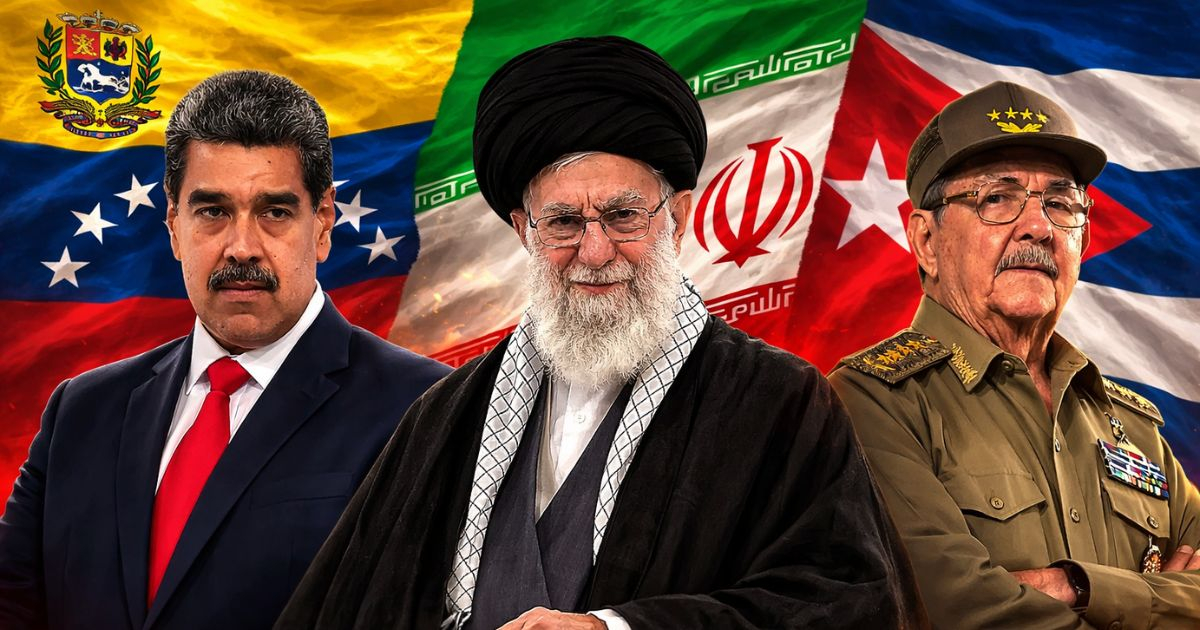
The February 28, 2026, joint airstrike by the United States and Israel on Iran isn't just an isolated incident; it represents the third act in a comprehensive strategy by the White House that links actions against Venezuela, Cuba, and Iran into a unified strategic axis. Official White House documents cross-reference each other, emphasizing actions against these nations as part of a coherent plan. Venezuela has already fallen, Iran is under attack, and Cuba appears to be next in line.
For the Cuban regime, already grappling with the worst energy crisis since the Cuban Missile Crisis of 1962, the assault on Iran exacerbates a disastrous situation. The attack has driven up oil prices, and the island has been without external fuel supplies for three months. The potential closure of the Strait of Hormuz—a route for 20% of the world's oil—could make vital imports even more expensive for Cuba.
President Trump's intentions were made clear shortly before ordering the strikes. On February 27, he hinted at a "friendly and controlled takeover" of Cuba, confirming that Secretary of State Marco Rubio is engaged in high-level talks with the Cuban regime. The timeline of events is telling: Venezuela (January 3) → Oil embargo on Cuba (January 29) → Iran strikes (February 28) → Is Cuba next?
Shield of Judah: The Joint Military Operation
Named "Roar of the Lion" by Israel, the operation was collectively dubbed "Shield of Judah." Initiating around 8:15 AM Israeli time, Israeli Defense Minister Israel Katz described it as a "preemptive strike to neutralize threats against Israel," declaring a 48-hour state of emergency, closing airspace, schools, and public gatherings.
President Trump confirmed the operation through an eight-minute video on Truth Social, stating, "Our military forces have commenced major combat operations in Iran." He later announced the successful destruction of Iran's nuclear facilities, addressing the Iranian people with, "Your freedom is near."
Pentagon officials labeled the attacks as substantial, involving air and sea assaults with dozens of missions from Middle Eastern bases and the USS Abraham Lincoln and USS Gerald R. Ford carriers. While the initial operation was planned to last four days, indications suggest Washington is prepared for "sustained operations over several weeks."
Iran's Retaliation: A Call for Devastating War
Iran swiftly retaliated. The Islamic Revolutionary Guard Corps (IRGC) declared its counterattack via a statement on Telegram, as reported by NBC News: "A broad wave of missile and drone strikes on occupied land has commenced in response to the enemy's hostile assault." Multiple waves of ballistic missiles targeted Israel, with sirens blaring across Tel Aviv. Israel's air defenses intercepted many, yet the threat persisted.
Anticipating further conflict, Iran warned that U.S. bases in the region could face retaliatory strikes. The U.S. embassy in Bahrain advised American citizens to seek safety. Trump acknowledged the potential loss of American lives, stating, "That often happens in war."
The Oil Weapon: The Strait of Hormuz's Strategic Importance
Cuba faces a dire threat from the energy dimension of this conflict. The Strait of Hormuz is a vital artery, carrying about 27% of global seaborne oil. Iran has shown its willingness to use the strait as leverage, having conducted live-fire naval exercises that temporarily closed sections of this maritime route.
Even a brief closure of the strait could propel oil prices beyond Cuba's reach. With depleted reserves and no international credit, every dollar increase in oil prices further deepens the Cuban regime's energy crisis.
Venezuela's Collapse: The Catalyst for Cuba's Crisis
On January 3, 2026, the capture of Nicolás Maduro in Caracas marked the beginning of Cuba's current crisis. Following the capture, all Venezuelan oil shipments to Cuba ceased. Venezuela, Cuba's primary oil supplier for 25 years, had been providing approximately 35,000 barrels daily in exchange for Cuban professionals.
With the cessation of Venezuelan support and subsequent U.S. actions against Iranian oil, Cuba's energy situation has spiraled into chaos. The regime faces simultaneous crises as support from Venezuela, Iran, and potentially Russia diminishes.
The Trump administration's strategic approach, as outlined in White House documents, reveals a coordinated effort to destabilize regimes perceived as threats by targeting their supply lines and financial networks. With limited time and options, the Cuban government is under immense pressure to find a resolution.
Cuba's Strategic Predicament: Questions and Answers
How does the conflict between the U.S., Israel, and Iran affect Cuba?
The conflict exacerbates Cuba's energy crisis by driving up oil prices and threatens to cut off vital imports through the potential closure of the Strait of Hormuz, worsening the island's already dire economic situation.
Why is Cuba considered the next target in the strategic axis?
Cuba is seen as the next target due to its strategic importance and the documented efforts of the Trump administration to destabilize regimes like Venezuela and Iran. U.S. actions suggest a coordinated approach to applying pressure on Cuba for regime change.
What are the potential economic impacts on Cuba if the Strait of Hormuz is closed?
A closure of the Strait of Hormuz could significantly increase global oil prices, further limiting Cuba's ability to afford necessary imports, intensifying its energy and economic crises.