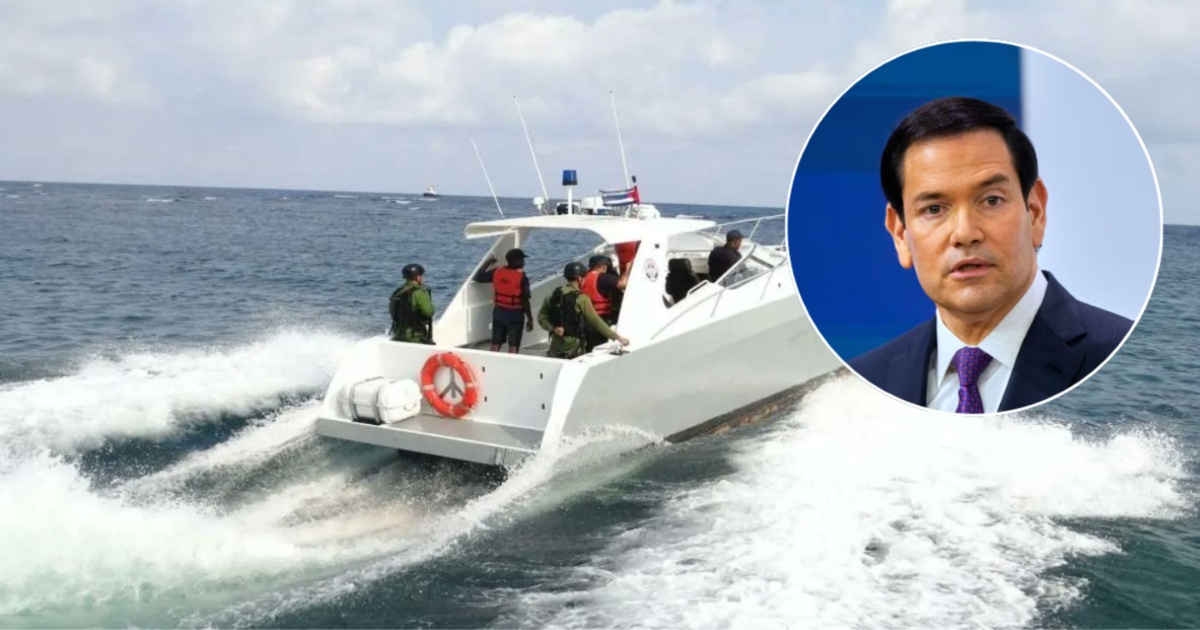
A confrontation involving Cuban security forces and a group of men traveling from Florida to Cuba had the potential to escalate into a severe crisis amidst already strained relations between the two nations.
However, Bloomberg describes the current approach as one of "calm," with both Cuba and the United States addressing the incident, which resulted in four deaths and several detentions. Washington has announced that it will conduct an investigation before taking any further steps, while Havana acknowledges the U.S. willingness to collaborate in clarifying the situation.
Bloomberg noted that Carlos Fernández de Cossío, Cuba's Deputy Foreign Minister, remarked on Thursday that U.S. authorities have shown a readiness to cooperate in resolving the matter, a stance that diverges from the historically tense interactions between the two governments.
On the American side, Secretary of State Marco Rubio stated that the U.S. will investigate the situation thoroughly before deciding on any action.
The reasons behind the group's 90-mile journey from Florida to Cuba in a 24-foot single-engine fishing boat, reported stolen from the Florida Keys, remain unclear.
The Monroe County sheriff identified a suspect in the theft, a man reportedly deceased in the Cuban shootout.
Cuba has labeled the men as "terrorists," alleging they planned and trained for an attack on the country from U.S. territory.
Weapons, Injuries, and Detentions: Cuba's Narrative
Cuban authorities claim the men were equipped with sniper rifles, night vision goggles, bulletproof vests, Molotov cocktails, and combat rations, intending to overthrow the government. When the Cuban border patrol approached the vessel, the occupants allegedly opened fire, injuring a Cuban military commander.
The Cuban Ministry of the Interior reported that four attackers were killed, and the rest, including an eleventh individual who had previously traveled to Cuba to meet the group, were detained.
According to a U.S. official, at least two of the men, one of whom was killed, were American citizens. The official also noted that a third held a K-1 fiancé visa, and some others might be U.S. permanent residents.
Amid the confusion, there was a misidentification of some involved: a man initially reported by Cuba as detained was later confirmed to be free in South Florida, an error acknowledged by Fernández de Cossío.
"Not an Isolated Incident": The Historical Context Highlighted by Havana
Fernández de Cossío emphasized that Cuba has faced attacks and terrorist acts for over 60 years, many allegedly orchestrated from U.S. soil.
Relations between Washington and Havana are at their most fragile in decades, exacerbated by the Trump administration's "near-total blockade" on the island and fuel supply cuts amid Cuba's economic crisis.
In this context, Trump remarked this Friday on the possibility of a "friendly takeover of Cuba."
Despite Bloomberg's depiction of "calm," significant questions remain: how a small vessel entered Cuban waters undetected, the motivations behind the operation, and the evidence supporting or refuting claims regarding the alleged plot, weaponry, and the immigration or citizenship status of those involved.
Key Questions About the Cuba-Florida Boat Incident
What was the outcome of the Cuba-Florida boat incident?
The incident resulted in four deaths and several detentions. The U.S. and Cuba are collaborating to investigate the situation further.
How are the U.S. and Cuba handling the situation?
Both nations are taking a calm approach, with the U.S. planning an investigation and Cuba noting American cooperation in clarifying the incident.
What were the alleged intentions of the men involved?
Cuban authorities claim the men intended to overthrow the government, armed with sniper rifles and other equipment, a claim under investigation.
How has this incident affected U.S.-Cuba relations?
This incident occurs amid historically strained relations, though current efforts suggest a mutual interest in resolving the issue calmly.