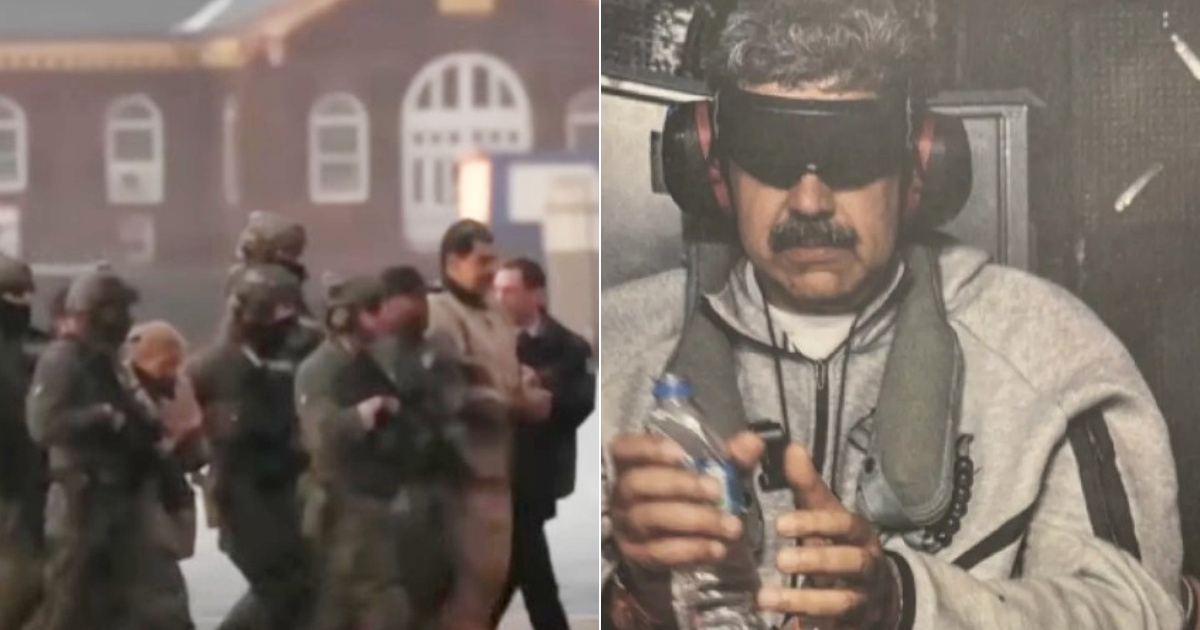
Former Venezuelan leader Nicolás Maduro has petitioned a federal judge in Manhattan to dismiss the charges against him, claiming that the United States government has infringed upon his constitutional right to due process by obstructing access to funds necessary for his legal defense.
In a filing submitted on Thursday to the U.S. District Court for the Southern District of New York, his attorney, Barry Pollack, argued that U.S. authorities have prevented the Venezuelan government from covering Maduro's legal fees. According to the defense, these costs should be financed by Venezuela due to his status as head of state.
"As the head of state of Venezuela, Mr. Maduro is entitled to expect that legal fees associated with these charges will be financed by the Venezuelan government," Pollack noted in the legal documents, as reported by the Associated Press.
In a statement filed as part of the case, signed as "Nicolás Maduro Moros," the former leader asserted that under the "laws and practices of Venezuela," he is entitled to state-funded defense.
"I relied on this expectation and cannot afford my own legal defense," he stated.
Maduro also revealed that he has been collaborating with Pollack on his legal strategy, describing him as "my trusted attorney."
Constitutional Argument and Fund Blocking
The defense claims that the Office of Foreign Assets Control (OFAC), a division of the Treasury Department that administers sanctions against Venezuela, authorized the payment of legal fees from Venezuelan government funds on January 9.
However, this authorization was revoked "without explanation" less than three hours later.
Pollack mentioned that while payments for the legal defense of Cilia Flores, Maduro's wife and co-defendant, were permitted, the former leader's defense funds were blocked.
In his motion, the attorney warned that the actions of the U.S. government jeopardize the legitimacy of any potential judicial process.
"The conduct of the United States government not only undermines Mr. Maduro's rights but also compromises this Court's mandate to offer a fair trial to all defendants, as guaranteed by the U.S. Constitution," he wrote.
He added that even though Washington "authorizes numerous commercial transactions with Venezuela," it prevents attorneys from receiving "untainted funds" meant for defense.
"Any trial proceeding under these circumstances will incur constitutional flaws and cannot result in a verdict that withstands future challenges," Pollack argued.
Pollack further stated that if the judge decides to uphold the charges and the funding issue remains unresolved, he will seek to withdraw from the case so that a court-appointed attorney can be assigned.
Charges of Narco-Terrorism and Life Imprisonment
At 63 years old, Maduro, along with Cilia Flores, 69, has been held in a federal jail in Brooklyn since their transfer to the United States following their capture on January 3 in Caracas during a U.S. military operation.
Both have pleaded not guilty in their initial appearance before federal justice and described themselves as "prisoners of war."
Maduro claimed that he remains "the constitutional president of Venezuela."
The 25-page indictment charges them with four main offenses: conspiracy to commit narco-terrorism, conspiracy to import cocaine into the U.S., possession of machine guns and destructive devices, and conspiracy to possess weapons of war.
The legal document alleges that Maduro and his wife collaborated with drug cartels and military members to facilitate the shipment of thousands of tons of cocaine to the United States.
The indictment further claims that as part of the supposed conspiracy, they ordered kidnappings, beatings, and murders of individuals linked to drug trafficking, including the homicide of a drug kingpin in Caracas.
Maduro's legal strategy also involves challenging the legality of his detention using the sovereign immunity argument, a defense similar to the one used by former Panamanian General Manuel Noriega after his capture in 1990.
In that case, U.S. courts dismissed the claim, and Noriega was sentenced to 17 years in prison.
If found guilty, both could face life imprisonment.
Consular Visit and Detention Conditions
Recently disclosed court documents reveal that on January 30, 2026, Maduro and Flores received a consular visit at the federal detention center where they are held. Details regarding the official's identity and the meeting's duration have not been disclosed.
The next hearing, originally set for March 17, has been postponed to March 26 at 11:00 a.m., after the prosecution requested more time to review evidence and prepare pre-trial motions. The judge granted the request "in the interest of justice."
This case is emerging as one of the most significant proceedings against a former Latin American leader in U.S. federal courts, as the defense seeks to halt the trial by arguing that without access to funds for legal representation, there are insufficient constitutional guarantees to proceed.
Frequently Asked Questions about Maduro's Legal Battle
Why is Nicolás Maduro seeking dismissal of charges in the U.S. court?
Maduro is arguing that the U.S. government violated his constitutional right to due process by blocking funds meant for his legal defense.
What are the charges against Maduro and Cilia Flores?
They face charges of narco-terrorism conspiracy, cocaine importation conspiracy, possession of machine guns and destructive devices, and conspiracy to possess weapons of war.
What could be the potential consequences if found guilty?
If convicted, both Maduro and Flores could face life imprisonment.