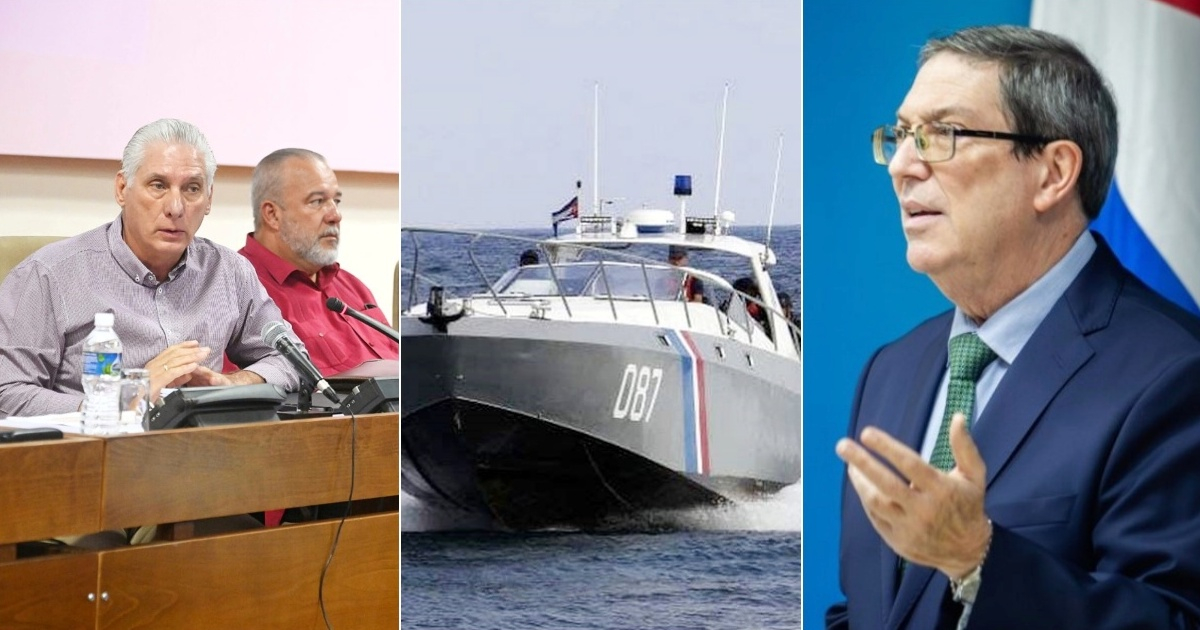
In a tragic turn of events on February 25, an armed confrontation near the Villa Clara coast resulted in four fatalities, several injuries, and accusations of "terrorist intentions." This incident, marked by a significant silence from Cuba's leadership, involves gunfire in territorial waters and potential diplomatic consequences with the United States.
Despite the gravity of the situation, neither the designated president, Miguel Díaz-Canel, nor Prime Minister Manuel Marrero Cruz or Foreign Minister Bruno Rodríguez Parrilla have publicly addressed the incident, which involves Cuban citizens residing in the U.S. and could impact diplomatic relations with Washington.
This silence aligns with a familiar pattern of the Cuban regime: to bypass, downplay, or delay responses to sensitive incidents, especially those that could carry political costs or disrupt the official narrative.
The Pattern of Silence and Narrative Control
When faced with sensitive events—ranging from social protests to migration crises or high-impact violent incidents—the initial reaction from Cuba's political leadership is often silence. Initial reports are typically handled by bodies like the Ministry of the Interior or official media, with the top leadership avoiding immediate statements.
Only once the narrative is fully framed, or when internal and external pressure demands it, do more comprehensive political statements emerge. In this case, following the deadly armed encounter, the discourse has been limited to communications from the MININT. No public appearances, social media messages, or public references have been made by the country's main leaders.
The Incident
According to an informative note from the Ministry of the Interior, a speedboat bearing a Florida registration (FL7726SH) was detected within Cuban waters, approximately one nautical mile northeast of El Pino canal, in Cayo Falcones, Corralillo, Villa Clara. The official account states that a surface unit of the Border Guard Troops, comprising five personnel, approached the vessel for identification. At that moment, the "offending" boat allegedly opened fire on the Cuban military.
The exchange of gunfire resulted in injuries to the commander of the Cuban vessel. The official report documented four individuals killed aboard the boat and six wounded, who were evacuated and received medical care. The authorities later identified Michel Ortega Casanova as one of the deceased, while the identification process for the other three victims continues.
The Silence in Havana
Meanwhile, in Cuba, the political leadership has not added a single word to the official narrative. The latest social media post from Miguel Díaz-Canel focused on the 50th anniversary of the People's Power Parliamentary Public Hearing, urging the revitalization of participation, defense of sovereignty, and maintaining hope for a better tomorrow.
Manuel Marrero Cruz also centered his message on the parliamentary commemoration, describing it as a tribute to Fidel Castro and reiterating the maxim that "people's power is true power." Foreign Minister Bruno Rodríguez shared an analysis from the Cubadebate Media Observatory, claiming that the U.S. government "demonizes" Cuba through derogatory labels and propaganda tactics, without mentioning the shooting in Cuban waters.
Reactions in the United States
In contrast, the incident, involving a vessel registered in Florida and Cuban citizens residing in the U.S., drew immediate reaction in Washington. Secretary of State Marco Rubio stated that the U.S. government would independently verify the events. Rubio noted that initial reports are incomplete, and they would use official channels, including the embassy in Havana, to precisely determine what occurred.
Vice President JD Vance indicated the situation is being monitored, although he acknowledged they lack sufficient details: "Hopefully, it's not as serious as we fear. But I can't say more because I simply don't know more."
Dariel Fernández, Miami-Dade County tax collector, described the statement as a propaganda narrative not verified by independent sources. Mayor Daniella Levine Cava called for a complete and immediate evaluation of the incident, with full transparency and accountability.
Congresswoman María Elvira Salazar demanded that U.S. authorities urgently clarify what happened, while Congressman Carlos A. Giménez insisted on determining whether any of the victims were U.S. citizens or legal residents.
The contrast is stark. While Washington announces independent verifications and South Florida politicians demand transparency, Cuba's leadership remains silent on an event that left four dead and several injured, involving high-caliber weapons and potentially straining already complex bilateral relations.
Understanding the Cuban Government's Silence
Why has the Cuban leadership remained silent about the incident?
The Cuban leadership's silence is consistent with their practice of avoiding immediate reactions to sensitive incidents that could have political repercussions or disrupt the official narrative. This strategy allows the government to control the initial narrative and react later with a consolidated message if necessary.
What was the official account of the incident?
The official account from the Ministry of the Interior states that a speedboat with a Florida registration was detected in Cuban waters. As a Border Guard unit approached for identification, the boat allegedly opened fire, resulting in a gunfire exchange that left four dead and six injured.
How has the United States responded to the incident?
The United States, through officials like Secretary of State Marco Rubio, has announced plans to independently verify the incident. U.S. politicians have called for transparency and clarity, emphasizing the need to assess the situation thoroughly.