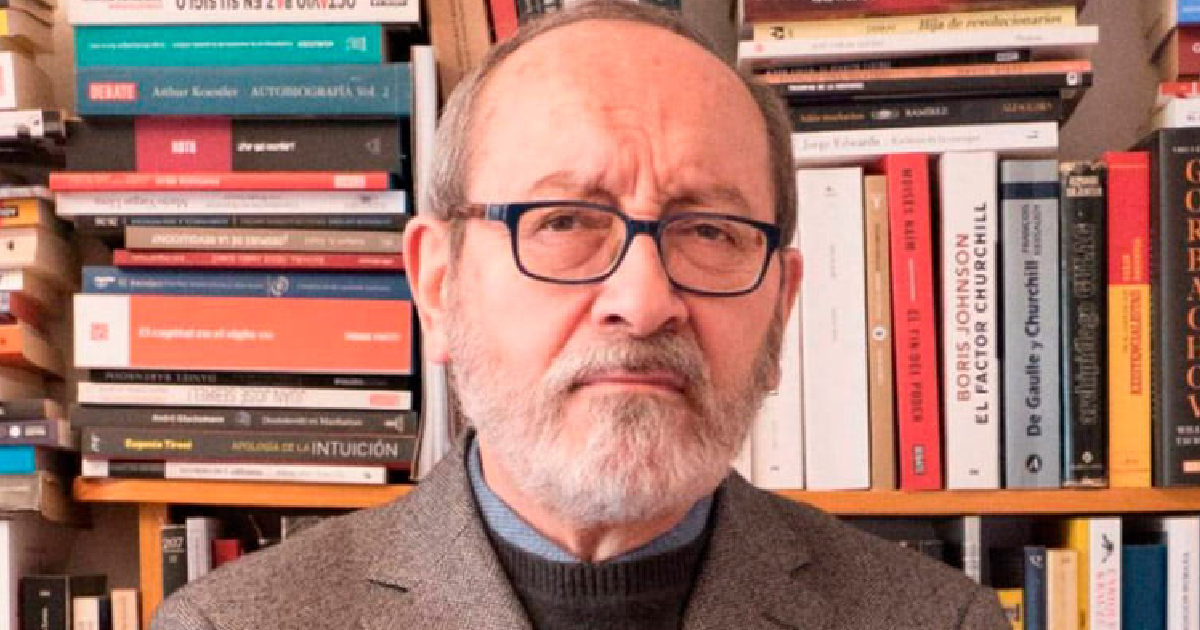
The legacy left by Fidel Castro is that of a nation entrenched in poverty, inequality, and decades of political repression and mass exodus, according to renowned Chilean writer, academic, and former communist member Sergio Muñoz Riveros.
Castro, who "ruled as if the island were his private estate for 49 years," advocated for a socialist system that ultimately resulted in what Muñoz Riveros describes as a "privatization of power." This viewpoint was detailed in an article published on February 21 in the Chilean newspaper El Mercurio.
In the piece titled "Fidel Castro's Legacy," Muñoz Riveros highlighted that Cuba's population has significantly declined, now estimated—by independent studies—to be around eight million people. He attributes this decline to a lack of prospects, with poverty reportedly affecting 40% to 45% of the population.
"Cuba today is a shockingly unequal society: the majority [...] barely get by while the ruling oligarchy, led by the Communist Party, enjoys the full perks of absolute power," the essayist contended.
The political journey that began in 1959 resulted in what he calls a complete failure and a "historical deception." After 67 years, the narrative of the island being a "fortress besieged by the United States" can no longer mask the inefficiency, arbitrariness, and corruption.
Muñoz Riveros also pointed out the stark contrast between the shortages faced by citizens, including fuel, and the availability of resources for the State Security's vehicles, a significant arm of the regime's repression.
The Chilean intellectual portrayed Castro's leadership as one with limitless power, adopting methods inspired by the Soviet model. Slogans such as "Homeland or Death," he argued, were manifestations of a system that suppressed dissent and forced thousands into prison, exile, or conflicts abroad.
The article further discusses Cuba's revolutionary influence abroad, noting that during the 1960s, 70s, and 80s, it supported and trained guerrilla groups across Latin America. "The human cost of such madness was devastating," he concluded.
In this context, Muñoz Riveros recalled Castro's 1971 visit to Chile, invited by the then-president Salvador Allende. He argued that Castro's 24-day stay—an unprecedented imposition on the Chilean leader—contributed to the political polarization that led to a crisis in the country.
Muñoz Riveros asserted that social discontent is now widespread in Cuba and concluded his article with questions about the nation's political future.
He dismissed a U.S. military intervention as a solution and emphasized that any resolution must acknowledge the Cuban people's right to self-governance. He also suggested that releasing political prisoners and fostering reconciliation would be critical steps forward.
Sergio Muñoz Riveros, born in Santiago, Chile, spent over 30 years in the Communist Party before leaving in 1986. He was a political prisoner and exiled following Augusto Pinochet's coup in 1973. He has authored books including "Democracy Needs Defenders" and "Democracy Under Siege."
Understanding Cuba's Current Social and Political Landscape
What is the current state of inequality in Cuba?
Cuba is experiencing significant inequality, with most citizens struggling to survive on minimal resources while the ruling elite, led by the Communist Party, enjoys the benefits of complete power.
How has Fidel Castro's leadership affected Cuba's society?
Fidel Castro's leadership has led to an impoverished and politically repressed society, with a significant decline in population and widespread poverty affecting a large portion of the Cuban people.
What does Sergio Muñoz Riveros propose for Cuba's future?
Muñoz Riveros suggests that any future solution for Cuba must include the Cuban people's right to self-governance, the release of political prisoners, and the promotion of reconciliation.