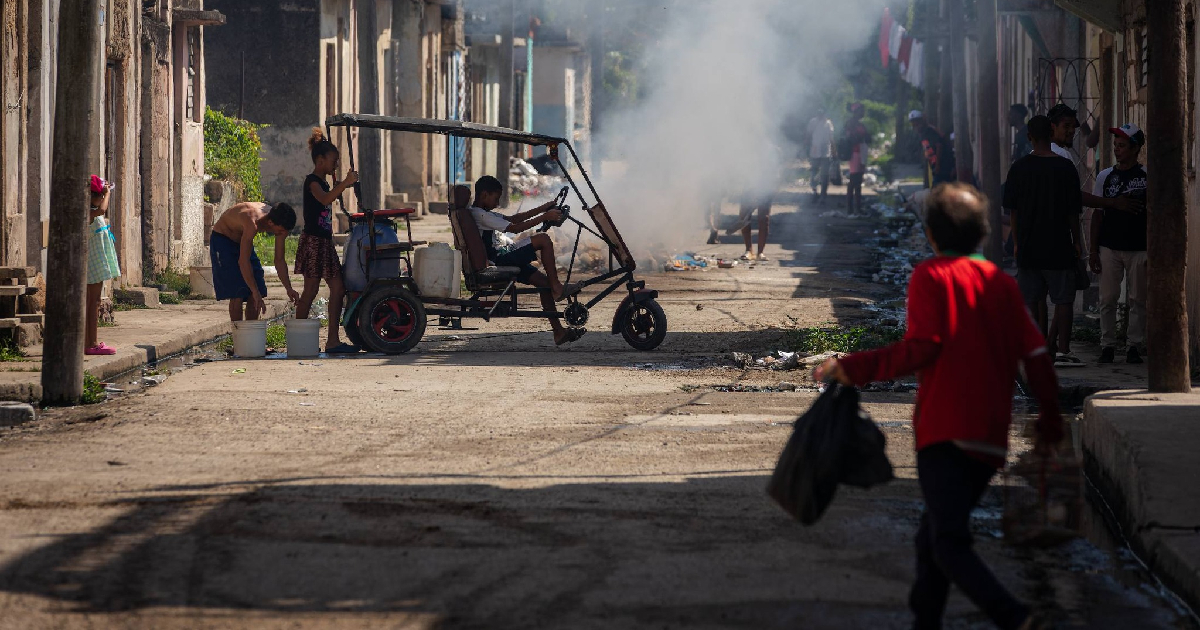
"MATANZAS IS HURTING ME." With this emphatic declaration and a series of haunting photographs, photographer Raúl Navarro González highlighted the visible decay on the streets of the city, enveloped in a haze from uncontrolled waste burns, growing public unrest, and weariness after enduring numerous hardships.
Navarro González shared on social media that after a two-month hiatus from photographing the city, he returned to find a setting overwhelmed by smoke and the stench of burning waste, noticeable even before reaching the improvised dumps.
"What I encountered wasn't silence; it was smoke," he noted, describing scenes of mothers and children navigating through the smog, elderly individuals struggling to walk, and homes exposed to airborne ash. The photojournalist pointed out the pollution seeping through windows, the unreported coughing, and the fear of fires reaching residences—an abnormality in everyday life.
The post sparked numerous comments expressing alarm and fatigue. Professor Alina Bárbara López Hernández, who shared the post, described the photo report as "beautiful images of the horror we experience" and warned about the severe health and environmental risks posed by burning waste, especially given the constraints in medical care.
Other users highlighted that this situation is mirrored across various regions of the country, with similar harmful effects. However, residents are caught between the threat of waste-filled streets and the dangers of burning garbage openly without essential safety measures.
Health Risks of Uncontrolled Waste Burning
The Center for Neuroscience of Cuba issued a warning explaining that uncontrolled waste burning occurs at low and inconsistent temperatures, resulting in incomplete combustion and the release of toxic substances.
The institution noted that at least 30 compounds produced in these processes are harmful to human health and can persist in the environment and the body for years. These substances could potentially lead to brain damage and hormonal disruptions.
The scientific alert was accompanied by expressions of frustration from many users pointing out the lack of viable solutions to the garbage problem, amidst outbreaks of viruses like dengue, chikungunya, Oropouche fever, and Zika, compounded by a lack of basic medications.
Although Armando Rodríguez Batista, the Minister of Science, Technology, and Environment (CITMA), claimed that the Cuban government does not endorse open-air burning of solid waste, many citizens question how such simultaneous occurrences across multiple regions can happen without at least negligence and irresponsibility from the authorities in such a tightly monitored environment as Cuba.
Residents' accounts emphasize respiratory issues, air pollution, and concerns for the health of the most vulnerable. In Navarro González's words, the city "wears out in small fires." These flames, one might add, fuel the larger blaze consuming Cuba.
Environmental and Health Challenges in Cuba
What are the health risks associated with uncontrolled waste burning in Cuba?
Uncontrolled waste burning releases toxic compounds that can cause respiratory issues, brain damage, and hormonal disruptions. These substances can persist in the environment and within the body for years.
How does the Cuban government address the waste management crisis?
The Cuban government, according to the Minister of Science, Technology, and Environment, does not support open-air burning of waste. However, citizens question the government's role given the widespread occurrence of these practices.