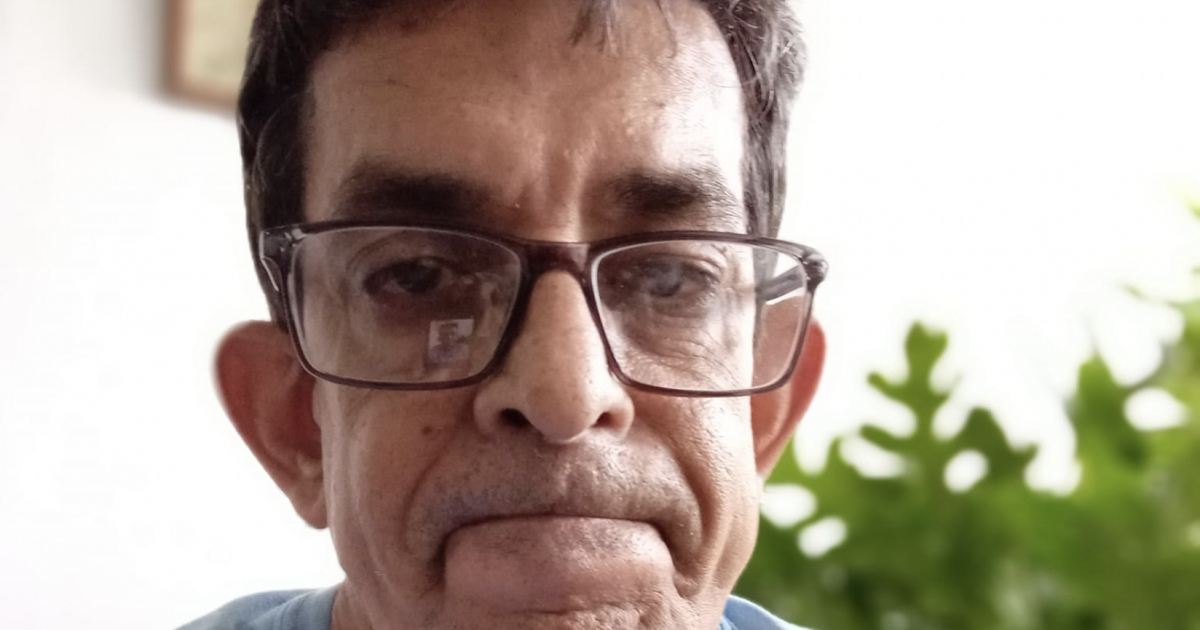
Cuban comedian Ulises Toirac has ignited a discussion on social media after sharing a thoughtful post on Facebook regarding the burning of trash in public spaces. He highlighted the potential health, environmental, and safety risks this practice poses in neighborhoods across Havana and other cities in Cuba. His comments shed light on a troubling issue that has become increasingly apparent amid the ongoing garbage collection crisis.
"This is a serious matter, very serious. It has implications far beyond just 'solving the visible problem,'" Toirac began. He elaborated that burning trash on the streets doesn't resolve the issue; instead, it transforms it into a more insidious and hazardous one.
Toirac detailed that urban waste comprises more than just paper or dried leaves. It includes plastics (PVC, PET, polystyrene), organic waste, synthetic textiles, batteries, household medical waste, and chemicals. Without proper technical control, burning these materials releases dioxins and furans, which are highly carcinogenic, produces fine particles (PM2.5) that can penetrate the lungs, and releases heavy metals like mercury and lead.
He also pointed out that in a densely populated city like Havana, smoke tends to linger at street level, making dispersion difficult. "In summary, what doesn't end up in the truck ends up in your lungs," he concluded.
Environmental and Health Implications
Beyond the immediate public health impact, Toirac noted environmental consequences such as local air pollution, toxic substance deposition in soils, and increased black carbon, which contributes to climate change. He emphasized that informal burning lacks the filters and controlled combustion chambers of industrial incineration, resulting in crude combustion.
He also warned of fire risks—fires can spread to nearby buildings—and potential injuries to individuals, along with indirect economic damage linked to increased illnesses and urban image deterioration.
A Deeper Problem: Waste Management
Discussing the root of the issue, Toirac stated, "If the cause is a lack of fuel for waste collection, the real problem isn't the trash; it's energy logistics." He added that burning trash "doesn't reduce the total volume of solid waste," "doesn't solve future accumulation," and "doesn't create a sustainable system."
The post attracted over a thousand comments, with many users supporting his analysis, agreeing that burning trash poses a collective risk. Some shared personal experiences of suffering due to the smoke. "I'm experiencing it firsthand. I'm asthmatic," one user wrote. Another added, "I live in Jesús María, and I've been struggling with severe shortness of breath and a cough that keeps me up at night."
Others, however, defended burning as a desperate measure against prolonged waste accumulation. "What are we supposed to do if the trash hasn't been collected for over a month?" one commenter asked. Another suggested, "Even if we don't burn it, the contamination and diseases remain; the real solution is collection."
Community Proposals and Institutional Challenges
Some users proposed solutions such as reintroducing animal-drawn carts for collection or expanding neighborhood recycling efforts. The discussion unfolded against the backdrop of a visible garbage collection crisis in Havana. Authorities have acknowledged the waste buildup and set up temporary collection points while seeking solutions to the fuel shortage.
Recent reports highlight specific complaints regarding trash fires in residential areas. In parts of Havana's Metropolitan Park, residents have raised alarms about waste burning near the 26th Street Clinical-Surgical Hospital in a densely populated area. Social media posts warned of emerging respiratory issues and the deadly effects of carbon monoxide. Similar grievances have surfaced in Lawton, Regla, and Diez de Octubre, where garbage accumulation and burning are affecting urban centers.
As logistical challenges persist, the ongoing social media dialogue reveals widespread concern among citizens about the health and environmental repercussions of a practice that, as Toirac noted, shifts the problem from the streets to our lungs.
Understanding the Trash Burning Issue in Cuba
What are the health risks associated with burning trash in public spaces?
Burning trash in public spaces releases harmful substances like dioxins, furans, and fine particles (PM2.5), which can cause cancer and respiratory issues by penetrating the lungs.
How does trash burning affect the environment?
Trash burning contributes to local air pollution, deposits toxic substances in the soil, and increases black carbon, which exacerbates climate change.
What solutions are being proposed to address the waste management crisis in Cuba?
Proposed solutions include using animal-drawn carts for garbage collection and expanding recycling efforts in neighborhoods.