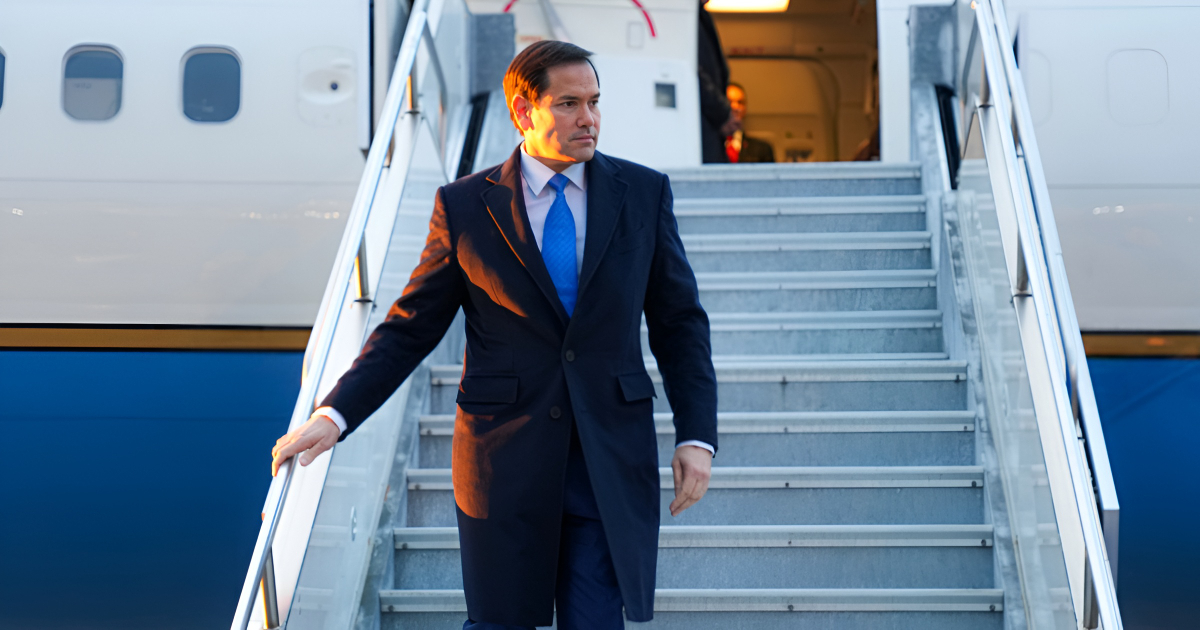
Marco Rubio, the U.S. Secretary of State, has recently established a significant political presence that extends beyond the inner workings of the White House, projecting a strong influence on global foreign policy.
ABC journalist and White House correspondent, David Alandete, recently described the Cuban-American politician as a leader with “clear ideas” within the Trump administration, increasingly overshadowing Vice President J.D. Vance.
Since assuming his role at the Department of State, Rubio's international agenda has garnered extensive media attention and elicited varied reactions across Europe and other allied nations.
In an interview with La Voce del Patriota, Alandete analyzed Donald Trump's return to the White House and the internal power dynamics in Washington, emphasizing that Rubio embodies a faction of the administration with greater institutional stability and a defined vision on challenges such as the relationship with Russia and broader international politics.
Alandete noted that Rubio has not only made his stance clear on key issues but also presents a contrast to figures like Vance, whom he deemed irrelevant in the current context.
The Munich Security Conference: A Platform for Rubio's Vision
Rubio's positioning gained prominence on the international stage during the Munich Security Conference (MSC), held from February 13 to 15, 2026.
At this forum, one of the premier annual gatherings of political leaders and security experts, Rubio delivered a speech characterized as both solid and conciliatory to allies, yet controversial in its defense of a strong and defined Western vision.
During his speech, Rubio declared that the United States and Europe share a “historic alliance that saved and changed the world,” emphasizing the need to revitalize this cooperation to confront contemporary global threats.
He highlighted the transatlantic relationship as “always being intertwined,” asserting that Washington aims to strengthen ties with its traditional allies while making it clear that the U.S. is prepared to act independently if necessary to safeguard its interests.
Analysts interpreted Rubio’s address in Munich as a reaffirmation of American leadership amid global tensions, focusing on sovereignty, collective defense, and strategic cooperation.
Several attendees and European diplomats welcomed the transatlantic unity message proposed by the Secretary of State with applause and even a sense of relief, noting its significance amid challenges such as the war in Ukraine, China’s pressure in the Asia-Pacific, and geopolitical tensions in the Middle East.
Domestic Reactions and Rubio's Growing Influence
The impact of Rubio's speech also resonated politically within the United States. President Trump publicly supported Rubio following criticism from European and some Democratic sectors, praising his performance in Munich as “fantastic” and defending his stance against both domestic and foreign opposition.
In addition to his international role, Rubio has maintained an active presence in the Senate and the media, where he has been recognized for his articulate and firm handling of foreign policy and national security issues.
His appearances before legislative committees to explain decisions related to operations in Venezuela and policies toward allies have been well-received by his party colleagues and some moderates, reinforcing his image as an executive-minded politician rather than merely ideological.
Rubio has demonstrated an ability to communicate with diverse audiences, articulating a narrative that combines strategic firmness with appeals for global cooperation, broadening his profile beyond American borders.
This perception, bolstered by his prominent role in Munich and public interventions in the Capitol, suggests that his influence on U.S. foreign policy will continue to rise, especially concerning alliances, security, and transatlantic relations.
At a time when U.S. foreign policy seeks to reaffirm its global leadership, Rubio has emerged at the center of international debate, solidifying not only his role within Trump's cabinet but also his projection as a key figure in contemporary American diplomacy.
Understanding Marco Rubio's Impact on U.S. Foreign Policy
What role does Marco Rubio play in U.S. foreign policy?
Marco Rubio, as U.S. Secretary of State, plays a pivotal role in shaping and executing the country's foreign policy, emphasizing strategic alliances and global cooperation.
How has Rubio's speech at the Munich Security Conference been perceived?
Rubio's speech at the Munich Security Conference was seen as a reaffirmation of U.S. leadership, advocating for transatlantic unity and readiness to act independently if necessary.