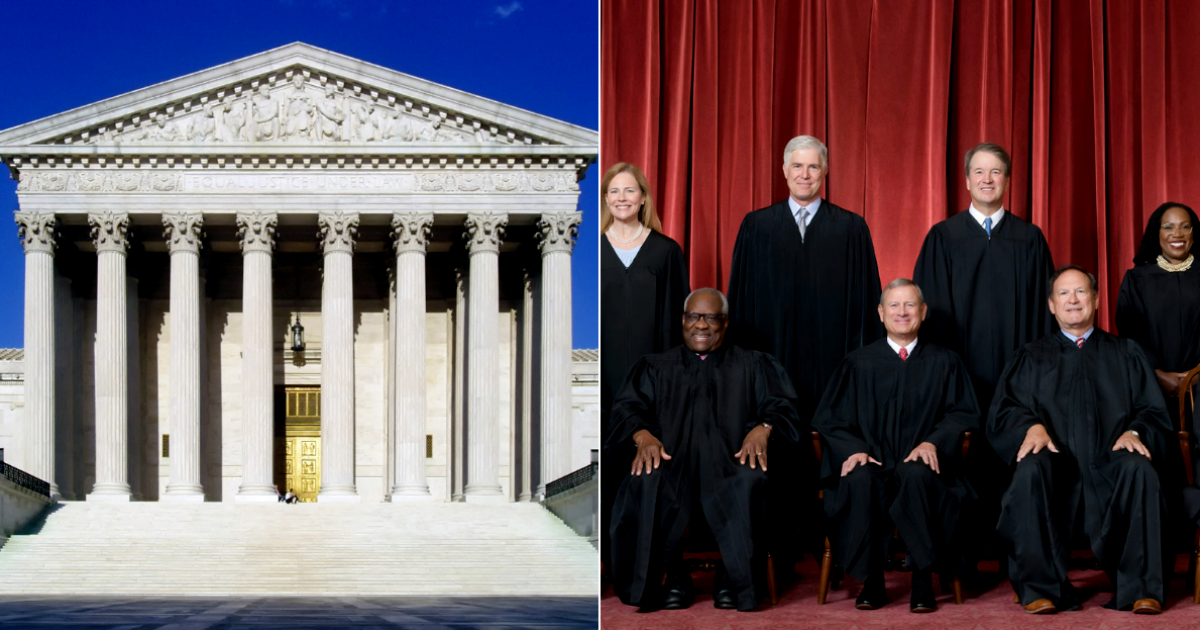
This Monday, the United States Supreme Court is holding a critical hearing that could reshape the reach of Title III of the Helms-Burton Act. Depending on the outcome, it could initiate a wave of claims over properties seized by the Castro regime post-1959.
The justices will hear arguments in two pivotal lawsuits: Exxon Mobil vs. Corporación CIMEX and Havana Docks Corp. vs. Royal Caribbean Cruises Ltd.—the latter also involving Norwegian Cruise Line, Carnival Corporation, and MSC Cruises.
The crux of both cases lies in interpreting a legal provision that allows U.S. citizens and companies to sue those who "traffic" in properties nationalized without compensation in Cuba.
While the cases differ legally, they share a fundamental question: how far did Congress intend to go when it enacted the Helms-Burton Act in 1996, which codified the embargo and established a mechanism for seeking compensation in federal courts?
Exxon vs. Cuban Military Conglomerate
Exxon Mobil seeks over $1 billion for assets seized in 1960, including refineries and terminals now reportedly linked to CIMEX, a state entity within GAESA, a military-corporate network controlled by Cuba's ruling elite.
The key debate is whether CIMEX can invoke the Foreign Sovereign Immunities Act to shield itself from lawsuits in the U.S. A lower court ruled in 2024 that Cuban state enterprises can claim such immunity.
However, Exxon argues that Title III was specifically designed to remove this hurdle, granting confiscation victims access to justice.
Should the Supreme Court overturn this interpretation, it could dismantle a major barrier that has stalled claims against Cuban state entities for years.
Cruise Lines Under Scrutiny
The second case does not involve sovereign immunity, as the defendants are private companies. The focus here is whether Havana Docks Corporation retains a valid right to the Havana port concession, despite its revocation following Fidel Castro's rise to power.
Between 2016 and 2019, during the thaw initiated by the Obama administration, thousands of American tourists visited Cuba on cruises that used this terminal.
In 2022, a federal judge ruled that the cruise lines had "trafficked" in confiscated property, ordering them to pay $440 million. However, in 2024, an appeals court overturned the decision, arguing that the concession had expired before the cruises began.
The Supreme Court now faces the task of determining whether the right to sue hinges on the formal validity of the concession or the fact that the property was seized without compensation. This ruling could also have far-reaching implications.
A Precedent with Ripple Effects
Title III was suspended from 1996 until 2019 when the Trump administration fully activated it, claiming it was a tool to increase pressure on the Cuban regime and penalize those benefiting from expropriated assets.
Since then, approximately 40 lawsuits have been filed, many progressing slowly due to procedural hurdles. Legal experts have noted that litigating under the Helms-Burton Act has proven costly and complex for plaintiffs.
Nonetheless, if the Supreme Court opts for a broad interpretation of Title III, the landscape could shift dramatically. Thousands of certified claims for confiscations—which include sugar mills, refineries, factories, ports, and lands—could be revived with renewed judicial vigor.
For international businesses, the message would be unmistakable: operating in Cuba, even years after the fact, could lead to substantial liabilities in U.S. courts.
For the Cuban regime, already grappling with an economic crisis, an adverse ruling could escalate financial pressure and further deter foreign investment.
Beyond the technical details, today's hearing marks a pivotal moment in the longstanding dispute over properties seized after the revolution.
The decision, expected in the coming months, will not only affect corporate giants but could redefine the real extent of one of the most controversial legal tools in U.S. policy toward Cuba.
If the Court opens the door to a broader interpretation of Title III, the floodgates of claims could be fully unsealed.
Understanding the Helms-Burton Act and Its Implications
What is the Helms-Burton Act?
The Helms-Burton Act, enacted in 1996, codifies the U.S. embargo against Cuba and establishes a framework for U.S. nationals to claim compensation for properties expropriated by the Cuban government after 1959.
How could the Supreme Court's decision impact U.S.-Cuba relations?
A decision broadening the scope of Title III could increase financial pressure on the Cuban regime, complicate foreign investment in Cuba, and lead to a surge in lawsuits over confiscated properties, affecting U.S.-Cuba relations significantly.