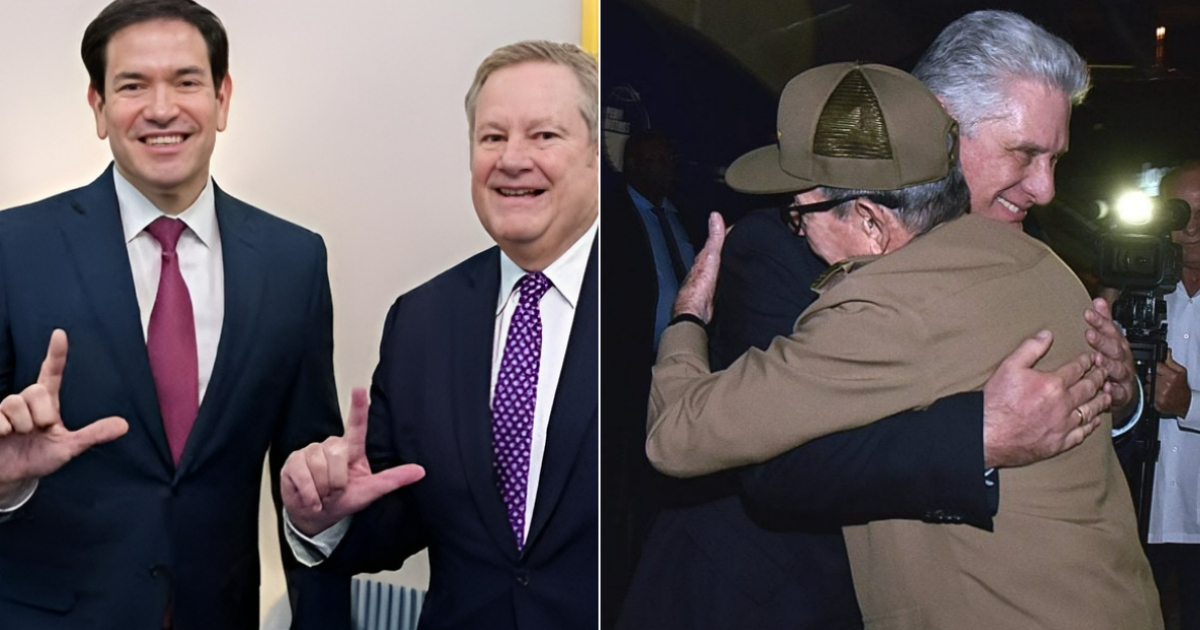
Mike Hammer, the Chargé d'Affaires at the U.S. Embassy in Havana, has suggested that 2026 might herald a significant turning point in Cuba's recent history.
In an interview with the Spanish newspaper ABC, Hammer stated, "I would say yes, there will be a change. In what form? We shall see," describing it as a "historic shift."
These remarks come amid increasing pressure from President Donald Trump's administration on the Cuban regime. This pressure includes the reinstatement of energy sanctions and Cuba's return to the list of state sponsors of terrorism at the start of Trump's current term in January 2025.
One major revelation from the interview was the confirmation of communications with individuals within the Cuban system. Although Hammer was circumspect with details, he mentioned, "There are communications with certain people," aligning with previous statements by President Trump.
He also implied that not everyone within the power structure is aware of these exchanges: "Some members of the regime might say there is nothing; perhaps they are not informed, or perhaps it's not with them."
Hammer noted that there are those within the system who recognize that "the project is nearing its end" and might be interested in facilitating a transition.
Washington's aim, he explained, is to achieve a "peaceful transition without bloodshed," emphasizing an economic and political opening that would benefit the Cuban populace.
A cornerstone of Washington's strategy has been the obstruction of oil supplies from Venezuela, exacerbating the energy crisis on the island. Hammer defended these measures as a way to deprive the regime of resources to maintain its repressive apparatus.
"Our policy has always aimed to prevent giving oxygen, energy, and capacity to the repressive machine of the Cuban regime," he stated. He also claimed that much of the oil reaching the island was not alleviating civilian shortages but was instead sold on international markets.
Hammer left the door open for possible assistance mechanisms that wouldn't empower the ruling elite. Regarding limited fuel shipments, he mentioned that the State Department is reviewing the situation. "We will make decisions based on how we can support the Cuban people without the regime taking advantage," he emphasized.
He recalled that following Hurricane Melissa, the U.S. announced humanitarian aid through the Catholic Church and Caritas Cuba to ensure resources reached those directly affected.
Additionally, Hammer confirmed that Washington is planning for the "day after" a potential political change in Cuba. "We've been thinking about a transition to a free Cuba for a long time. We have all sorts of plans for how it can happen in the least chaotic way," he asserted.
The diplomat described a country with deteriorated energy, health, and transportation infrastructures and criticized that tourism revenues were not reinvested to benefit the national economy. In his view, an opening would allow for international investment and support for reconstruction.
While avoiding specific timelines, he maintained that current conditions differ from previous years. "When I arrived, no one was talking about it. Now people aren't asking if it will happen but when," he noted, referring to a change in perception both inside and outside the country.
Hammer was particularly critical of the human rights situation on the island. He emphasized the need to release political prisoners and argued that the Cuban regime functions as a dictatorship.
"If in a country you can't express yourself freely and are jailed for displaying a sign, tell me that's not a dictatorship," he stated.
He also questioned the Cuban government's priorities amid the energy crisis, pointing out that while citizens face blackouts and fuel shortages, resources are still available for surveillance and repression forces.
The diplomat's statements suggest a pivotal year ahead in bilateral relations and the island's political future. Although he did not disclose specifics about the White House's next steps, he reiterated that the current situation represents a "historic opportunity" after more than six decades of socialist rule.
"There has never been an administration so focused on the hemisphere and on Cuba," he concluded.
Key Developments in U.S.-Cuba Relations
What changes does the U.S. anticipate in Cuba by 2026?
The U.S. anticipates a significant political and economic shift in Cuba by 2026, driven by internal and external pressures on the regime.
How is the U.S. engaging with individuals within the Cuban system?
There are ongoing communications with certain individuals within the Cuban system, although details remain confidential.
What is the U.S. strategy regarding Cuba's energy crisis?
The U.S. strategy involves blocking oil supplies from Venezuela to pressure the Cuban regime, while reviewing possible assistance that avoids empowering the ruling elite.
What are the U.S. plans for a post-transition Cuba?
The U.S. is preparing for a peaceful transition to a free Cuba, with plans for economic and infrastructure support to minimize chaos.