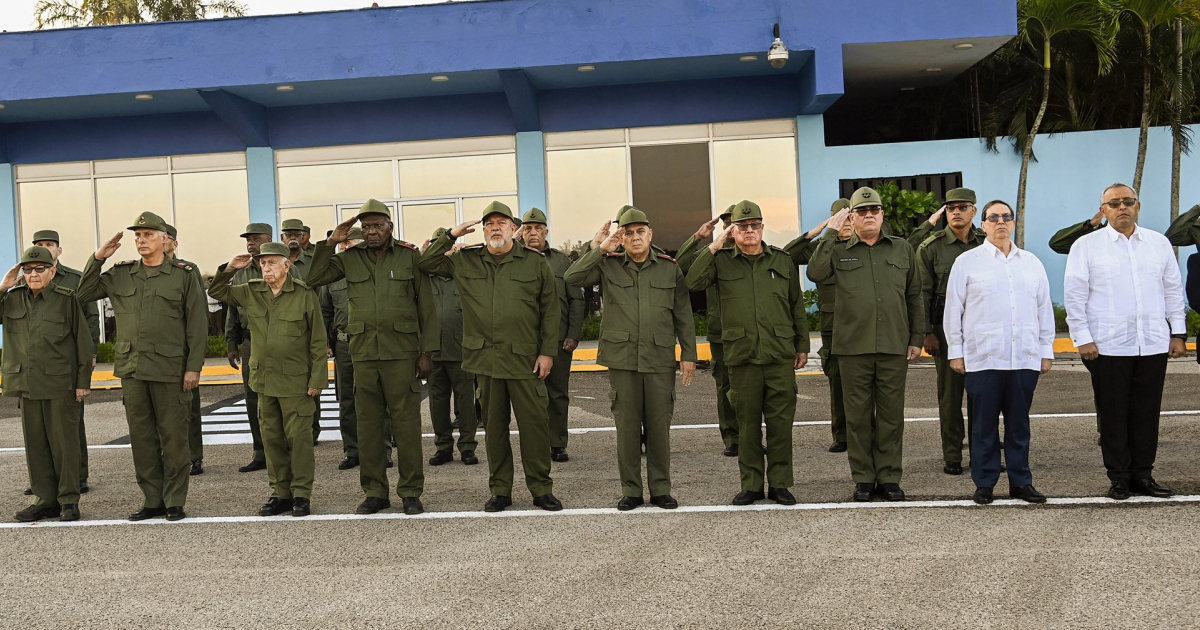
U.S. Congressman Michael Baumgartner took to X to commend President Trump and Secretary Rubio for their approach to "liberating Venezuela from the grip of Cuban communist advisors." He encouraged all Americans to applaud this initiative.
Baumgartner described this move as "another significant foreign policy victory for this administration," and hinted at more achievements to come.
This statement comes amidst reports of a noticeable decrease in Cuban presence within Venezuela's security apparatus, a relationship that has been pivotal for the political endurance of the Chavismo regime for years.
The congressman attributes this shift to the strategies led by President Donald Trump and Secretary of State Marco Rubio, who have consistently voiced their intention to undermine the Caracas-Havana axis.
In a recent post on Truth Social, Trump highlighted that "Cuba lived for many years on vast amounts of OIL and MONEY from Venezuela. In return, Cuba provided ‘Security Services’ for the last two Venezuelan dictators, BUT NO MORE!"
Background: Cuban Retraction in Key Areas
According to Reuters reports referenced in public records, Cuban security advisors and medical personnel have begun to leave Venezuela in recent days.
This move, confirmed by 11 sources close to the agency, marks a shift in a strategic relationship that has allowed Havana to significantly influence key military and intelligence structures in Venezuela for over a decade.
Some Cuban advisors have reportedly been removed from positions within the General Directorate of Military Counterintelligence (DGCIM), an organization known for its role in monitoring and persecuting officers deemed disloyal.
Additionally, Venezuelan leader Delcy Rodríguez has reportedly replaced Cuban bodyguards with Venezuelan ones, breaking the longstanding practice established by Hugo Chávez and maintained by Nicolás Maduro, who entrusted their personal security to elite forces sent from Havana.
The Immediate Trigger: U.S. Military Operation
The immediate catalyst for this shift was a U.S. military operation on January 3 that resulted in the capture of Maduro and left 32 Cuban personnel dead.
Havana confirmed the casualties, honoring them as "internationalist heroes," a stark contrast to years of official denials regarding military presence in Venezuela.
The Cuban influence did not arise spontaneously. A special Reuters report published in 2019 uncovered agreements made in May 2008 between the defense ministries of both nations, granting Cuba extensive access to Venezuela's military sector.
2008 Agreements and Control Architecture
Under these agreements, Venezuelan officers were sent to Havana for counterintelligence training; Cuban instructors oversaw the modernization of what was then the military intelligence service (DIM); and its mission was redefined to focus on internal surveillance of the armed forces. In 2011, the organization was renamed DGCIM, reflecting its new orientation.
According to testimonies collected by Reuters, agents trained under Cuban guidance infiltrated barracks, intercepted communications of high-ranking officials, and promoted an internal denunciation system. The DGCIM has been criticized by international bodies for practices such as arbitrary detentions and torture.
For years, the Cuban regime categorically denied having an operational military presence in Venezuela. However, the official confirmation of casualties in January exposed the involvement of members of the Revolutionary Armed Forces (FAR) and the Ministry of the Interior (MININT) in the security apparatus linked to the Chavista leadership.
A Turning Point Amidst International Pressure
The reduction in Cuban presence occurs under direct pressure from Washington, which has sought to cut off oil supplies and weaken the strategic alliance between the two governments.
While some military advisors and professors linked to the National Experimental University of Security (UNES) remain in the country, sources indicate that Havana's influence is waning.
This retraction affects not only a bilateral alliance but also the control structure that allowed Chavismo to navigate internal conspiracies during years of economic crisis and massive protests. If it solidifies, it could alter the balance within the Venezuelan armed forces.
Baumgartner's statements reflect the view of some sectors in Washington that see this process as a weakening of the security framework that supported two governments criticized for their authoritarianism.
For years, the exchange of oil for political and intelligence advice consolidated a scheme that safeguarded Chavismo and provided economic lifeline to Havana.
Now, with more intense international pressure and visible movements within Venezuela's security structures, the relationship appears to be entering its most delicate phase.
Impacts of U.S. Policies on Venezuela-Cuba Relations
What role did Cuban advisors play in Venezuelan security?
Cuban advisors significantly influenced Venezuelan military and intelligence structures, providing training and supervision, which helped maintain the Chavista regime's political stability.
How did the U.S. influence the reduction of Cuban presence in Venezuela?
The U.S. exerted direct pressure on Venezuela, cutting off oil supplies and strategically undermining the Caracas-Havana alliance, leading to a decrease in Cuban advisors' roles in Venezuela.
What was the impact of the 2008 agreements between Cuba and Venezuela?
The 2008 agreements granted Cuba extensive access to Venezuela's military sector, allowing Cuban advisors to train Venezuelan officers and oversee intelligence operations, solidifying their influence in the country.