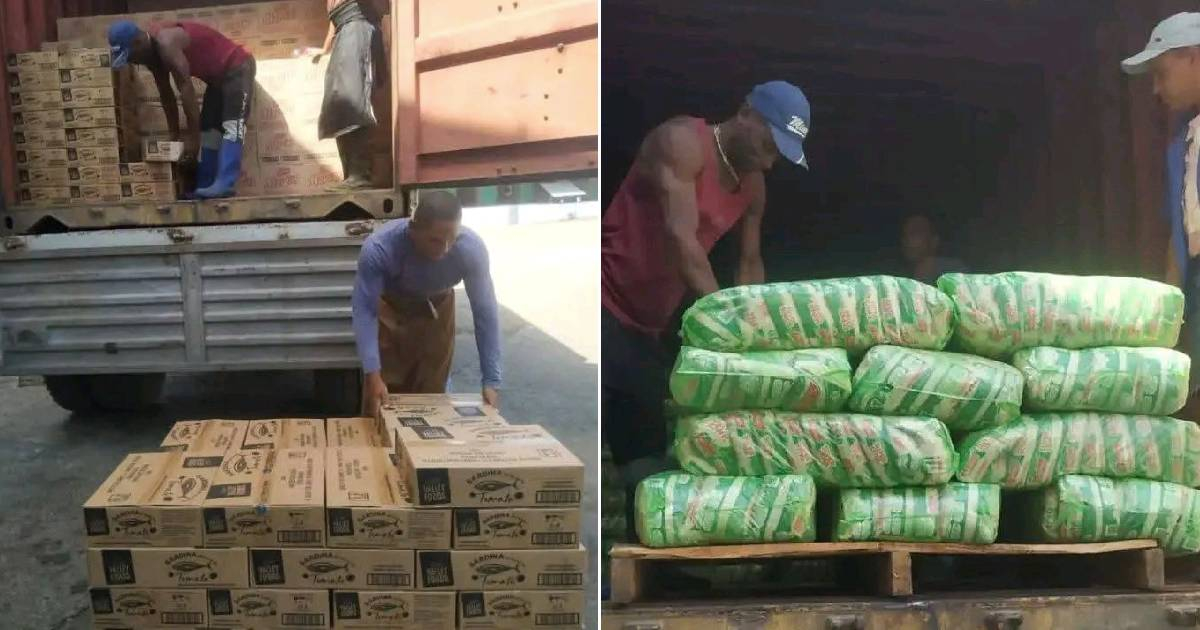
The recent aid distribution from Mexico to Cuba has sparked controversy. Residents of Güira de Melena in the Artemisa province reported that vulnerable families received only a single pack of crackers per household.
According to accounts shared on Facebook, local authorities managed the delivery, which is a common practice for donations entering the country, typically routed through state structures.
"I will always appreciate any assistance the Cuban people receive; however, unfortunately, in Cuba, nothing reaches the people without first being scrutinized and distributed by the State," a user commented while sharing images of the received items.
The post has ignited a discussion among Cubans both on the island and abroad about the handling of humanitarian aid. This aid was segmented and allocated solely to so-called "vulnerable groups," leaving the rest of the population, also facing severe hardship, without any support.
Some online users questioned why the public receives only minimal quantities of goods, while others argued that any contribution is valuable amid shortages.
Mexico provided a donation comprising several tons of food, which has begun to be distributed across various provinces, according to institutional sources.
This assistance arrives amidst widespread shortages of food and basic goods, with markets largely empty and private sector prices beyond the reach of many citizens.
Authorities have stated that the Mexican aid will benefit vulnerable groups in the provinces of Artemisa, Havana, and Mayabeque, as well as the special municipality of Isla de la Juventud. It has also reached several eastern provinces like Las Tunas.
Mexico has confirmed that it will continue its humanitarian support, including efforts organized by its citizens, who have collected supplies at the Zócalo and the National Autonomous University of Mexico (UNAM). However, they will not send oil "for the time being," as stated by President Claudia Sheinbaum.
This means that although food is arriving, the ongoing energy and fuel crisis, which has resulted in blackouts and halted services, will continue to exacerbate the economic situation.
Cuba's reliance on external donations to meet basic food needs highlights the severe decline of its production system. After years of inefficiency, poor management, and a lack of sustainable solutions, much of the population struggles to secure daily sustenance.
Understanding Cuba's Aid Distribution Challenges
Why did vulnerable families in Güira de Melena receive only a pack of crackers?
The aid was managed by local authorities and distributed through state mechanisms, resulting in limited quantities for each family, particularly for those deemed vulnerable.
How is the Mexican aid being distributed across Cuba?
The Mexican aid, consisting of several tons of food, is being distributed to vulnerable groups across provinces like Artemisa, Havana, Mayabeque, Isla de la Juventud, and eastern areas such as Las Tunas.
Will Mexico continue its humanitarian aid to Cuba?
Yes, Mexico plans to maintain its humanitarian support, including efforts led by its citizens. However, it has decided not to send oil at this time.