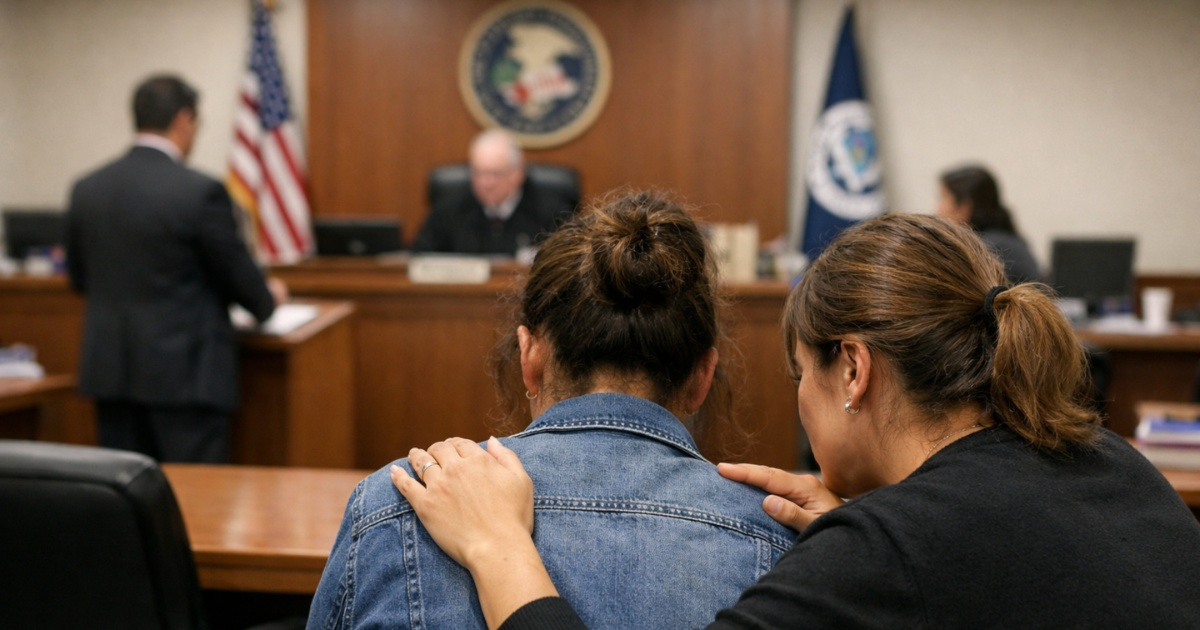
In a shocking revelation, a federal indictment partially unsealed in the Eastern District of New York (EDNY) accuses five individuals of allegedly running a sham law firm, recruiting "clients" via Facebook, and conducting make-believe immigration proceedings.
The fraudulent activities involved staged asylum interviews and mock "court" appearances via videoconference. The defendants impersonated immigration judges, federal agents, and lawyers.
The U.S. Attorney's Office announced that the accused face charges of wire fraud conspiracy, wire fraud, money laundering conspiracy, and two counts of impersonating a U.S. official or employee.
Among those charged are four individuals who have been apprehended: Daniela Alejandra Sánchez Ramírez, 25; Marlyn Yulitza Salazar Pineda, 24; Jhoan Sebastián Sánchez Ramírez, 29; and Alexandra Patricia Sánchez Ramírez, 38, all Colombian nationals.
According to the press release, three of them—Daniela, Jhoan, and Alexandra Sánchez Ramírez—were detained at Newark Liberty International Airport while attempting to board a one-way flight to Colombia.
Marlyn Salazar Pineda was apprehended at a New Jersey restaurant, while a fifth suspect remains outside U.S. custody.
The release further details that Daniela and Jhoan Ramírez, along with Marlyn Pineda, were on parole, while Alexandra Ramírez was in the U.S. on a tourist visa. Daniela, Jhoan, and Alexandra are siblings.
The detained suspects were scheduled to appear in federal court in Brooklyn before Magistrate Judge Peggy Cross-Goldenberg.
Scam Involved Fake Legal Services and Hefty Fees
Judicial documents reveal that the group and their accomplices posed as immigration attorneys, operating a bogus firm named “CM Bufete De Abogados Consultoría Migratoria.”
After luring potential clients—primarily through Facebook—they charged fees ranging from hundreds to thousands of dollars for supposed services and advisories, which, according to the indictment, were non-existent.
The prosecution emphasized that none of the accused nor their accomplices held a law degree or license to practice in any U.S. jurisdiction.
After securing payments, the defendants pretended to represent their "clients," sending documents that "appeared official" due to the inclusion of U.S. government agency insignias.
Some documents cited real pending immigration cases or falsely claimed successful resolutions, but none were legitimate or issued by federal agencies, the prosecution stated.
Elaborate Hoax with Staged Videoconferences
Additionally, the accused orchestrated fake proceedings, including asylum interviews and court appearances, where victims participated via videoconference.
During these sessions, the impostors masqueraded as immigration judges, CBP and USCIS agents, and lawyers.
To bolster their act, they donned judicial robes and uniforms, appearing against backgrounds resembling courtrooms or government offices, complete with agency seals and flags.
During these video calls, the fraudulent officials asked personal and sensitive questions, requesting victims’ personal identification information.
In some instances, the accused falsely assured victims that their “proceedings” had resolved pending immigration matters.
This led to victims not showing up in immigration court, resulting in deportation orders for at least one victim, who mistakenly believed their case was resolved. The prosecution noted that the deportation order was later overturned.
The investigation uncovered over $100,000 in fraudulent transactions sent by victims to the defendants and others linked to the fake firm.
Federal Prosecutor Joseph Nocella Jr. stated that the accused "undermined the integrity" of the immigration system by posing as judges, law enforcement officers, and attorneys, targeting vulnerable individuals seeking legal aid.
Inspector General of DHS, Joseph V. Cuffari, emphasized their commitment to pursuing fraudsters and government impersonators.
The prosecution reminded that the charges are accusations, and the defendants are presumed innocent until proven guilty. If convicted, each defendant could face up to 20 years in prison.
Understanding the Immigration Fraud Case
What charges are the defendants facing?
The defendants are charged with wire fraud conspiracy, wire fraud, money laundering conspiracy, and two counts of impersonating a U.S. official or employee.
How did the scheme operate?
The scheme involved posing as immigration attorneys, conducting fake legal proceedings, and charging victims for non-existent services, all while impersonating officials.
What were the consequences for victims?
Victims were misled into thinking their immigration cases were resolved, leading to missed court dates and at least one deportation order, which was later overturned.