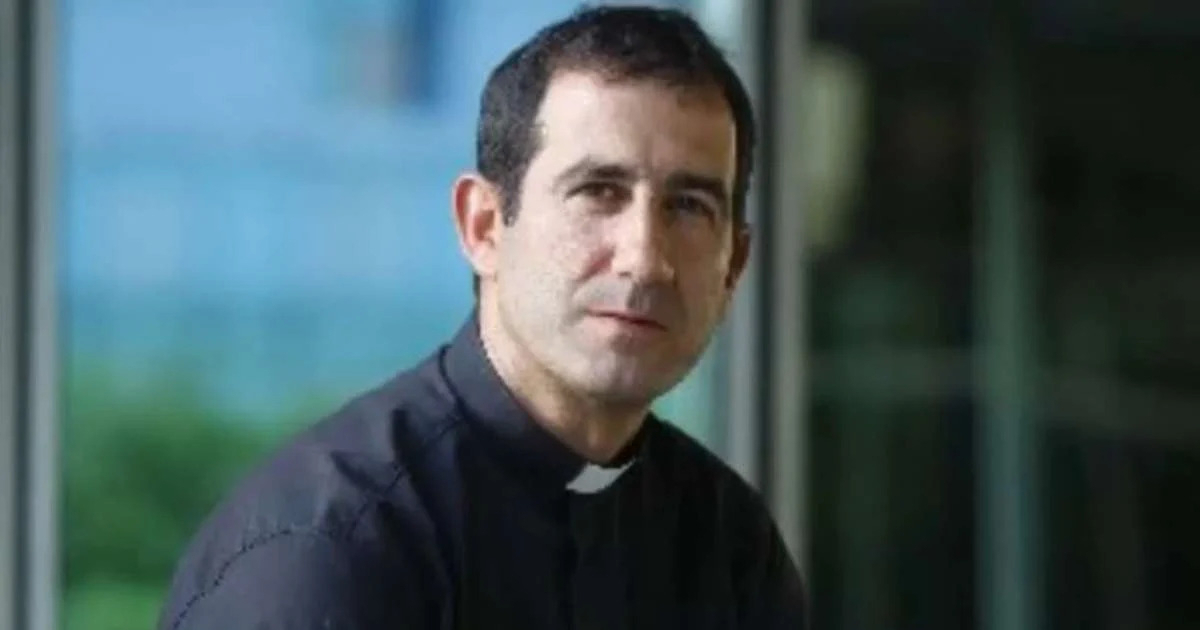
Cuban priest Alberto Reyes Pías has made a compelling public plea for Cuba to engage in dialogue with the United States. He argues this should be done not from the standpoint of maintaining the regime's ideological sovereignty, but rather from a desire to alleviate the suffering of the Cuban populace.
In a Facebook post, Reyes emphasized that much of the discourse surrounding the relationship between Washington and Havana tends to focus solely on the governments involved, neglecting the reality of the Cuban people. He pointed out that the citizens are held captive under an authoritarian system that does not represent them.
The priest highlighted that while some perceive the tensions with the U.S. as the "Northern giant" bullying the "small and defenseless island," the reality is that the Cuban people have long been striving, from a position of vulnerability, to end years of oppression and poverty.
Reyes criticized those who view American calls for Cuban freedom as interference in national sovereignty. "The Cuban people are not responsible for anti-American complexes, and those who harbor such sentiments should find another outlet rather than prioritizing their ideology over the hunger and misery of an entire population," he stated.
Furthermore, Reyes argued that this is the opportune moment to support the U.S. proposal and to prove that nations claiming to be democratic possess the integrity and courage to defend the freedom and true sovereignty of ordinary citizens.
Using a metaphor, Reyes compared the imbalance between the Cuban people and their government to an eight-year-old child being bullied by someone stronger, noting that no one expects the child to defend themselves alone. Similarly, the Cuban people have endeavored to resist repression without external assistance, doing "what they can."
He insisted that Cuban society is "unprotected, without the rule of law, with a civil framework meticulously dismantled over nearly 70 years," leaving it "vulnerable at the mercy of powerful oppressors."
Reyes also questioned the hypocrisy of those who oppose any rapprochement with the United States, citing historical examples such as U.S. intervention in World War II, which was crucial in defeating Nazi Germany.
For Reyes, if there are countries that proclaim themselves democratic, they should "have the decency and courage" to defend the real freedom of Cubans, rather than prioritizing ideologies over the hunger and misery faced by the majority of the Cuban population.
"Without the help of someone stronger, we are left to sink deeper and deeper, until we die and see our children die, while... listening to those who today demonize those who are doing something for our freedom, say from a bar in London or Paris: 'Oh, how admirable the Cuban people, how they resisted until the end!'" he concluded.
The priest's call comes amid a climate of political tension and anticipation in Cuba following pressure from the Trump administration, which has expressed its intent to expedite the fall of the dictatorship in Cuba this year.
His stance, echoed in multiple previous statements against the regime, adds to the internal voices demanding a systemic change and highlighting the economic, social, and political crisis the country is experiencing.
Understanding Alberto Reyes' Call for U.S.-Cuba Dialogue
Why is Alberto Reyes calling for dialogue between Cuba and the United States?
Alberto Reyes is urging for dialogue to alleviate the suffering of the Cuban people, who are caught in an authoritarian system and are not represented by their government. He believes the focus should be on the people's welfare rather than ideological sovereignty.
What does Alberto Reyes think about the perception of U.S. interference in Cuba?
Reyes criticizes the notion that U.S. calls for Cuban freedom are interference, arguing that the Cuban people are not to blame for anti-American sentiments and that their suffering should not be overshadowed by ideological disputes.
How does Reyes describe the situation of the Cuban people?
Reyes describes the Cuban society as unprotected and lacking the rule of law, with a civil structure that has been systematically dismantled over decades, leaving the people vulnerable to powerful oppressors.