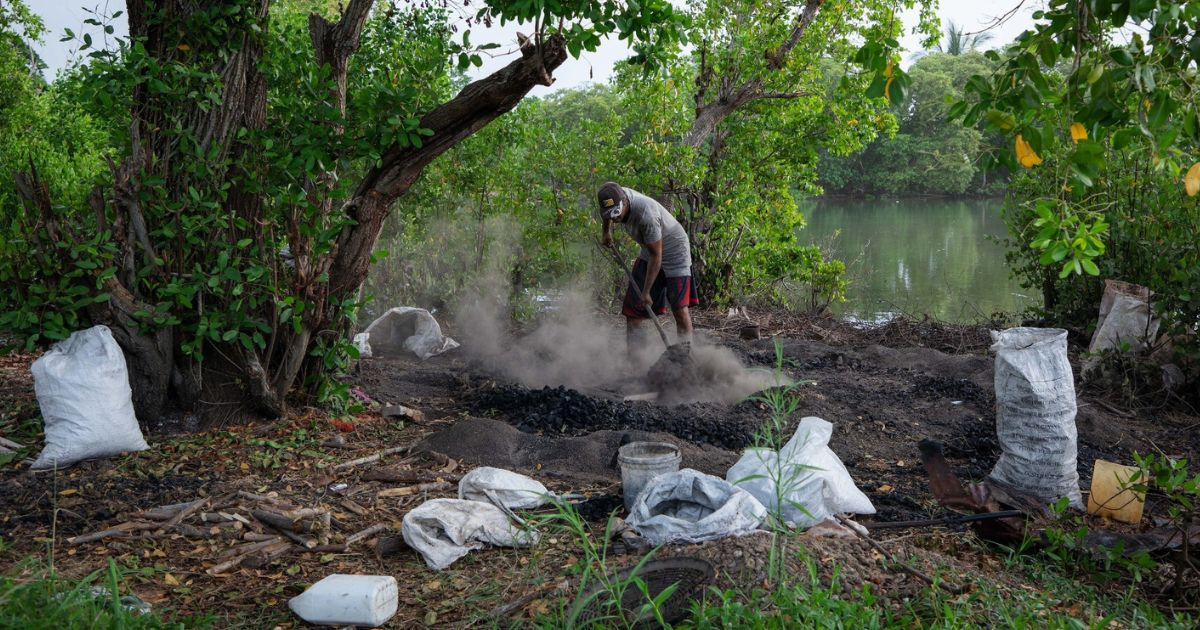
As global discussions center around cutting-edge technologies, Cuba finds itself turning back to wood-burning stoves and charcoal as everyday cooking solutions. In several provinces, sacks of these fuels are priced at over 2,000 to 3,000 Cuban pesos.
The Facebook page Sangre Cubana highlighted the stark contrast between international debates on artificial intelligence and renewable energy, and the harsh reality faced by many Cuban families. These families have resorted to "unearthing the wood stove" due to a practically collapsed electrical system and the lack of liquefied gas.
Cooking has become a "war mission," with the meager average salary forcing tough choices between buying food or fuel to cook it. This sentiment echoes across social media, where Cubans express their frustrations online as a minimal outlet for their struggles.
Comments and complaints also focus on soaring prices of basic agricultural products: a single sweet potato costs 70 to 80 pesos, while a pumpkin can equal a significant portion of a worker's salary, approximately 800 pesos, according to one online commenter.
The disparity between the dire situation and the official rhetoric has sparked critical reactions and protests, even at the risk of facing the usual repressive measures and sanctions from the authorities.
Recently, Radio Guantánamo described the use of charcoal as an "ecological alternative," promoting the idea of "cooking with what we have" amid the energy crisis. This characterization drew criticism from internet users, who rejected framing it as an achievement rather than a necessity imposed by scarcity.
Meanwhile, state-run media have shown images of flour being transported by mules in Imías and bread being baked with wood due to a diesel shortage. The Municipal Assembly of People's Power in Jovellanos announced the activation of wood-fired ovens to ensure bread production in various local communities.
The Ministry of the Food Industry claims that using artisanal ovens powered by wood waste supports a circular economy and helps counter the "blockade."
While officials tout these practices as signs of creativity and resilience, numerous social media users depict the situation as a forced regression, a bottomless crisis brought on by the failed policies of the dictatorship.
Challenges in Cuban Daily Life Amid Energy Crisis
Why are Cuban families using wood-burning stoves?
Cuban families have resorted to wood-burning stoves due to a nearly collapsed electrical system and the lack of liquefied gas, making it a necessary alternative for everyday cooking.
How has the economic situation affected food prices in Cuba?
The economic situation has led to skyrocketing prices for basic agricultural products, with items like sweet potatoes and pumpkins costing a significant portion of a worker's average salary.
What are the official claims regarding the use of wood-fired ovens?
Authorities claim that using wood-fired ovens, powered by wood waste, supports a circular economy and helps combat the effects of the "blockade."