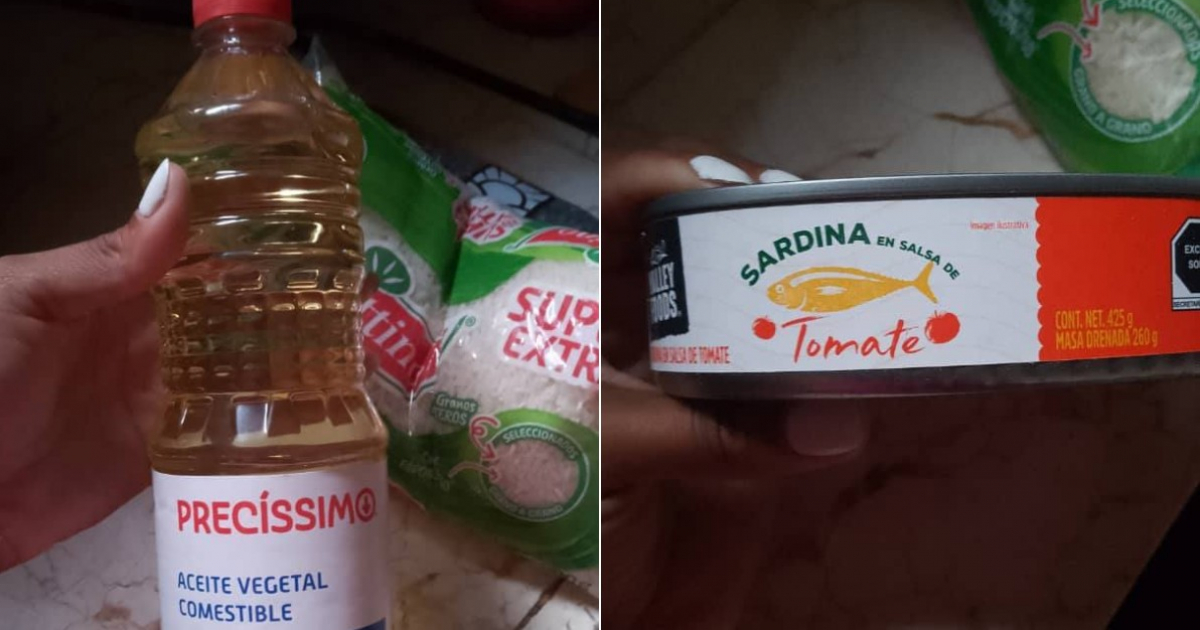
In the municipality of Regla, Havana, a Cuban mother recently revealed the specific contents of a food aid package from Mexico, intended for her underweight child.
She shared that the package included a 900-gram bag of rice, a pack of black beans, an 850-milliliter bottle of oil, a can of sardines in tomato sauce, a can of fruit in syrup, and two packs of Maria cookies.
In the Facebook group "Madres Cubanas Luchadoras," she posted, "For moms who may not know, there is a distribution for underweight children," listing the items she received.
Her post quickly garnered attention from other mothers who were unaware of this specific aid distribution.
Discrepancies and Concerns Over Aid Distribution
Comments soon emerged, highlighting inconsistencies and raising questions about the contents. One user noted the absence of a sardine can and three units of amaranth, a cereal, and asked, "Where are the cleaning supplies and milk that Mexico sent?"
Many participants agreed that they had not received milk or hygiene products, despite official announcements stating they were part of the shipment.
From this individual experience, the discussion expanded to the overall reach of the aid and the criteria for its distribution.
Comments not only pointed out differences in what was delivered but also strongly questioned the scope of the assistance and the criteria for distribution.
Wider Implications of Limited Aid
A woman from Havana shared that although she has an underweight daughter, she was informed that only two beneficiaries were registered in her health area, meaning her daughter would not receive a package.
Most mothers criticized the exclusivity of the distribution, noting that large segments of the population, also affected by shortages, are excluded from the benefit.
Comments such as "It seems other children have no rights, what a lack of respect," "It should be equal, don’t they see the situation we're in," and "All children in Cuba are malnourished, seventh graders look like fourth graders," reflect the widespread discontent.
The reactions also questioned the actual impact of the package. "The question is what does this solve, because with this aid no child will gain weight... maybe one or two days of food, but that's not a solution," another participant remarked.
The Broader Economic Crisis
Meanwhile, a retiree voiced suspicion: "The small private businesses are stocked with canned sweets in syrup, cans of chicken spam, pork, and beef, and milk. Where do you think this supply came from?"
This online exchange occurs amid severe economic challenges, where the rising cost of food, the devaluation of the national currency, and insufficient wages have significantly reduced families’ purchasing power. Basic goods like powdered milk now cost nearly a full month's salary.
In such circumstances, a foreign donation's arrival and its limited distribution highlight the nutritional crisis in the country, underscoring how much children's diets depend on external supplies and selective lists.
The fact that rice, beans, oil, and sardines become newsworthy and a source of public dispute is a sign of the systemic precariousness affecting the nation and the difficulty in ensuring adequate nutrition for children.
The discontent isn't just about what's given but what's missing: effective economic policies that curb inflation, stabilize prices, and enable families to support their children without relying on restrictive lists or sporadic donations.
Understanding Cuba's Food Aid Challenges
What was included in the Mexican food aid package?
The package included a 900-gram bag of rice, a pack of black beans, an 850-milliliter bottle of oil, a can of sardines in tomato sauce, a can of fruit in syrup, and two packs of Maria cookies.
Why did some mothers not receive milk or hygiene products?
Despite official announcements, many recipients reported not receiving milk or hygiene products, raising questions about distribution discrepancies and criteria.
How has the economic crisis in Cuba affected families’ access to food?
The economic crisis, characterized by rising food costs, currency devaluation, and insufficient wages, has sharply reduced purchasing power, making it difficult for families to afford basic necessities.