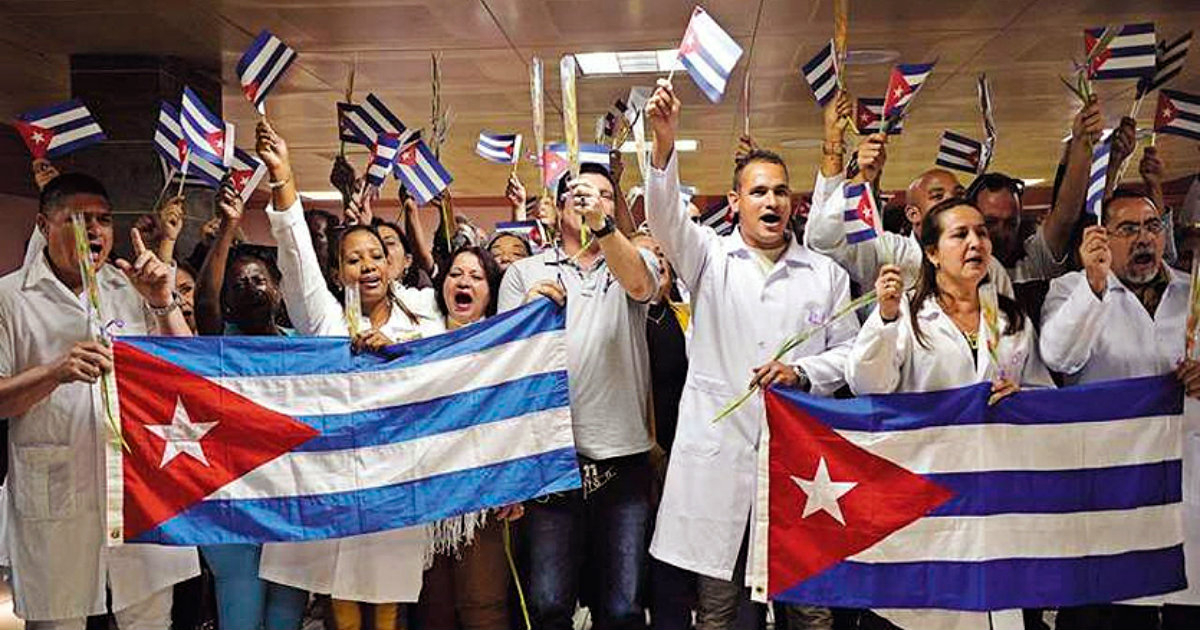
Cuban medical missions, often showcased by the government as a hallmark of international cooperation, are now under intense scrutiny. Professionals involved in these missions have come forward with allegations of labor exploitation, income retention, and restrictions on their fundamental rights.
A report by Deutsche Welle (DW) features statements from Javier Larrondo, president of the Madrid-based organization Prisoners Defenders (PD). Larrondo claims that the Cuban government withholds approximately 85% of the salaries paid by host countries for each doctor or nurse.
“Cuba generates around five to six billion dollars annually from these medical missions,” Larrondo stated.
His analysis of agreements and contracts reveals that foreign governments often pay thousands of dollars per professional, yet the workers receive only a small portion. For instance, during the pandemic, Mexico paid $3,750 monthly per doctor, but the Cuban professionals received about $200.
In Qatar, the Cuban state reportedly charges around $13,000 per specialist, while paying them a maximum of $1,200. Similarly, in Italy, Cuban doctors earned 1,200 euros, despite the European country paying 4,700 euros for each professional.
PD has collected over 1,400 testimonies from mission participants in various countries. As a result, eliminating this source of income for the regime has become a goal for the current United States administration.
According to Larrondo, testimonies describe exhausting workdays, political pressure, constant surveillance, and restrictions on free association. There are also reports of passport retention and prohibitions on carrying academic credentials, making it difficult to leave the program.
“The laws are designed to intimidate and suppress the doctors, who risk losing their families,” Larrondo warned.
The organization asserts that deserters may face up to eight years of being unable to return to Cuba, resulting in prolonged separation from children and relatives.
The DW report includes the account of Arisleydi López, a nursing graduate with over 30 years of experience, who participated in missions in Mexico and Venezuela. “I thought I would earn a decent salary and improve my daughters’ lives,” she recounted.
López criticized the contracts for not clearly defining the actual salary and called the process “a total fraud.” She also highlighted grueling working conditions and noted that some professionals lacked adequate training.
“They are exploiting and enslaving healthcare personnel,” she stated. Leaving the mission meant losing the opportunity to return to Cuba for years.
Now residing in the United States, she remains separated from one of her daughters still in Cuba: “Everything I had to lose, I lost. If I disagree with being enslaved, it means eight years of separation from my family,” she declared.
The allegations have reached the international stage, with United Nations rapporteurs voicing concerns over potential labor violations, and the European Parliament issuing critical resolutions against the system.
Despite these criticisms, the Cuban government defends the missions as a legitimate income source that supports the national healthcare system and the country's economy.
Amid the severe healthcare crisis in Cuba, the debate over the medical brigades intensifies. While authorities present them as a symbol of solidarity and health diplomacy, testimonies collected by Prisoners Defenders depict a model that, according to critics, prioritizes foreign currency earnings over the rights and welfare of the healthcare professionals themselves.
Insights into Cuban Medical Missions and Their Impact
What percentage of their salary do Cuban medical professionals actually receive during missions?
Cuban medical professionals reportedly receive only a small fraction of their salaries, with the government retaining about 85% of the payments made by host countries.
How do Cuban medical missions impact the families of the professionals involved?
Professionals who leave the missions may face up to eight years of being unable to return to Cuba, resulting in extended separations from their families.
What are the main criticisms of Cuban medical missions?
Critics argue that Cuban medical missions exploit healthcare workers by underpaying them, imposing harsh working conditions, and restricting their rights, all while prioritizing government revenue.