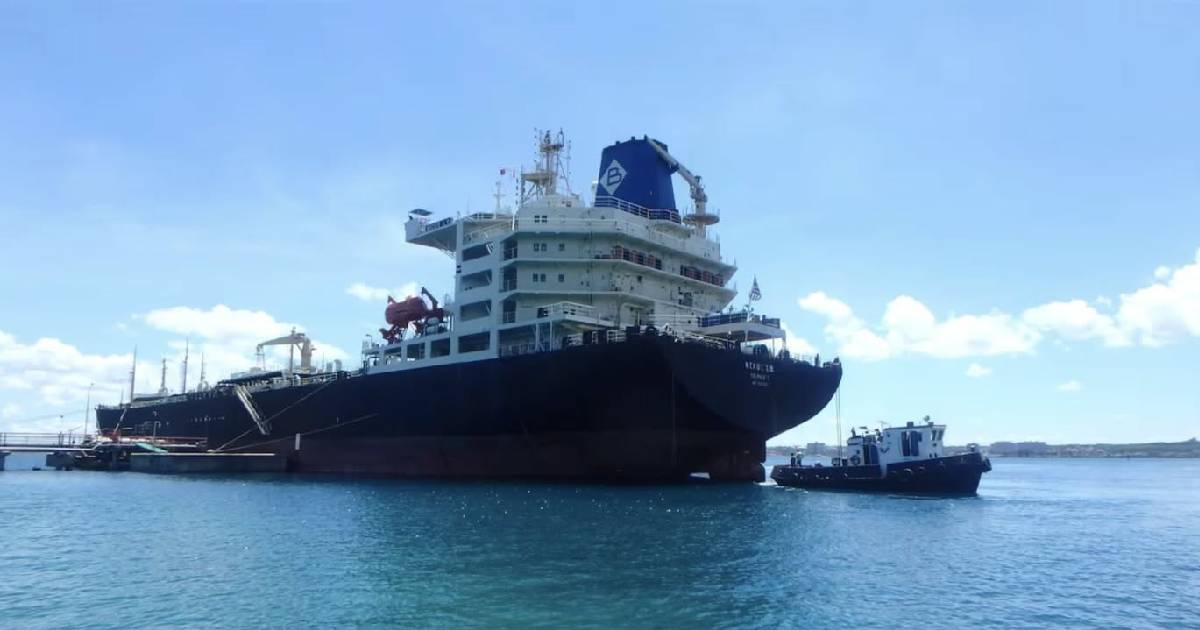
On Thursday, members of Cuba's constrained private sector confirmed the arrival of imported fuel in the country. This development comes amidst the ongoing oil embargo imposed by the United States, which has disrupted critical supplies and exacerbated the severe energy crisis plaguing the Caribbean nation.
In discussions with the EFE agency, several small business owners, who requested anonymity, reported that shipments of imported fuel are arriving via cargo ships. However, these deliveries are in minimal quantities, insufficient to alleviate the energy suffocation caused by Washington's policies on the national economy.
This private sector initiative partially aligns with a statement made last November by Oscar Pérez-Oliva, the Minister of Foreign Trade and Foreign Investment. He indicated that "foreign and joint ventures would be allowed to import their own fuel when necessary."
Until this point, the Cuban government held an absolute monopoly on the importation and distribution of oil and fuels, controlling both the supply chain and retail sales of derivatives within the island.
According to the consulted entrepreneurs, the fuel is imported in standardized containers aboard merchant vessels and may originate from the United States or other regional countries. However, the logistics process—which involves safety certifications and storage in authorized facilities—is typically slow.
Cuban authorities have emphasized that the imported fuel is strictly for business self-consumption and its resale is prohibited, despite the extreme pressure faced by the country due to supply shortages.
This announcement comes at a time of unprecedented energy scarcity for Cuba, which heavily relies on oil imports to generate electricity and support key economic sectors.
The cessation of shipments from Venezuela since January and the threat of tariffs on countries supplying crude oil to the island have deepened a crisis already affecting transportation, tourism, production, and basic services throughout the territory.
While the introduction of imported fuel into the private sector offers partial relief, analysts agree that these quantities are not enough to reverse the overall energy situation. Cuba continues to face prolonged power outages, transportation shortages, and challenges in maintaining essential services nationwide.
Understanding Cuba's Current Energy Crisis
Why is Cuba experiencing an energy crisis?
Cuba's energy crisis is largely due to the U.S. oil embargo, which has cut off key supplies, and the halt of crude oil shipments from Venezuela, further limiting resources needed for electricity and essential services.
What measures has Cuba taken to alleviate the fuel shortage?
Cuba has allowed private entities to import their own fuel, although in limited quantities, to ease the shortage. This marks a shift from the previous state-controlled monopoly on fuel imports.
What are the implications of the fuel shortage on Cuba's economy?
The fuel shortage has led to disruptions in transportation, tourism, and basic services, impacting the broader economy and contributing to prolonged power outages across the nation.