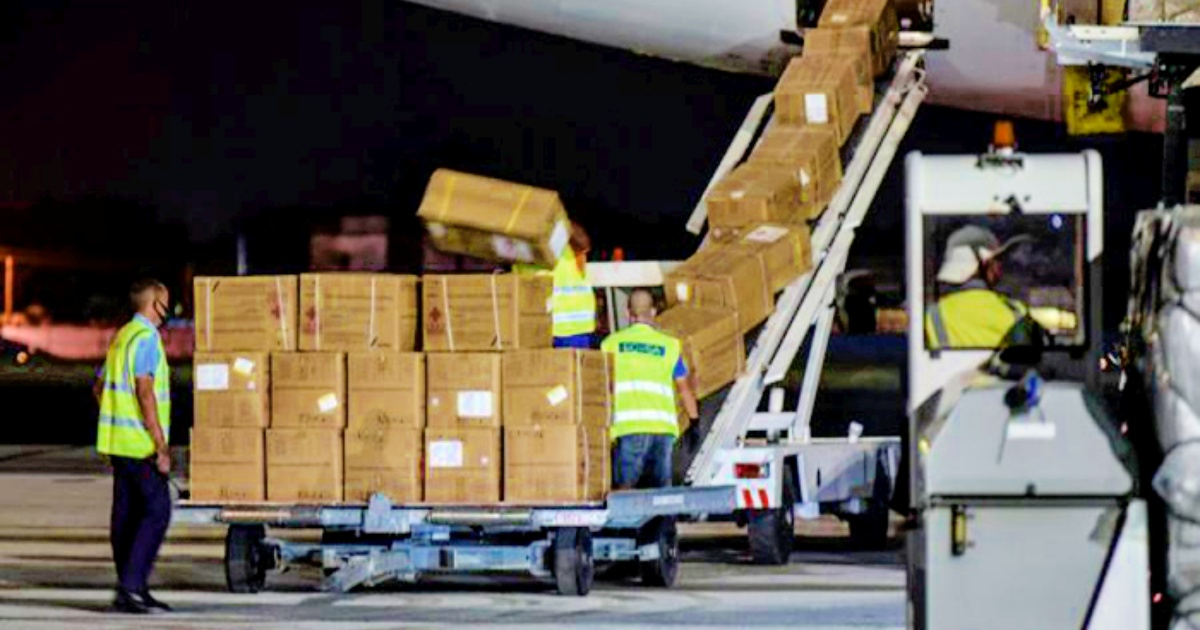
Amidst a prolonged economic crisis, the Cuban government has decided to indefinitely extend the exemption from Customs Duty for the importation of raw materials used in production processes. This move benefits both state-owned and private enterprises.
This decision is formalized in Resolution 21/2026 from the Ministry of Finance and Prices (MFP), signed on February 3 and published on February 17 in the Official Gazette No. 20.
The regulation states: "Extend the exemption from Customs Duty, granted by Resolution 329, issued by the undersigned on November 11, 2024, until economic conditions necessitate otherwise."
The measure is retroactive, applicable to transactions from January 1, 2026, as specified by the Gazette.
More Than 230 Tariff Subheadings Benefited
According to the Cuban News Agency (ACN), the exemption covers "more than 230 tariff subheadings" primarily linked to the agricultural sector: feeds, fertilizers, pesticides, veterinary medicines, seeds, and agricultural tools and inputs.
The Ministry of Finance and Prices detailed that in 2025, 110 entities benefited from this fiscal policy.
Among the most imported products under this exemption were sugar, animal feed, wheat flour, edible fats, and beans. Some of these items are among "the most traded by Non-State Management Forms," as recognized by the official agency.
The measure applies to "all economic actors, both state and non-state," including state companies, private micro, small and medium enterprises (MSMEs), cooperatives, and self-employed workers who meet the established requirements for importing raw materials or production inputs.
Cost Reduction Amidst Crisis
The MFP stated that the goal of the extension is to reduce import costs and, consequently, production costs for domestic goods, including those produced through partnerships between state entities and the non-state sector.
The Ministry asserts that this "may contribute to containing the prices of the country's productions."
Additionally, it is confirmed that the benefit "is granted automatically," which—according to the official version—streamlines the import process by eliminating the need for additional procedures to request the exemption.
An Exemption with No Expiration Date
The original measure, contained in Resolution 329 from November 11, 2024, exempted importers of production inputs from Customs Duty until December 31, 2025.
With the new resolution, the benefit remains without a set expiration date, contingent upon the evolution of the economic situation.
In the legal grounds published in the Gazette, the Ministry recalls that the Tax System Law 113, dated July 23, 2012, states in Article 284: "The Customs Duty is collected through customs tariffs."
However, the legislation empowers the minister to ease these burdens. According to Resolution 21/2026: "The Final Disposition Second, points a) and f), empowers the Minister of Finance and Prices, when economic and social circumstances so advise, to grant exemptions, total, partial, permanent or temporary bonuses, as well as to forgive administratively determined tax debts (...) and to modify the forms and procedures for calculating, paying, and settling taxes."
The official text further argues that: "It is necessary to maintain the described treatment until economic conditions demand it, which leads to extending the aforementioned Resolution 329 of 2024."
Continuing a Policy of Tariff Flexibility
This decision comes barely a month after authorities announced a new extension of the tariff exemption for non-commercial imports of food, medicines, hygiene products, and medical supplies, in effect since 2021.
Both measures underscore the increasing reliance on imports to sustain both basic consumption and internal production processes, in a context marked by foreign currency shortages, a decline in national production, and structural economic difficulties in Cuba.
While the government presents the indefinite extension of the exemption as a mechanism to stimulate production and alleviate costs, the official formulation—"until economic conditions demand it"—leaves open the question of the real duration of the crisis that necessitates maintaining these exceptional measures as a permanent policy.
Frequently Asked Questions about Cuba's Tariff Exemption Policy
What is the purpose of extending the tariff exemption in Cuba?
The extension aims to reduce import and production costs for domestic goods, supporting both state-owned and private sectors amidst economic challenges.
Who benefits from the tariff exemption on raw materials in Cuba?
The exemption benefits all economic actors, including state companies, private MSMEs, cooperatives, and self-employed workers who meet import requirements.
How does the tariff exemption impact Cuba's economy?
The exemption can help stabilize production costs and prices of goods, potentially easing the economic strain on the country's production capabilities.