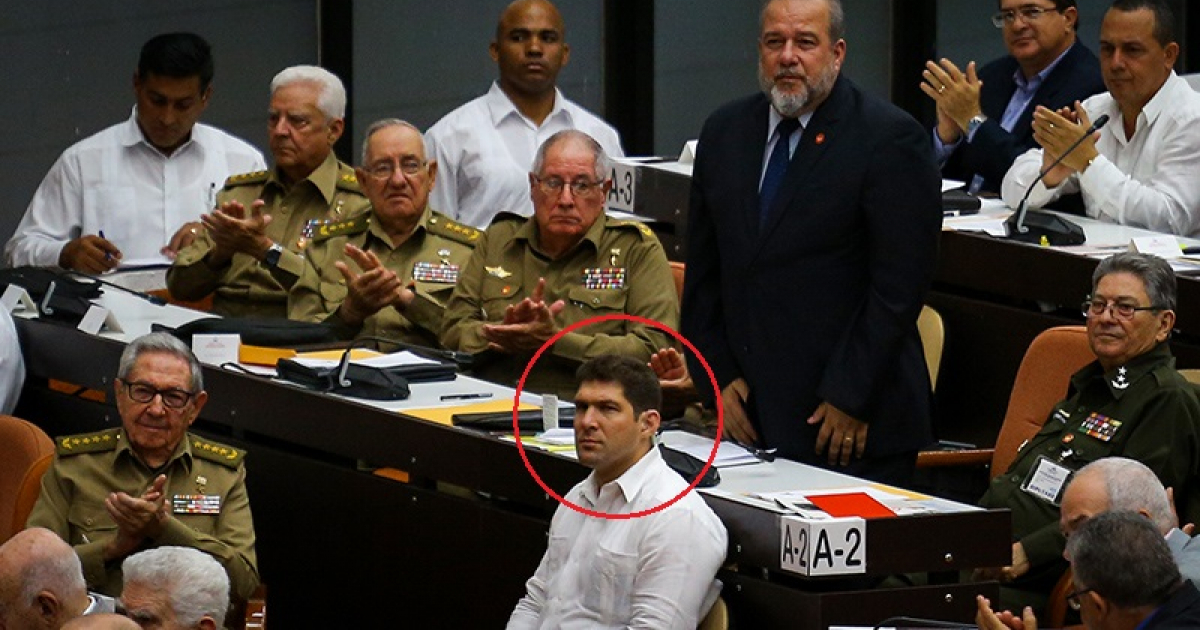
This Wednesday, reports surfaced regarding ongoing negotiations for a transition in Cuba, with discussions reportedly involving Raúl Guillermo Rodríguez Castro, known as "El Cangrejo," and Secretary of State Marco Rubio.
No longer merely the grandson of Raúl Castro, El Cangrejo has emerged as a visible figure in Cuba's political landscape. His reputation in both Havana and Miami has steadily grown, fueled by sporadic scandals that have attracted attention on social media and from the independent press.
Born into the upper echelons of Cuban power, Raúl Guillermo Rodríguez Castro is the son of Débora Castro Espín and the late General Luis Alberto Rodríguez López-Calleja, who was the former head of GAESA, the military conglomerate controlling a significant portion of the Cuban economy.
At 41, he holds the rank of lieutenant colonel in the Ministry of the Interior and serves as the head of the General Directorate of Personal Security. Considered the right-hand man of Raúl Castro, he oversees his grandfather’s security and direct access.
Notorious Incidents That Boosted His Fame
Several incidents have marked his notoriety in Havana and Miami:
Diplomatic Trips to the U.S. (2012-2016): He frequently traveled to New York under the guise of the Cuban mission to the United Nations using a diplomatic passport. While ordinary Cubans faced travel restrictions, Raúl Castro's grandson enjoyed official privileges.
Party with Gente de Zona in Varadero (2017): Videos captured him dancing with the duo Gente de Zona and enjoying boat rides with the Gurriel brothers, illustrating his status as a high-ranking State Security officer in Cuba, far from an average citizen.
Incident in Holguín (2022): A young mother, Yudelky Peña, was severely injured in Mayarí, with witnesses claiming that Raúl Guillermo Rodríguez Castro was driving the vehicle. The victim was left with permanent injuries, yet no trial occurred, and the case was hushed up.
Private Flights to Panama (2024-2025): He reportedly took numerous flights on private jets like Learjet 55 and Dassault Falcon 900EX, coinciding with business figures linked to Cuban and Venezuelan interests.
Luxury Purchases in Panama (2025): He was observed engaging in million-dollar shopping sprees in Chiriquí, with alleged real estate investments in Coclé.
Ties with Jorge Javier Rodríguez Cabrera (2025): He appeared in luxury yacht photos with the businessman arrested by ICE in the U.S., accused of owning Gran Azul LLC, a company focused on shipping, logistics, and tourism directed at Cuba.
The Duality of Cuban Life
Beyond isolated incidents, his lifestyle starkly contrasts with the Cuban reality. While the nation endures blackouts and shortages, El Cangrejo luxuriates in yachts, travels, and access to foreign currency. He seamlessly mingles with entrepreneurs, artists, and financial operators, all under the shadow of GAESA and the Castro name's protection.
In 2026, his profile gained further prominence. At the funeral of military officials killed in Venezuela, the nonagenarian General ceded the spotlight to his grandson. Raúl Guillermo stood beside Miguel Díaz-Canel, sending a clear political message as he donned an olive green uniform with a dark belt and visible pistol, guarding and supporting his grandfather.
Understanding Raúl Guillermo Rodríguez Castro's Influence
Who is Raúl Guillermo Rodríguez Castro?
Raúl Guillermo Rodríguez Castro, known as "El Cangrejo," is the grandson of Raúl Castro and a significant figure in Cuba's political sphere. He serves as a lieutenant colonel in the Ministry of the Interior and is the head of the General Directorate of Personal Security.
What are some controversies associated with El Cangrejo?
El Cangrejo's controversies include diplomatic trips to the U.S., a notorious party with Gente de Zona, a vehicle incident in Holguín, private flights and luxury purchases in Panama, and ties with businessman Jorge Javier Rodríguez Cabrera.
How does El Cangrejo's lifestyle contrast with life in Cuba?
While Cuba faces blackouts and shortages, El Cangrejo enjoys luxury yachts, international travel, and access to foreign currency, highlighting the disparity between his life and the everyday struggles of Cuban citizens.