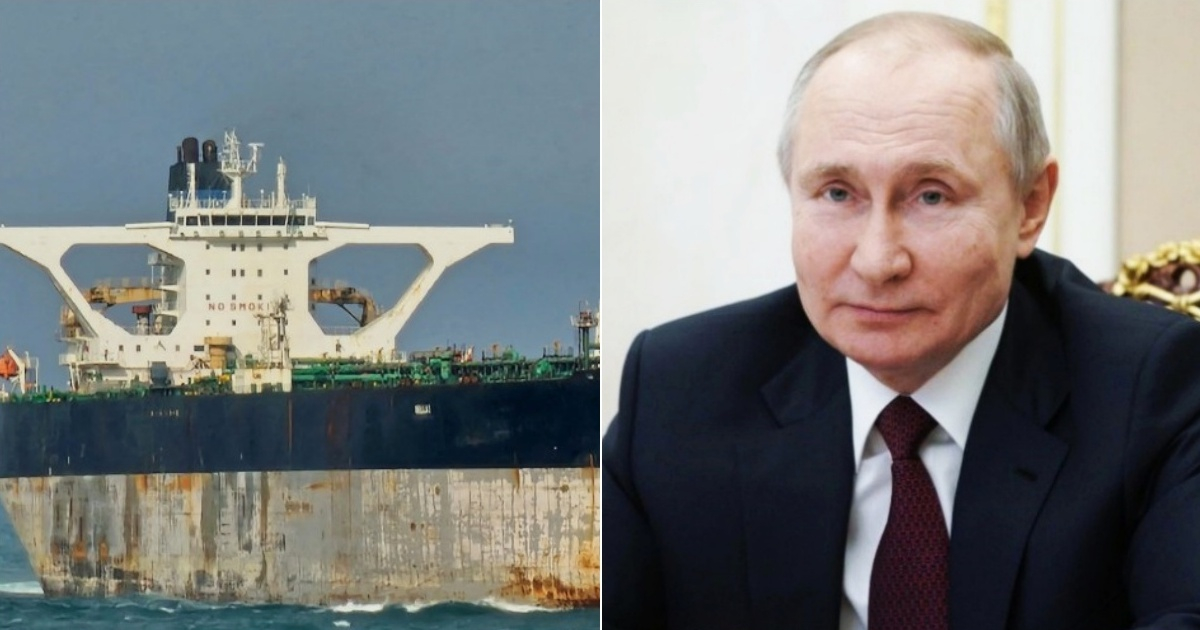
This Tuesday, the Kremlin intensified its rhetoric against several nations, accusing them of enforcing a "naval blockade" against Russia and likening their actions to those of "Western buccaneers" on the high seas.
Nikolai Patrushev, an advisor to President Vladimir Putin and chairman of Russia's Maritime Board, issued the warning, stating that Moscow is prepared to deploy its Navy along strategic routes to safeguard its foreign trade.
“If we don't respond decisively, the British, French, and even the Baltic states will soon become so brazen that they will attempt to entirely block our country's access to the seas, at least in the Atlantic basin,” Patrushev declared in an interview with the Russian outlet Argumenty i Fakty.
He further suggested that in major maritime directions, including regions distant from Russia, there should be a continuous presence of formidable forces ready to temper the enthusiasm of Western corsairs.
Accusations of "Piracy" and Military Response Threats
Patrushev described the actions against Russia-linked vessels as "pirate-like attacks" and claimed that the West aims to "cripple" one of Russia's key economic sectors: foreign trade.
“Based on available information, these actions will intensify, and attacks on our ships and cargo will become more frequent,” he cautioned.
In this context, he emphasized that the Navy is "the best guarantee of navigation security" and advocated for increasing the Russian naval presence along strategic routes, even far from its bases.
The Kremlin advisor alleged that NATO is forming a multinational force with an offensive focus in the Baltic and mentioned alleged plans to "block the Kaliningrad region, seize merchant ships, and sabotage underwater communications."
“Any attempt to impose a naval blockade on our country is completely illegal under international law, and the concept of a 'shadow fleet,' which EU representatives constantly invoke, is a legal fiction,” he asserted.
In a direct message to Europe, he added, “If a peaceful resolution to this situation fails, the Navy will break and eliminate the blockade.”
He issued a veiled warning: “Let us not forget that many ships sail under European flags. We might also be interested in what they are transporting and where they are headed.”
The Sole Russian Ship Seized by the U.S.
The aggressive rhetoric contrasts with the known facts, as the only Russian-flagged ship publicly seized in recent months was the Marinera tanker, confiscated by the United States after several days of pursuit in the Atlantic.
In early January, U.S. forces began tracking the Bella-1, a vessel used for transporting hydrocarbons linked to Russia, Iran, and Venezuela.
Two weeks later, it was detained, even though Moscow sent an escort and even approached a submarine for its protection.
The ship was captured empty, and part of its crew was detained. Subsequently, an agreement between Washington and Moscow facilitated the release of two Russian workers.
To date, no Russian-flagged ship has been reported seized by European countries, although the European Union has intensified sanctions against what it calls the Russian "shadow fleet," used to circumvent oil export restrictions.
BRICS and Global Naval Expansion
In his interview, Patrushev advocated for strengthening the Russian Navy through 2050 and confirmed that an updated shipbuilding program is being finalized for presentation to the president.
“Russia needs a balanced navy, capable of facing all pressing challenges and meeting the demands of the age, especially technological ones,” he stated, highlighting the integration of unmanned ships and cutting-edge technologies.
He also supported giving the BRICS group a strategic maritime dimension.
He recalled that in January, the naval exercise “Peace Will 2026” took place in the South Atlantic, involving Russia, China, Iran, the United Arab Emirates, and South Africa, along with maneuvers in the Strait of Hormuz.
“It's time to give them a comprehensive strategic maritime dimension,” he noted, while emphasizing that the fleets of these countries work to protect trade routes which, he claimed, have become vulnerable “even to Western piracy.”
A Geopolitical Message
Patrushev's statements come amid growing tensions between Russia and the European Union over energy sanctions and crude export controls.
Moscow has repeatedly accused Brussels of using the "shadow fleet" concept as a political tool to justify inspections and restrictions.
At the same time, the Kremlin seeks to project an image of a naval power capable of resisting any maritime isolation attempts.
“In the hope of peace, one must not slacken in military matters,” quoted Patrushev, evoking Peter the Great, on the eve of Defender of the Fatherland Day.
The message is clear: if Europe moves towards an effective blockade, Russia will respond with military presence.
However, as of now, the only effective seizure of a Russian vessel has been carried out by the United States, not by the European countries that Moscow labels as "Western pirates."
Understanding Russia's Naval Strategies and Responses
What prompted Russia's recent naval warnings?
The Kremlin has accused several countries of enforcing a "naval blockade" against Russia, likening their actions to those of "Western buccaneers," which prompted the warnings.
How has Russia responded to alleged Western piracy?
Russia plans to increase its naval presence in strategic maritime routes and has warned it will deploy its Navy to protect its foreign trade from what it calls "Western piracy."
Has any Russian ship been seized by European countries?
To date, no Russian-flagged ship has been reported seized by European countries, though the EU has imposed sanctions against the so-called Russian "shadow fleet."
What is the significance of the BRICS naval strategy?
The BRICS naval strategy aims to strengthen maritime cooperation among member countries, protecting trade routes and addressing vulnerabilities posed by alleged Western piracy.