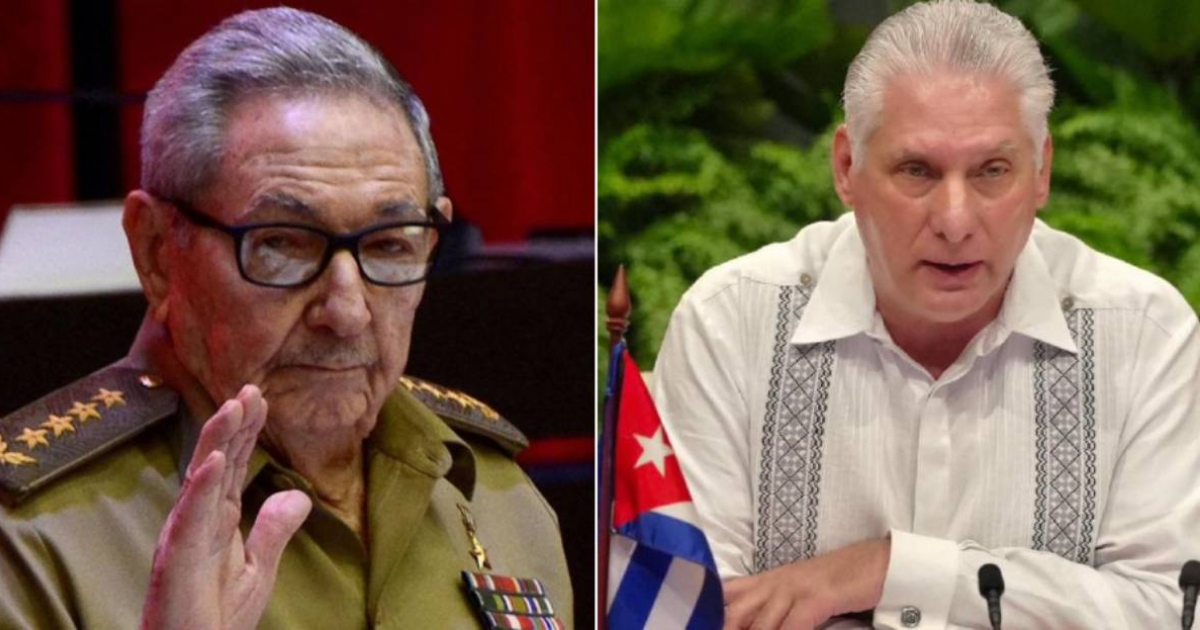
The United States government is directing its efforts toward engaging with the genuine power base in Cuba, sidelining the country's titular leader, Miguel Díaz-Canel, in its approach to the island's transition.
A report from Axios has disclosed that discreet communications are ongoing between Secretary of State Marco Rubio and the associates of Raúl Castro, who is 94 years old.
According to the report, Rubio has been in discussions with Raúl Guillermo Rodríguez Castro, also known as "El Cangrejo," who is Raúl Castro's grandson and a close confidant. These talks are taking place amidst increasing pressure from Washington on the Cuban regime.
The sources referenced indicate that these dialogues are not being routed through the official channels of the Havana government.
The absence of contact with Díaz-Canel reinforces the belief in Washington that the true power on the island remains concentrated with Raúl Castro and his inner circle, including sectors connected to the military-business conglomerate GAESA.
Political Pressure and Potential Shifts in Cuba
The report highlights that these discussions are occurring as Cuba faces a severe economic and energy crisis, which has been exacerbated by the January capture of Venezuelan leader Nicolás Maduro, who was a strategic ally and major oil supplier for Cuba.
In this context, the administration of President Donald Trump is assessing various scenarios for the Cuban situation.
One of the sources mentioned that the stated aim of U.S. policy is political change in Cuba should reforms, such as the release of political prisoners, the establishment of a free press, and the conduct of elections, not materialize.
Washington might consider transitional strategies that do not necessarily involve a complete break with all current system players, using the process unfolding in Venezuela as a precedent.
The State Department has neither confirmed nor denied these contacts but refrained from commenting on details. Meanwhile, the Cuban government has denied the existence of high-level dialogue with the United States but has expressed willingness to engage "as long as it is on equal terms."
In the meantime, the diplomatic exclusion of Díaz-Canel sends a clear political message: for Washington, the key interlocutor is not in the Palace of the Revolution but within the historical Castro circle.
FAQs on U.S.-Cuba Relations
Why is the U.S. government bypassing Díaz-Canel in its dealings with Cuba?
The United States perceives that the real power in Cuba remains with Raúl Castro and his close circle, rather than with the formal leader, Miguel Díaz-Canel.
What are the key issues influencing U.S.-Cuba relations currently?
The main issues include Cuba's economic and energy crises, the capture of Venezuelan leader Nicolás Maduro, and the U.S. demand for political reforms in Cuba.
What is the U.S. stance on political changes in Cuba?
The U.S. aims for political change in Cuba, advocating for reforms such as the release of political prisoners, a free press, and elections.