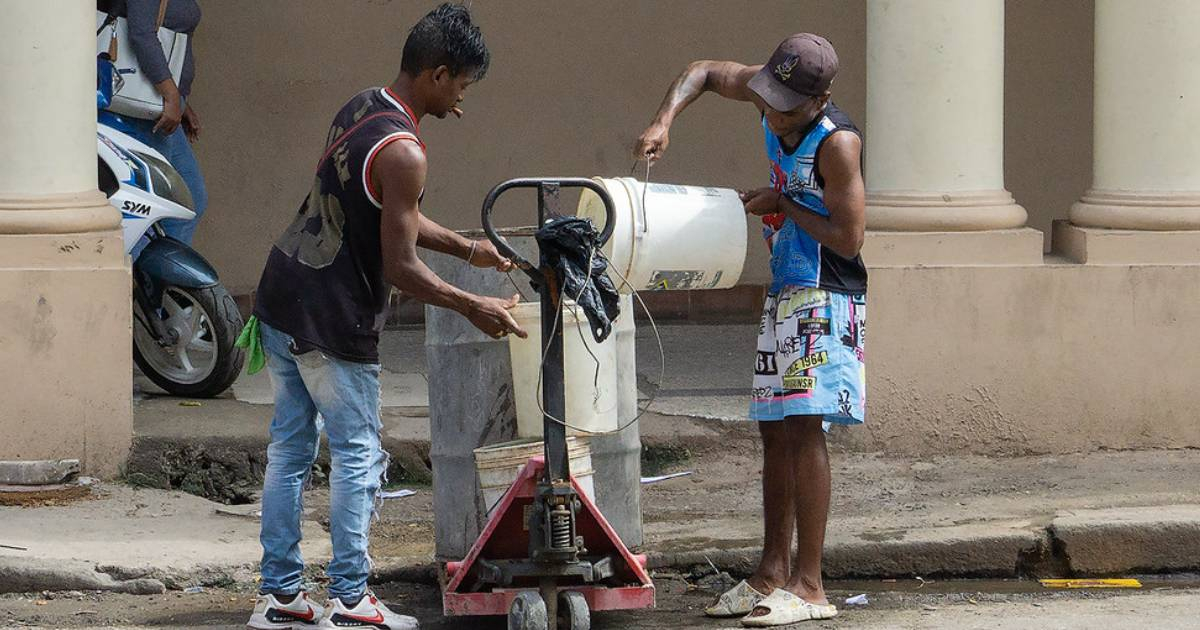
A Facebook post originating from Holguín has resonated deeply with many Cubans both on the island and abroad. This seemingly extraordinary message highlights the stark reality of the worsening water shortage affecting homes across Cuba.
“I'm buying a little water to bathe my grandma and my child,” wrote Migdalia Elosegui Parra in the group Revolico Motelera Antilla. This simple yet profound message quickly went viral, evoking widespread reactions of pain, outrage, and empathy.
The succinct plea paints a disturbing picture, unimaginable in any modern society, where a mother is forced to purchase water just to ensure basic hygiene for a child and an elderly relative.
The response was immediate. “Wow, what kind of life is this?” one user exclaimed. Others expressed their sorrow and frustration: “This is heartbreaking,” “Dear God, what sorrow,” “What sadness,” “How long will this go on?”
However, the post also sparked a wave of generosity, as numerous individuals offered assistance without expecting anything in return. “Come to my place, I have some water for you,” one person offered. “I can share a bit of water,” another user stated, acknowledging their own struggles with scarcity but still willing to help. “My brother has plenty of water, he’ll give you some,” assured a Cuban woman.
Some even offered whatever little they had: “If you can, send someone to pick up a 20-liter gallon… I’m so sorry,” someone commented. Others requested her address to deliver the water for free. “Water shouldn’t be sold; it should be given to those in need,” insisted one user.
This outpouring of support culminated in a heartfelt response from Migdalia, who publicly expressed her gratitude: “I want to thank José for the help with water and everyone else who offered what they had. A thousand thanks to all.”
Yet, this temporary relief raises an uncomfortable question: how is it possible that people in Cuba are having to "buy a little water" just to bathe?
The post also sparked a political debate in the comments. Some blamed the system, openly criticizing the “dictatorship,” while others cited the “blockade” as an excuse. There were those who doubted the message’s authenticity, unable to fathom the severity of the situation.
“I don’t believe this post is real... This can’t be happening in Cuba... What more must the Cuban people endure?” a skeptic remarked.
Among those who reacted was Cuban lawyer Manuel Viera, known online as “Manuel Viera Porelcambio,” who shared the post with a powerful comment: “I’ve been in those shoes many times and know what it feels like to be deprived of a basic life service like water, which is a right for everyone,” he wrote.
But the story goes deeper.
Another post revealed that Migdalia had been sounding the alarm days earlier. On February 11, she issued an even more urgent plea: “Buying oil to bring water to 4 vulnerable families. Extremely urgent help needed, please.”
In other words: not only is water being purchased, but so is the fuel required to retrieve it.
In Cuba, scarcity has turned essentials into luxuries. Having water at home, taking a shower, doing laundry, cooking, or caring for a sick elderly person has become a daily struggle—often unspoken—that remains absent from official narratives.
Understanding Cuba's Water Crisis
What sparked the viral reaction to the Facebook post from Holguín?
The post highlighted the desperate situation of a mother seeking to purchase water for basic hygiene, showcasing the severe water shortages in Cuba.
How did the public react to Migdalia's plea?
The public responded with both outrage at the situation and solidarity, offering Migdalia assistance and sharing what little they had.
What larger issues does this incident highlight about life in Cuba?
The incident underscores the critical scarcity of basic resources in Cuba, turning everyday necessities into luxuries and prompting political debate.