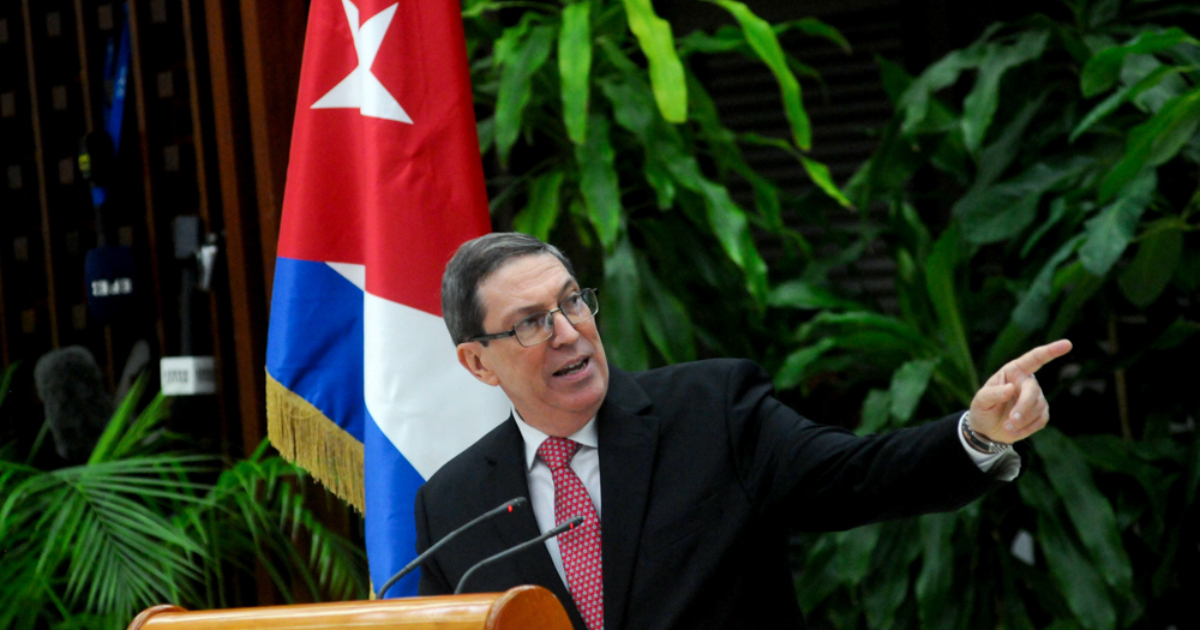
Cuba's Foreign Minister, Bruno Rodríguez, has openly criticized the United States' tariff policy, questioning the extent of measures taken against countries exporting fuel to the island.
In a post on his X account, Rodríguez denounced the U.S. government's decision, announced on January 29, to impose punitive tariffs on nations selling oil to Cuba. He described this policy as being founded on the "myth of a supposed national security threat."
The minister argued that this measure presents "a significant challenge to all states," labeling it a restriction based on "ridiculous pretexts" of each country's sovereign right to decide whether and where to export their products.
“Who can determine the limits of this authority that the U.S. now claims with its aggression towards Cuba?” Rodríguez questioned. He also speculated on whether Washington might, in the future, impose tariffs on countries importing soybeans, corn, graphite, automobiles, airplanes, or other goods from markets competing with the U.S.
His remarks come amid increasing pressure on fuel supplies to Cuba, as the island faces a severe energy crisis characterized by prolonged blackouts and a shortage of basic resources.
Recently, the foreign minister stated that the country is experiencing an exceptionally difficult period, which will require greater efforts from its people.
“The situation is tough and will demand considerable sacrifice,” he wrote in another message on X, again holding the United States accountable for Cuba's deteriorating economic and energy conditions.
Impact of U.S. Tariff Policies on Cuba
What are the U.S. tariffs targeting in relation to Cuba?
The U.S. tariffs are targeting countries that export oil to Cuba, imposing punitive measures as a response to what the U.S. claims as a threat to national security.
How does Cuba's government view these tariffs?
Cuba's government, through its Foreign Minister Bruno Rodríguez, views these tariffs as a significant challenge and an unjustified limitation on the sovereignty of nations to conduct their trade.