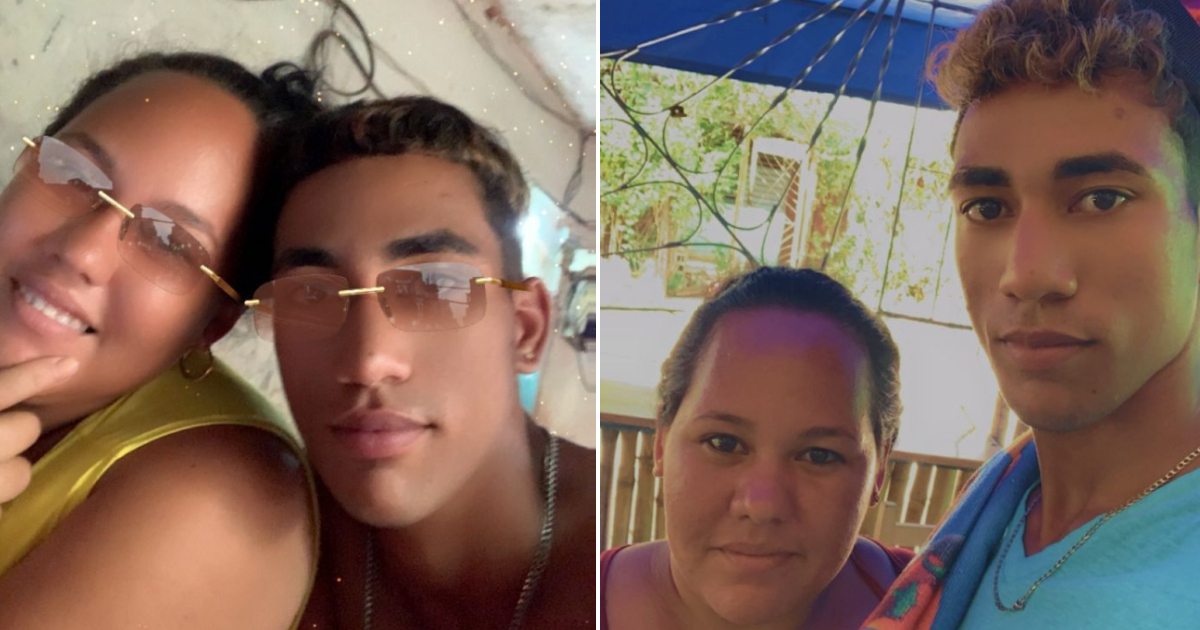
A 19-year-old Cuban was slapped with a 7,000 Cuban pesos (CUP) fine in Río Cauto, Granma province, for his refusal to enroll in the Mandatory Military Service (SMO), as per a report that surfaced on social media.
The incident became public through the Facebook account of Alexander Verdecia Rodríguez, where his wife, Cuban dissident Eliannis Villavicencio Jorge, shared the report. "I am making this declaration to God and the world. Just a while ago, a representative from the Mandatory Military Service came to my house to hand my brother, Enmanuel Espinosa Jorge, a 7,000 pesos fine," she announced in her post.
In her message, she detailed that the young man "is 19 years old; neither he, our mother, nor I want him to join the Military Service out of fear that something might happen to him." She further added, "My brother never wants to wear a uniform of repression. Although he is not an opposer, he resists being used by the Regime. No to Mandatory Military Service."
Villavicencio also recounted an episode from 2016, when her brother was allegedly taken to a shelter without parental care following her arrest. "They lied to me, the child was missing for more than 48 hours," she wrote.
The images accompanying the report display a "Notice of Fines" dated February 16, 2026, detailing the 7,000 CUP penalty, as well as an official summons from the Military Committee, indicating that the young man was required to report according to National Defense Law No. 75.
Eliannis Villavicencio Jorge is married to Alexander Verdecia Rodríguez, coordinator of the Patriotic Union of Cuba (Unpacu) in Río Cauto, who has been imprisoned since February 2025. The prosecution has demanded a 10-year sentence for her husband due to his critical posts on social media.
Following the case's revelation on the Facebook page of CiberCuba News, the post garnered numerous comments. Many users expressed support for the young man's and his family's decision. Comments included phrases such as: "I gladly pay the 7,000, my son won’t go to military service," "Better to pay the fine than to attend," "Well done, congratulations, families must stand firm with their youth," "I prefer to pay the fine than undergo the service," and "No to military service."
Other comments cautioned about potential legal repercussions or reminded that the service is mandatory under current regulations. Some pointed out that non-compliance could result in legal proceedings if the summons is ignored. In October 2024, Decree 103/2024 was ratified and published in the Official Gazette, updating penalties related to the Mandatory Military Service, stipulating fines of up to 7,000 CUP for those who fail to appear before the Military Committee when summoned.
Mounting Opposition to Military Service in Cuba
For years, there has been a growing opposition to Mandatory Military Service within and outside of Cuba. Campaigns like #NoToMandatoryMilitaryService have gained momentum following reports of recruit deaths, explosions at military facilities, and persistent allegations of abuse and lack of transparency within military units. In recent weeks, there have been accounts of young people being transferred to Havana without clear information provided to their families; a case of a mother who reported that the officer who shot her son inside a military unit remains free; and fresh summonses accompanied by warnings about possible legal consequences, as per testimonies shared on social media.
These are compounded by complaints from families who claim not to have received official explanations after severe incidents, such as the case of a mother demanding justice for her son's death in a military unit, Antonio Rassi Roque.
These denunciations do not appear to be isolated incidents, but rather paint a picture of growing distrust and fear surrounding the compulsory recruitment. In this context, the fine imposed on the young man from Río Cauto is not seen as an isolated event but as part of a policy that continues to raise questions about the real assurances for young people and their families.
Beyond the amount of the fine—7,000 CUP, a significant sum in the Cuban wage context—the case reignites the debate over the coercive nature of Mandatory Military Service and the right of young people to decide their future without pressure or financial repercussions. In a country marked by institutional opacity and repeated reports of abuse within military units, each new penalty reinforces the perception that the State prioritizes discipline and control over individual rights and family safety.
Frequently Asked Questions about Cuban Military Service
What are the penalties for refusing Mandatory Military Service in Cuba?
Refusing Mandatory Military Service in Cuba can result in fines up to 7,000 Cuban pesos, as stipulated in Decree 103/2024. Non-compliance could potentially lead to legal proceedings.
Why do some Cubans oppose Mandatory Military Service?
Opposition to Mandatory Military Service in Cuba stems from concerns over personal safety, reports of abuse, lack of transparency within military units, and the coercive nature of the service.
What are the social media reactions to the fine imposed on Enmanuel Espinosa Jorge?
The social media reactions have been largely supportive of Enmanuel Espinosa Jorge and his family, with many users praising their decision to refuse military service despite the fine.