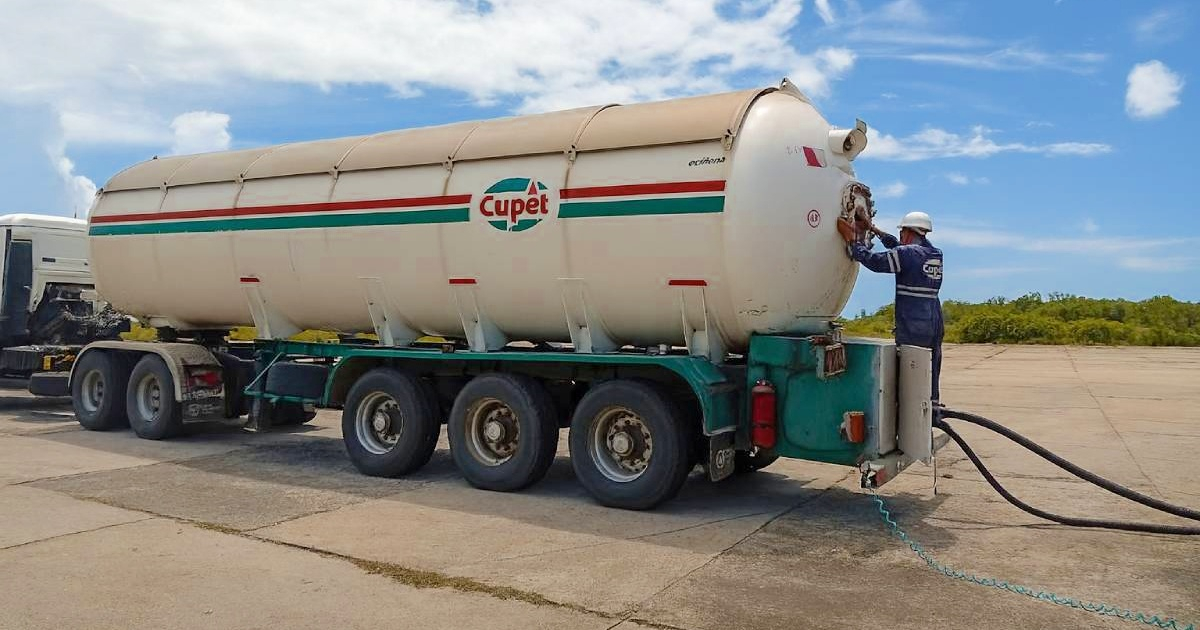
Amid prolonged blackouts, halted transportation, and a chronic fuel shortage that has crippled both power generation and economic activities, limited shipments of fuel from the United States to Cuba have commenced.
These operations, conducted under current legal mechanisms, do not yet offer a comprehensive solution to the crisis but do introduce a new element to the intricate web of sanctions, licenses, and bilateral trade.
Private Licenses and Business Arrangements
Sources within the private sector, as cited by CiberCuba, have confirmed that these transactions are happening under existing U.S. federal licenses. These are not direct government-to-government agreements but rather business models where U.S. authorized companies export the fuel, and state-sanctioned Cuban import entities handle the operations.
International trade specialists explain that Cuban companies often appear in the official export documentation as managing the entry of fuel into the country. However, these entities typically act as intermediaries within Cuba's centralized commercial system, which controls strategic imports under state management.
Limited Volumes Amid Structural Shortage
The volume of fuel shipments so far has been described as limited. Analysts agree that the quantities being handled are insufficient to reverse the widespread scarcity affecting public transportation, the private sector, and power generation.
Cuba has been grappling with an energy deficit for months, exacerbated by a lack of foreign currency, a decrease in Venezuelan supply, and challenges in accessing international financing. The prolonged blackouts and fuel supply interruptions have impacted both the state economy and small businesses.
Commercial Offers and CIF Mariel Modality
In this context, specific marketing signs have begun to emerge. A notice circulated within internal networks of small business owners on the island—reported by Martí Noticias—advertises the sale of diesel at $2.50 per liter under the CIF Mariel modality, specifying arrival dates and cautioning that available slots are "very limited." The CIF (cost, insurance, and freight) terms indicate that the price includes maritime transport to the port of Mariel, suggesting operations with already structured logistics and secured coverage.
The warning about limited slots reinforces the notion that these are small batches aimed at economic players with the capacity to pay in foreign currency. The emergence of such offers confirms that these operations are not merely on paper but translate into tangible commercial proposals within the country, albeit restricted in scale and access.
Political Debate and Financial Constraints
The issue has sparked debate in South Florida and among Cuban exile communities. Some argue that any commercial transaction involving fuel could indirectly benefit the Cuban state apparatus, which controls the energy infrastructure and wholesale distribution channels. Others believe that the involvement of private actors and specific licenses create distinct economic spaces, separate from traditional governmental cooperation channels.
Beyond the political debate, the main challenge in expanding these operations is scale. Transporting large volumes of fuel requires adequate infrastructure, maritime insurance, complex logistics contracts, and solid banking support. In the context of sanctions and financial restrictions, these factors typically increase costs and risks for the companies involved.
For now, the process progresses discreetly and on a small scale. It does not immediately alter the reality of blackouts nor resolves the precariousness of the internal supply. However, it sets a precedent: it demonstrates that, under certain legal and commercial conditions, limited energy flows between the two countries can materialize.
The real impact will depend on the continuity of federal licenses, the financial viability of the operations, political stability in Washington and Havana, and Cuba's ability to sustain payments in a severely cash-strapped environment. In a country where energy has become a critical factor for daily life and economic activity, even small movements can have significant implications.
FAQs on U.S. Fuel Shipments to Cuba
What legal mechanisms allow fuel shipments from the U.S. to Cuba?
These shipments occur under existing U.S. federal licenses, allowing authorized companies to export fuel to state-sanctioned Cuban import entities.
Why are the fuel shipments to Cuba considered limited?
The volumes currently being shipped are insufficient to address the widespread fuel shortage affecting multiple sectors, including public transportation and power generation.
What challenges do these fuel shipments face?
These operations face challenges such as the need for adequate infrastructure, maritime insurance, complex logistics contracts, and solid banking support, especially given financial restrictions and sanctions.