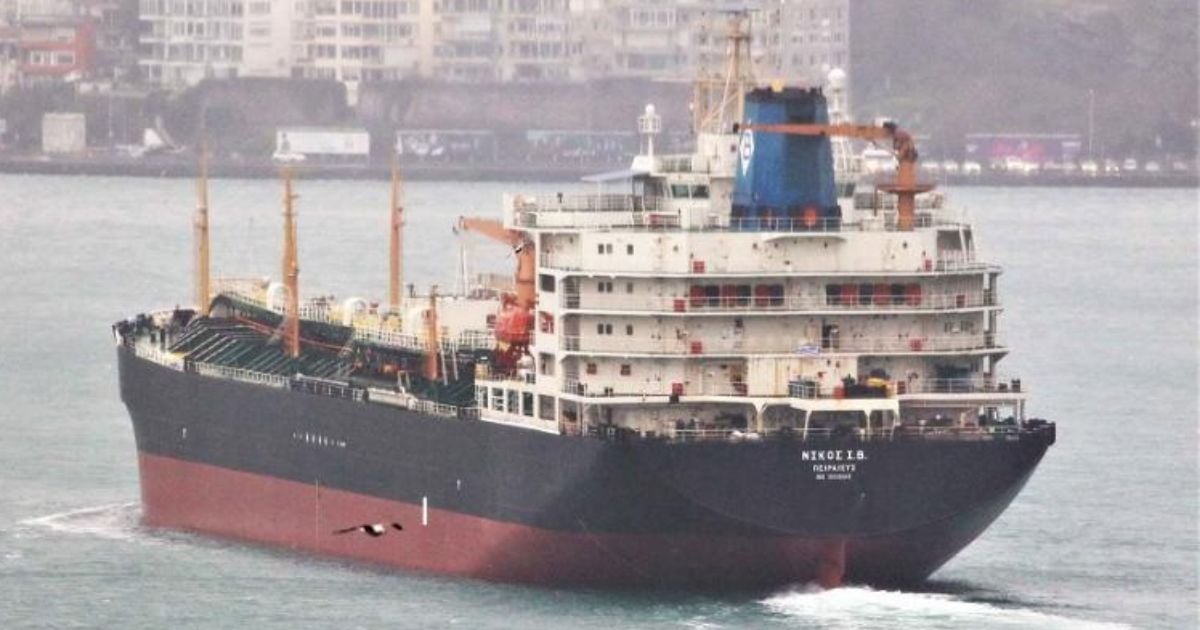
This Monday, a tanker carrying cargo entered Matanzas Bay, located in western Cuba, and docked near the city's energy logistics port, amidst the ongoing U.S. energy blockade against the island, as reported by EFE.
The vessel, known as Nicos I.V., is identified by the IMO number 9103843, sails under the flag of Saint Vincent and the Grenadines, and measures 183 meters in length.
Despite being partially loaded and having a capacity exceeding 300,000 barrels, the nature and quantity of the fuel it carries remain unclear, highlighted EFE.
Should it have arrived from a foreign port, it would be the first tanker to dock in Cuba since the Ocean Mariner on January 9, which arrived from Mexico with approximately 85,000 barrels.
Ship tracking platforms had not recorded the Nicos I.V. at a Cuban port in recent weeks, although it is possible that the vessel was operating in Cuban waters without broadcasting its position, noted the press agency.
While the Nicos I.V. is not subject to U.S. sanctions, it is actively monitored due to a previous environmental offense and its past involvement in the so-called energy bridge between Venezuela and Cuba.
According to U.S. legal documents, the tanker is owned by the Greek shipping company Nicos I.V. Special Maritime Enterprises, a corporation established to oversee this vessel, with its technical and commercial management handled by the Greek company Oceanic Shipmanagement Corp.
Strategic Energy Logistics Hub in Matanzas
On the western shore of Matanzas Bay lies one of Cuba's strategic energy logistics complexes, housing the nation's largest supertanker base and the Antonio Guiteras thermoelectric plant, one of the country's main power stations.
This base experienced a significant industrial disaster in August 2022, resulting in 17 fatalities and damage to four of its eight tanks, each with a capacity of 50,000 cubic meters. Recovery efforts are still underway.
The United States imposed an oil blockade on Cuba in January by halting Venezuelan crude shipments and later announcing tariffs, via executive order, on countries supplying oil to the island.
Impact of the Oil Blockade on Cuba
Cuba produces only about a third of the roughly 110,000 barrels per day it requires, EFE noted.
The oil blockade has led to increased blackouts, fuel shortages at gas stations, and growing challenges across multiple sectors due to energy dependency.
The Cuban government has implemented an emergency plan that includes minimal services in healthcare and transportation, suspension of university in-person classes, remote work, restricted hours in state offices, and stringent fuel rationing.
Tracking the Nicos I.V.'s Journey
According to public records from MarineTraffic and VesselFinder, the Nicos I.V. (IMO 9103843) is a chemical tanker built in 2002, measuring 183 meters in length and 32 meters in width, sailing under the flag of Saint Vincent and the Grenadines, and classified as an Oil/Chemical Tanker.
Both platforms indicate its destination as Matanzas, Cuba (CUQMA), and currently report it as docked.
The recorded arrival time is February 16, 2026, at 11:22 AM (UTC-5).
The visible history also notes a departure from Cienfuegos Anchorage on August 18, 2025, at 7:48 PM (UTC-5), although this entry pertains to a previous movement and not necessarily the immediate route before arriving in Matanzas.
Additionally, technical data reveals a reported draft of 8.2 meters at the time of the last record.
FAQs About Cuba's Energy Situation
What is the significance of the Nicos I.V. docking in Matanzas?
The arrival of the Nicos I.V. in Matanzas is significant as it marks the first docking of a tanker since January, amidst a severe energy crisis exacerbated by the U.S. blockade.
How has the U.S. oil blockade affected Cuba?
The U.S. oil blockade has led to increased blackouts, fuel shortages, and operational challenges across various sectors in Cuba due to its heavy reliance on energy imports.
What measures has the Cuban government implemented in response to the energy crisis?
In response to the energy crisis, the Cuban government has activated an emergency plan that includes minimal services in key sectors, teleworking, restricted office hours, and strict fuel rationing.