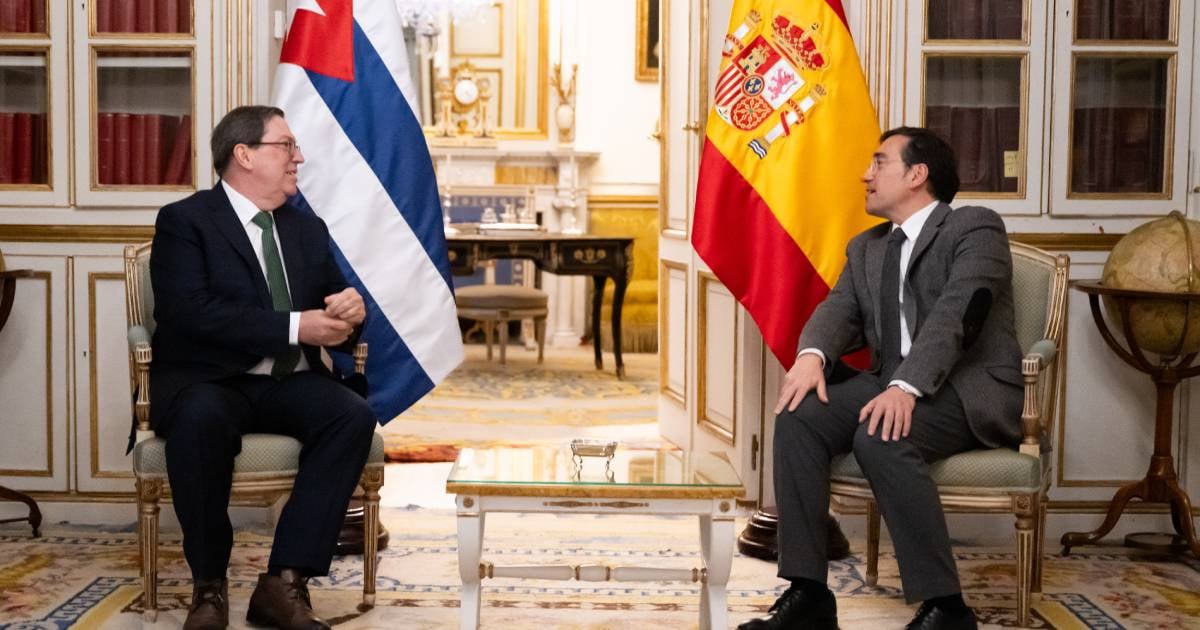
On Monday, Spain announced its decision to send humanitarian aid, including essential food and medical supplies, to Cuba through the United Nations system. This gesture comes as the island grapples with a worsening energy and economic crisis.
The announcement was made by Spain's Foreign Minister, José Manuel Albares, to Cuban Foreign Minister Bruno Rodríguez Parrilla during a meeting in Madrid, requested by the Cuban official. The Spanish government, through the Spanish Agency for International Development Cooperation (AECID), has yet to specify the volume or timing of the shipment.
Facilitated by the UN, the aid will provide essential food and health supplies, addressing two critical areas for millions of Cuban families enduring extended power outages, fuel shortages, and challenges in maintaining basic services such as healthcare and transportation.
In his official X account, Bruno Rodríguez emphasized that the meeting with Albares was an opportunity to "reaffirm the commitment to strengthen political, economic-commercial dialogue and cooperation for the benefit of both countries." He framed this cooperation in the context of what he termed the "increasing aggression of the United States against Cuba," especially concerning the "fuel blockade causing suffering to our people."
Rodríguez also expressed Havana's support for the Ibero-American Summit that Spain will host in Madrid in November, highlighting the importance of "multilateralism" in addressing global challenges.
Despite the diplomatic discussions on cooperation, a group of Cuban activists in Madrid confronted the Cuban foreign minister, shouting slogans like "Miserable!", "Murderer!" and "We want a free Cuba!" They criticized the regime he represents for failing to address the issues driving thousands of compatriots to emigrate, suffer hardships on the island, or express frustration towards their own government officials.
This incident, which occurred before the diplomatic meeting, underscores the deep dissatisfaction among the Cuban diaspora in Spain and many within Cuba, who view any gestures not accompanied by substantial solutions with skepticism. The declining economy, an overwhelmed informal market, and sporadic fuel deliveries are causes for concern.
The aid pledged by Spain adds to other international efforts aimed at easing Cuba's humanitarian crisis. The United Nations has been involved in food donations and assistance in various regions of the country, and recently, other nations like Mexico have dispatched tons of essential goods in response to shortages caused by fuel scarcity and natural disasters.
For many Cubans, however, the arrival of food and medicine cannot offset the feeling of abandonment and the lack of genuine opportunities on the island, which continues to operate under both external and internal constraints limiting access to the basics.
Key Questions about Spain's Humanitarian Aid to Cuba
What type of aid is Spain sending to Cuba?
Spain is sending humanitarian aid that includes essential food and medical supplies to Cuba.
How will the aid to Cuba be delivered?
The aid will be channeled through the United Nations system to ensure it reaches those in need in Cuba.
Why are Cuban activists in Spain protesting against their government?
Cuban activists in Spain are protesting against their government due to the unresolved issues that force many Cubans to emigrate and live in hardship.