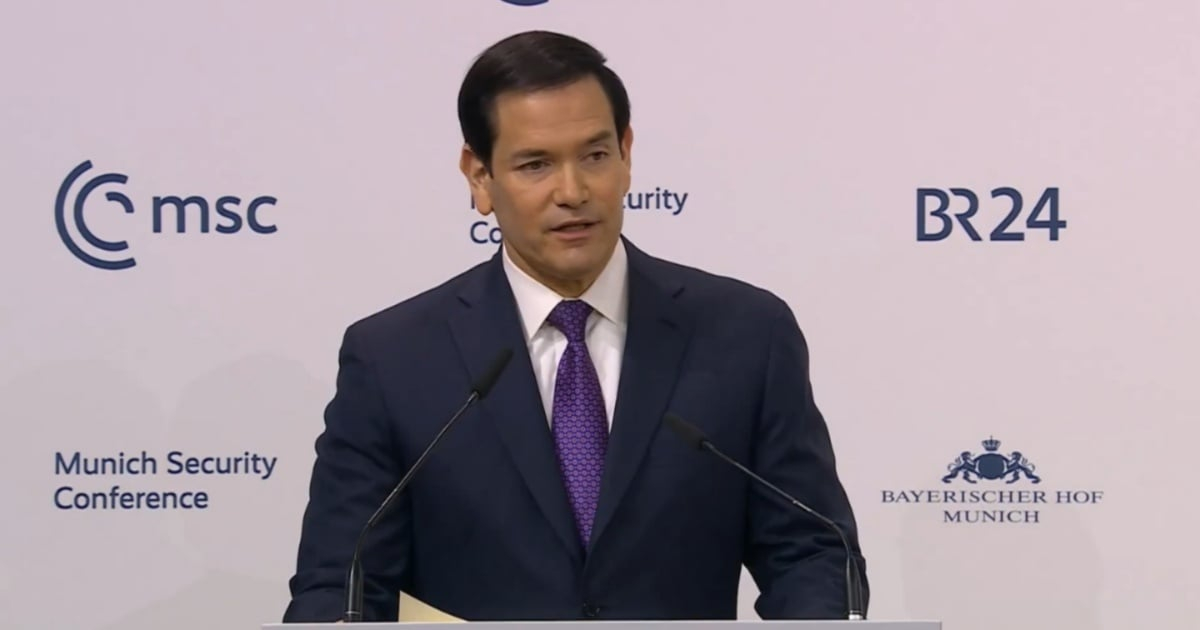
During his address at the Munich Security Conference, U.S. Secretary of State Marco Rubio invoked the Cuban missile crisis to highlight the ongoing threat of communism, drawing parallels to critical moments in history when the West faced off against Soviet ambitions.
Rubio noted that the conference's inaugural event in 1963 came on the heels of one of the most perilous episodes of the 20th century. He reminded the audience, "The Cuban missile crisis had brought the world to the brink of nuclear destruction," underscoring the intense tension that characterized the early years of the Cold War.
The U.S. diplomat used this historical reference to illustrate what he described as the persistent advance of communism during that era and the danger it posed to Western civilization. He emphasized that at that time, "thousands of years of Western civilization were hanging by a thread," and the outcome against the Soviet bloc was far from assured.
Rubio's mention of Cuba was part of a broader message advocating for a revitalized transatlantic alliance between the United States and Europe. He stressed the importance of defending national sovereignty and enhancing the economic and military strength of the West to meet current challenges.
Although his reference to Cuba was brief and limited to the historical context of the 1962 crisis, Rubio reiterated its significance as a defining moment in global balance during the Cold War. According to him, it underscores the crucial need for strategic cooperation among allies.
Understanding the Historical Context of the Cuban Missile Crisis
What was the Cuban Missile Crisis?
The Cuban Missile Crisis was a 13-day confrontation in October 1962 between the United States and the Soviet Union, initiated by the discovery of Soviet ballistic missile deployment in Cuba, which brought the world perilously close to nuclear war.
Why is the Cuban Missile Crisis significant?
The crisis is significant because it was the closest the Cold War came to escalating into a full-scale nuclear war and highlighted the importance of diplomatic negotiations in de-escalating international tensions.