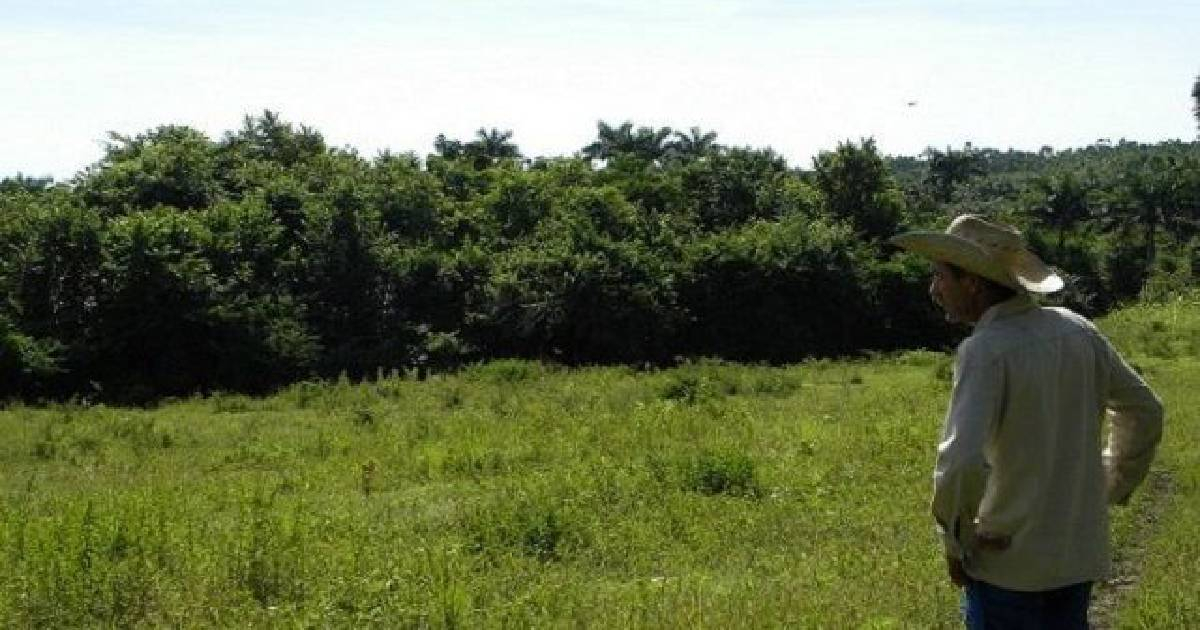
The Cuban government has revealed plans to revive the ill-fated Havana Greenbelt project, a stretch of land surrounding the capital where Fidel Castro attempted an agricultural experiment in the late 1960s. This initiative aimed to cultivate specific crops to supply the city independently but ultimately ended in failure.
The state-run broadcaster COCO reported that the Havana municipalities of La Lisa, Boyeros, Marianao, and Arroyo Naranjo have been chosen for a new program under the Agroindustrial Development Agency. This initiative seeks to encourage farming on lands deemed highly fertile.
This pilot project focuses on enhancing intermunicipal collaboration to manage local growth within the agroindustrial sector. Despite acknowledging the presence of high-quality but currently uncultivated land, the report highlights the potential benefits.
According to state media, the goal of this initiative is to tackle the existing food crisis, which they blame on the intensified U.S. embargo. It is presented as part of broader efforts to ensure "resilience" against what is portrayed as an attempt to starve the population into submission.
Local governments are expected to gain access to scientific tools for agriculture and allocate available resources to make the land productive.
The official narrative emphasizes productive linkage, food sovereignty, and strengthening local food systems. However, it fails to address why these lands have remained unused for decades.
The celebratory tone of the announcement starkly contrasts with the current state of Cuban agriculture, which suffers from systemic issues such as state controls, chronic shortages of supplies, marketing problems, and a collection system that historically discourages individual farming initiatives.
A Historical Precedent
The Havana Greenbelt was launched in 1968 as an ambitious plan to encircle the capital with crops, primarily the Caturra variety of coffee, along with fruit and other produce. The aim was to create a peri-urban green belt capable of self-sustaining the city.
Led personally by Fidel Castro, the project mobilized thousands of workers, with an estimated 25,000 participating daily, forcing the closure of workplaces and schools. Millions of pesos were spent on wages, not to mention transportation, interrupted services, and equipment costs.
Millions of coffee seedlings were planted (there was even talk of producing enough for export), 14 million pigeon pea plants, and 531 kilometers of windbreaks comprised of eucalyptus and casuarinas.
The outcome was vastly different from expectations. The coffee crops failed to thrive, the species did not adapt well (citrus and fruit trees were planted in low-lying areas near the ocean), and production levels fell short of promises.
Over time, the project became a symbol of economic voluntarism and poor technical planning. Decades later, Cuba spends over $204.9 million on importing food and agricultural products.
Memory vs. Current Reality
Announcing a "productive rescue" of the same model raises questions about repeating strategies that previously failed to meet their goals.
The broadcaster acknowledges that fertile soils remain unused, highlighting the state's inability to utilize available land effectively in a context of heavy reliance on imported food.
While official discourse speaks of sovereignty and self-reliance, markets continue to face persistent shortages of basic goods.
Agricultural production is hampered by a web of regulations, controlled prices, and centralized distribution mechanisms that have discouraged initiative for years.
The declaration of renewed efforts for the Havana Greenbelt comes amid a severe food crisis.
The lingering question is whether reattempting a previously unsuccessful experiment, without structural changes to the agricultural model, can alter a reality defined by uncultivated fields, low productivity, and a population increasingly dependent on imports for sustenance.
Questions About the Havana Greenbelt Revival
What is the Havana Greenbelt project?
The Havana Greenbelt project was an initiative launched in 1968 to surround the capital with crops, aiming for self-sufficiency. It primarily focused on coffee, fruit, and other produce but ultimately failed.
Why is the Cuban government reviving this project?
The Cuban government is reviving the project to address a current food crisis and reduce reliance on imports, blaming the U.S. embargo for exacerbating food shortages.
What challenges does Cuban agriculture face today?
Cuban agriculture faces systemic issues like state control, chronic supply shortages, marketing challenges, and a collection system that discourages individual farming initiatives.