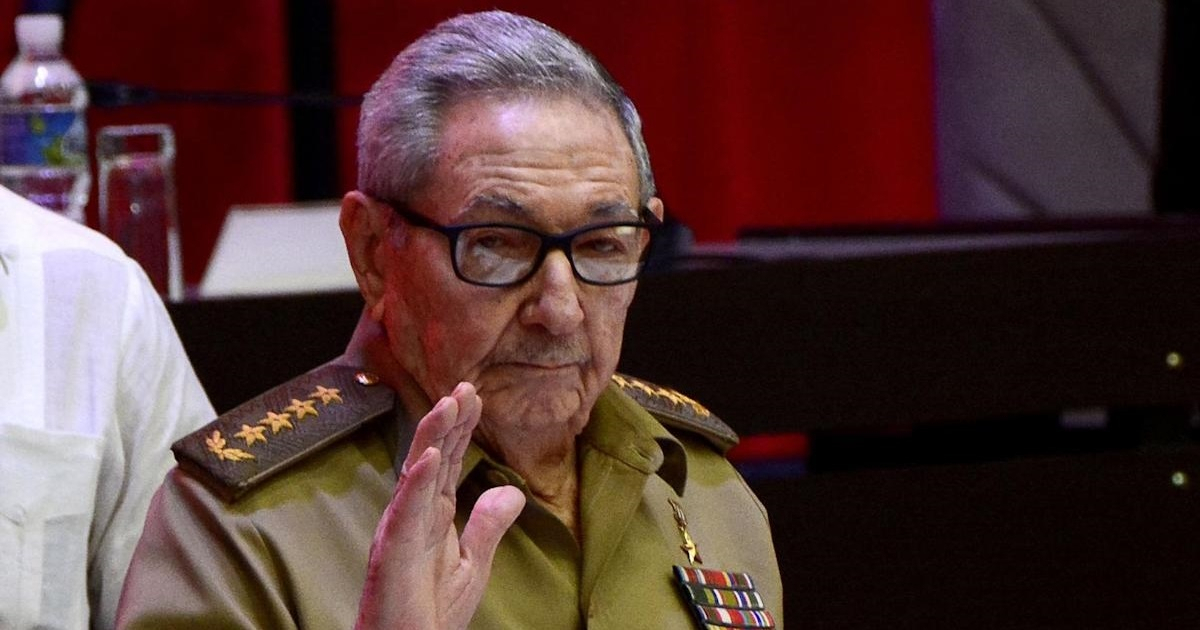
Nearly three decades after the tragic shootdown of the Brothers to the Rescue aircraft, a pressing question resurfaces, echoing through the decades of Cuba-U.S. relations: why should Raúl Castro be held accountable for the deaths of the pilots involved?
In an opinion piece for the Miami Herald, Frank Calzon, the former executive director of the Center for a Free Cuba, and John Suárez, the current executive director, argue that "President Trump should hold Cuba accountable for the downing of the Brothers to the Rescue plane."
The article highlights the events of February 24, 1996, when four human rights activists, flying two Cessna aircraft in search of rafters in the Florida Straits, were shot down by Cuban fighter jets. The victims included U.S. citizens Mario de la Peña (24), Carlos Costa (30), Armando Alejandro Jr. (45), and U.S. permanent resident Pablo Morales (30). All were members of the Cuban exile humanitarian group and resided in Miami-Dade.
Their planes, reportedly flying over presumed international waters, were destroyed by Cuban missiles, and their bodies were never recovered. Calzon and Suárez assert that Fidel and Raúl Castro were culpable for the crime, with Raúl, then the Minister of the Armed Forces, admitting in a June 21, 1996 recording, "I said to try to shoot them down." The authors describe this as a premeditated act of state terrorism.
The article also recalls how Madeleine Albright, then Secretary of State, presented conclusive evidence of Cuba's responsibility for this terrorist act to the international community, with the White House vowing justice. However, despite several formal indictments reported by the Miami Herald, a trial was never held due to prosecutorial discretion.
In 2003, federal prosecutors indicted General Rubén Martínez Puente, the head of the Cuban Air Force, along with pilots Lorenzo Alberto Pérez Pérez and Francisco Pérez Pérez, none of whom faced justice. Martínez Puente passed away in 2021.
The article also notes that in 2000, Cuban spy chief Gerardo Hernández was sentenced to a double life term for espionage and conspiracy to commit murder due to intelligence he shared with Havana that led to the shootdown. His sentence was commuted in 2014 amid the thaw between the Obama administration and Raúl Castro, and Hernández now oversees surveillance activities in Cuba.
Calzon and Suárez emphasize that "no international law grants sovereign immunity to parliamentarians" and that "statutes of limitations do not apply to terrorist acts." They argue that Raúl Castro, like his subordinates who executed his orders and were charged with this crime, should face prosecution.
"Failing to hold Cuban leaders accountable encourages Cuba to commit further heinous acts of state terrorism against Americans," the article stresses.
The debate emerges as four Cuban-American congress members — Mario Díaz-Balart, María Elvira Salazar, Carlos A. Giménez, and Nicole Malliotakis — urged President Donald Trump to push for criminal charges against Raúl Castro for his alleged role in the attack. In a letter dated February 13, 2026, they requested the Department of Justice to consider formally indicting him for the shootdown of the two civilian aircraft in international waters and to evaluate issuing an Interpol red notice.
The precise location of the shootdown is crucial. The International Civil Aviation Organization concluded that the incidents occurred outside Cuban airspace, a point leveraged to argue that the United States could claim jurisdiction over a crime against American citizens in international space.
From Cuba, Gerardo Hernández Nordelo questioned the legal feasibility of a criminal charge against Raúl Castro on social media, mocking the argument that the shootdown took place in international waters.
Beyond legal hurdles — such as immunity and the lack of real extradition prospects — proponents of the initiative argue the process's value would be political and moral: formally recognizing it as the murder of U.S. citizens and holding those responsible accountable.
The Miami Herald article also quotes then-Senator Marco Rubio, who, in February 2016, stated, "One of the most chilling things I've ever heard is the audio recording of regime pilots asking for orders to kill these men and then celebrating their shootdown. The murder of these Americans was a grave violation of U.S. law for which justice has not been served."
For Calzon and Suárez, under an "America First" policy, ensuring Raúl Castro and his accomplices answer for the murder of Americans sends a strong message to U.S. adversaries and protects American lives.
Even 30 years later, the case remains an open wound. The question at the forefront of political debate in Washington today is whether this historical debt can finally translate into a judicial process against the person who, according to the authors, gave the order to "shoot them down."
Legal Implications of the Brothers to the Rescue Shootdown
What are the legal challenges in prosecuting Raúl Castro for the shootdown?
Legal challenges include issues of sovereign immunity, the absence of extradition agreements with Cuba, and jurisdictional questions since the incident occurred in international waters. However, international law does not grant immunity for acts of terrorism, and the United States could claim jurisdiction given the crime against its citizens.
Has there been any precedent for prosecuting foreign leaders for terrorism?
Yes, there have been instances where international courts and countries have prosecuted foreign leaders for terrorism or related crimes, such as the trials of former Yugoslav President Slobodan Milošević and Liberian President Charles Taylor. These cases set a precedent for holding leaders accountable for state-sponsored acts of violence.