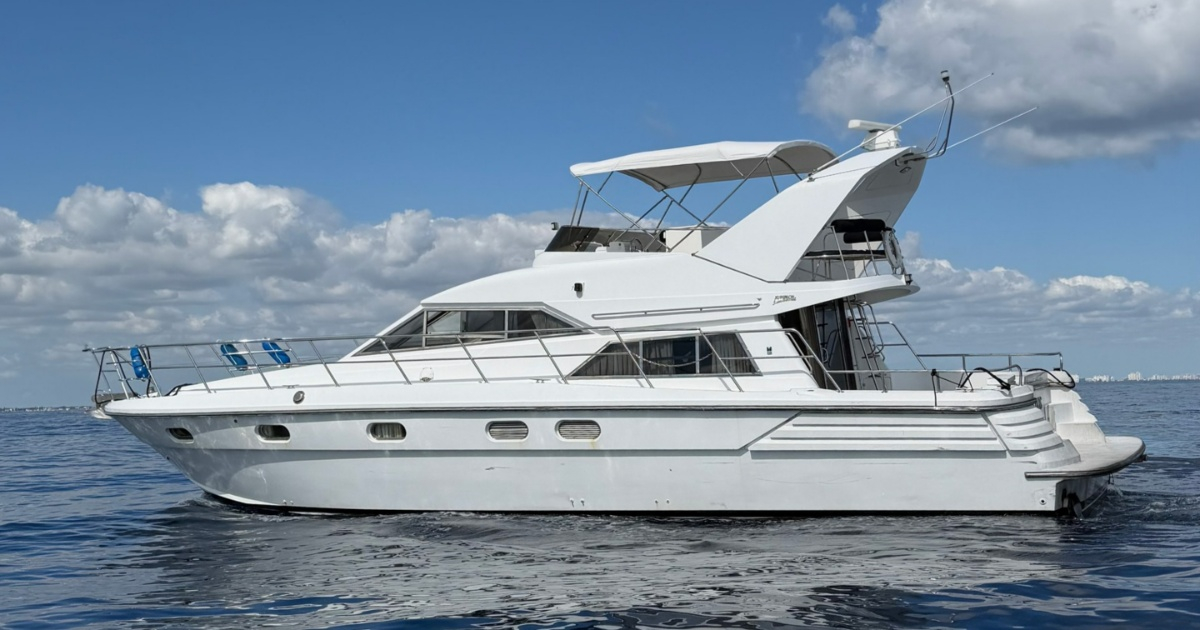
The U.S. Coast Guard recently intercepted two vessels carrying a staggering $5.6 million worth of cocaine near Port Everglades, Fort Lauderdale, Florida.
The confiscated haul amounted to 745 pounds of cocaine, as revealed by the Coast Guard Southeast on Facebook. Lieutenant Justin Dadlani, who commands the Fort Lauderdale Station, emphasized the life-saving mission of the Coast Guard. "Each kilogram of these drugs kept off our streets is a life saved," he stated.
Lieutenant Dadlani also expressed commendation for the crew's professionalism and the ongoing collaboration with Customs and Border Protection and Homeland Security Investigations. "I'm extremely proud of our team's dedication," he added.
The recent arrests are part of a broader governmental strategy to safeguard borders by dismantling foreign terrorist groups and transnational criminal organizations, which include drug and human trafficking operations.
Significant Seizures Continue
On Friday, also at Port Everglades, the Coast Guard announced the capture of approximately 17,750 pounds of cocaine. This cache, valued at over $133.5 million, was the result of several interdictions in the international waters of the eastern Pacific Ocean.
The government agency's report detailed that the seized shipment came from four interdictions. The first occurred on January 25, when the Coast Guard cutter Seneca identified a fast-moving vessel. The Helicopter Interdiction Tactical Squadron (HITRON) used air enforcement tactics to assist in the operation. The crew of the Seneca subsequently seized 4,410 pounds of cocaine during the boarding.
The second interdiction took place on January 31, when the Seneca spotted three fast boats. With HITRON's support once again, all three vessels were intercepted, leading to the seizure of an additional 13,340 pounds of cocaine.
Captain Lee Jones, commanding officer of the Seneca, highlighted the strengthened posture and ongoing success in combating narcoterrorism and transnational criminal networks. He noted that the Coast Guard, alongside interagency and international partners, continues to patrol drug trafficking routes to prevent smugglers from accessing maritime paths leading to U.S. borders.
Coordinated Efforts and Strategic Operations
The operations involved the Coast Guard cutter Seneca, a Coast Guard helicopter, the Joint Interagency Task Force South (JIATF-South), and units from the Coast Guard's Southeast and Southwest Districts. The JIATF-South, based in Key West, is tasked with detecting and monitoring illicit drug air and maritime transit. When interdiction becomes imminent, operational control shifts to the Coast Guard during the law enforcement phase.
Statistics from the Coast Guard indicate that 80% of drug seizures intended for the U.S. occur at sea, prompting an acceleration of anti-drug operations in the eastern Pacific to support Operation Pacific Viper. The goal is to curtail the flow of narcotics from South America and restrict funding for criminal organizations that also facilitate illegal fentanyl production and trafficking.
Coast Guard Anti-Drug Operations: Key Insights
What is the estimated value of the drugs seized by the Coast Guard near Florida?
The drugs seized by the Coast Guard near Florida are estimated to be worth $5.6 million.
How much cocaine was seized in the recent interdictions in the eastern Pacific?
Approximately 17,750 pounds of cocaine were seized in recent interdictions in the eastern Pacific.
What is the role of JIATF-South in these operations?
JIATF-South, based in Key West, is responsible for detecting and monitoring illicit drug air and maritime transit, handing over operational control to the Coast Guard when interdiction is imminent.