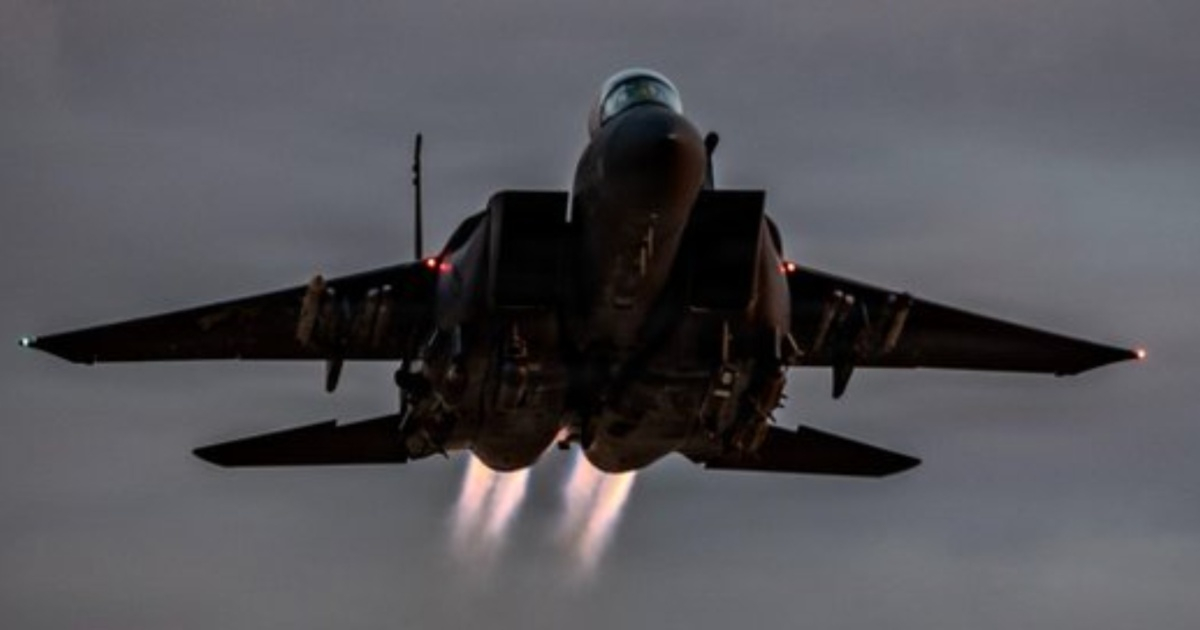
The United States military is gearing up for potential extended operations lasting "weeks" against Iran if President Donald Trump decides to launch an attack, revealed two U.S. officials who spoke to Reuters on the condition of anonymity due to the sensitive nature of the planning.
This disclosure intensifies the stakes for ongoing diplomatic efforts and paves the way for a wider conflict than previous skirmishes between the two nations, as reported by Reuters.
Military preparations come as U.S. envoys Steve Witkoff and Jared Kushner prepare for talks with Iran on Tuesday in Geneva, with Oman acting as a mediator. Meanwhile, Secretary of State Marco Rubio cautioned that while Trump favors a deal with Tehran, "achieving that is quite challenging," according to the report.
The report further notes that Trump has been amassing military forces in the region. On Friday, U.S. officials announced that the Pentagon will dispatch an additional aircraft carrier to the Middle East, along with thousands of troops, fighter jets, guided-missile destroyers, and other assets capable of executing and defending attacks.
When asked by Reuters about these preparations, White House spokeswoman Anna Kelly stated that Trump has "all options on the table" regarding Iran. The Pentagon declined to comment.
According to the cited officials, this planning would be more intricate than recent operations.
Potential Targets in a Sustained Campaign
In a prolonged campaign, the United States might target Iranian government and security facilities, not just nuclear infrastructure, as noted by one of the officials, who declined to provide further details.
Reuters emphasizes that Washington fully anticipates Iranian retaliations, with a potential cycle of attacks and counterattacks over time.
The report highlights Iran's formidable missile arsenal, which increases the risk for U.S. forces and the region. It also mentions warnings from the Revolutionary Guard about retaliating against U.S. military bases if strikes occur on Iranian soil. The U.S. maintains bases in Middle Eastern countries such as Jordan, Kuwait, Saudi Arabia, Qatar, Bahrain, the United Arab Emirates, and Turkey.
Trump, as quoted by Reuters, has publicly suggested the possibility of regime change in Iran following a military event at Fort Bragg, reiterating his reluctance to deploy ground troops and indicating a preference for air and naval strikes.
The report compares the current situation to previous actions: last year, the U.S. sent two aircraft carriers to the region, and during the "Midnight Hammer" operation in June, it conducted what Reuters describes as a largely isolated strike on Iranian nuclear facilities, followed by a "very limited" Iranian retaliation against a U.S. base in Qatar.
U.S.-Iran Tensions and Military Preparations
What has prompted the U.S. military to prepare for extended operations in Iran?
The U.S. military is preparing for potential extended operations in Iran due to the possibility of President Donald Trump ordering an attack, as revealed by anonymous U.S. officials to Reuters.
How is the U.S. increasing its military presence in the Middle East?
The U.S. is bolstering its military presence in the Middle East by sending an additional aircraft carrier, thousands of troops, fighter jets, guided-missile destroyers, and other military assets.
What kind of Iranian retaliation is the U.S. anticipating?
The U.S. expects potential retaliatory actions from Iran, involving a cycle of attacks and counterattacks, given Iran's substantial missile arsenal.