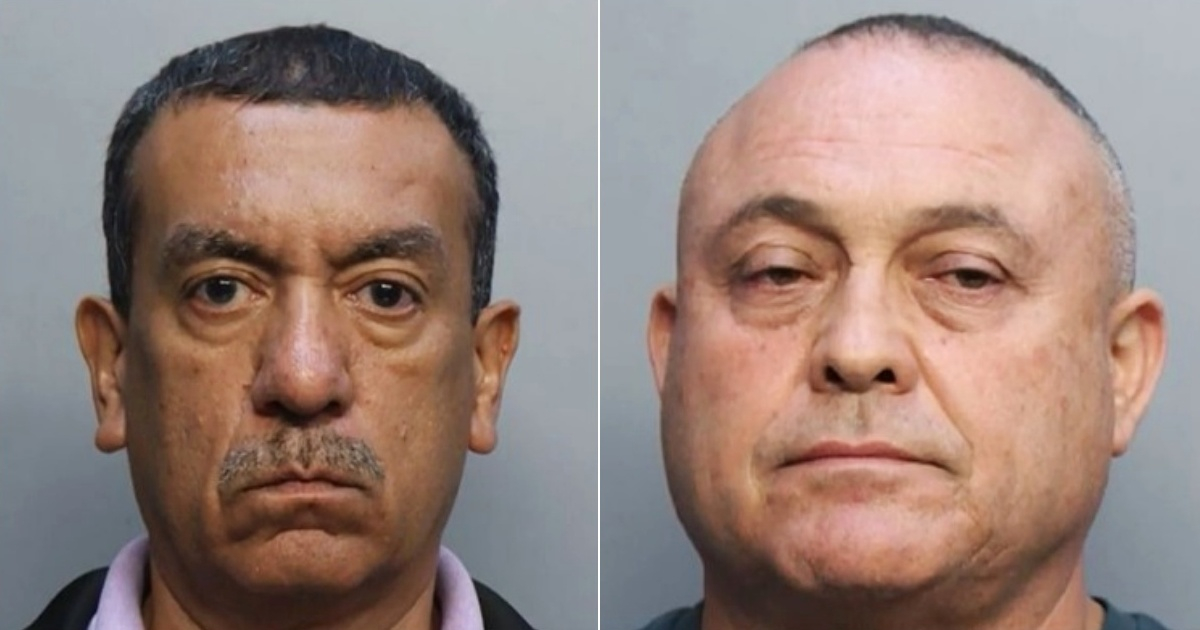
The investigation into a suspected vehicle certification fraud scheme in Hialeah is broadening as authorities continue to uncover additional suspects.
On Thursday, officials announced the arrest of two more individuals connected to a case that allegedly involved issuing fake vehicle titles without the buyer's presence and with forged signatures directly inputted into the state system.
The latest individuals taken into custody, José Luis Daza Espinosa and Hugo Jesús Rodríguez, were apprehended following the discovery of alleged irregularities at the Hialeah Auto Tag agency, located at 1550 W 84th Street.
Although their nationalities have not been disclosed, both individuals face charges including misconduct by a public official, providing false information in public records, and tampering with or altering vehicle titles.
Bail for each charge was set at $2,500, and both have been released after posting bail.
According to police records cited by local media, the vehicle documents processed by the accused did not involve the physical presence of the supposed buyer, a critical requirement in Florida for vehicles categorized as rebuilt or total loss.
Investigators suspect the accused utilized internal access within the agency to input false information into the state’s FRVIS system, effectively creating "clean" titles for previously destroyed cars.
Earlier that day, Gianna Elizabeth Donoso and Lindon Rubín Donoso were also arrested on similar charges and released after posting bail.
With these arrests, the total number of individuals detained in connection with the case has reached seven, though authorities anticipate further charges as the legal proceedings unfold.
Uncovering the Fraud Scheme
The joint investigation by the Miami-Dade Sheriff’s Office and the county’s Tax Collector's Office began last summer after systematic anomalies in vehicle title issuances were identified at the Hialeah Auto Tag agency.
The fraudulent scheme reportedly involved legitimizing vehicles declared total losses, referred to as "rebuilt" in Florida, by bypassing inspection and owner presence requirements in the system.
The process typically followed a similar pattern:
- The accused would arrive with vehicle documents in an envelope.
- An employee, identified as Belkis Escobar, allegedly used her personal login to access the state system.
- The owner’s presence was faked, and their signature was forged at the counter.
- The system would then update the title, turning a totaled vehicle into one with a clean title, ready for resale without any alerts.
The aim, according to authorities, was to "cleanse" dirty titles, drastically increasing the commercial value of vehicles that were often rendered unusable after severe accidents.
Implications and Risks for the Community
Besides the individuals arrested on Thursday, others implicated include Ronaldo Morales Maldonado, Jorge Jamieson, Belkis Escobar Navarro, Ricardo Castillo, and José Menéndez Mederos.
All face charges such as official misconduct, falsifying public records, title tampering, and document fraud.
The case has raised alarm in Miami-Dade, one of the nation’s busiest used car markets.
A vehicle declared a total loss can lose substantial value, but with a fraudulent title, it becomes indistinguishable, exposing buyers to significant risks.
Key consequences include:
- Financial losses from paying more for a vehicle that is not worth its title claim.
- Insurance complications, as policies may be voided if the vehicle has a hidden history.
- Safety hazards, as rebuilt vehicles without proper inspections may have critical defects.
- The immigrant community, relying on private agencies for expedited processing, is particularly vulnerable to businesses offering to "cut legal corners."
Official Recommendations for Potential Victims
Authorities urge anyone who processed plates, titles, or registrations at this agency to verify their documentation.
Advised actions include:
- Confirming the title’s validity on the Florida Highway Safety and Motor Vehicles (FLHSMV) portal.
- Checking Sales Tax payments to ensure they match state records.
- Verifying the vehicle’s history using the VIN to detect previous total loss declarations.
- Visiting a Tax Collector's office if inconsistencies arise.
Report any information or suspicions to Miami-Dade Crime Stoppers (305-471-TIPS), where immigration status disclosure is not required.
Meanwhile, police are assessing how many vehicles may have been processed under this scheme and how many buyers might have been affected. The investigation remains ongoing.
Understanding the Hialeah Fraud Case
What charges are the arrested individuals facing?
The individuals arrested in this case face charges of public official misconduct, providing false information in public records, and tampering with or altering vehicle titles.
How did the fraudulent scheme operate?
The scheme involved creating fraudulent vehicle titles by bypassing mandatory inspections and faking the presence and signatures of buyers, effectively "cleaning" titles of cars declared total losses.
Why is this case significant in Miami-Dade?
This case is significant due to Miami-Dade's active used car market, where fraudulent titles can lead to financial losses and safety risks for buyers, as well as insurance complications.