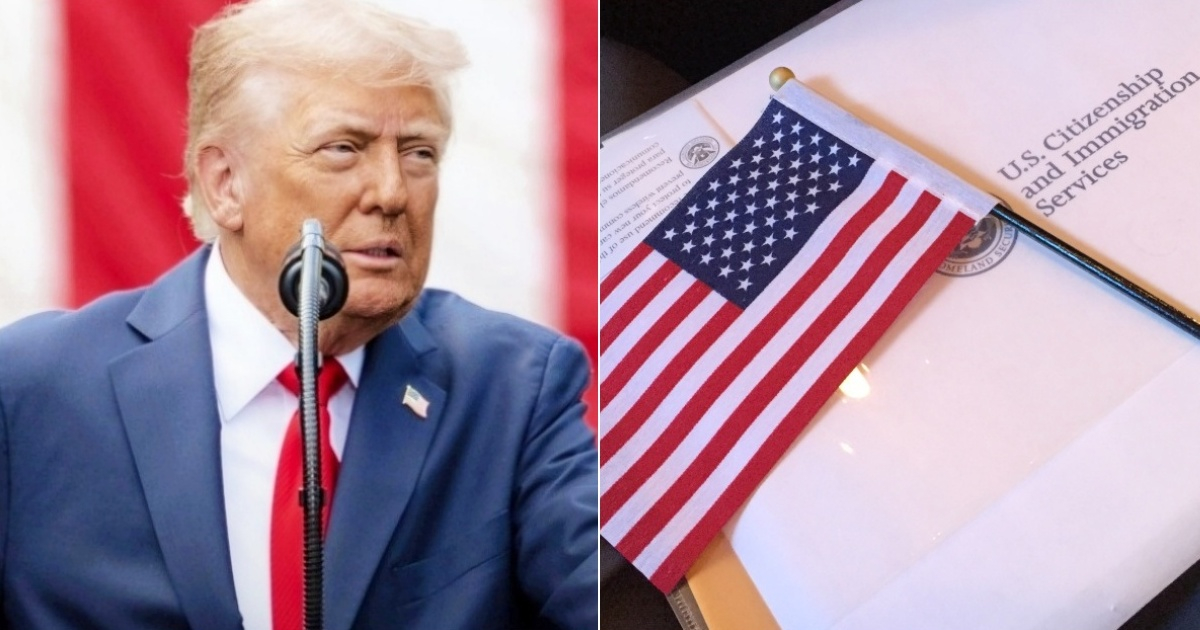
The Trump administration is significantly ramping up efforts to strip naturalized citizens of their U.S. citizenship, marking a new chapter in its stringent immigration policies.
According to NBC News, the U.S. Citizenship and Immigration Services (USCIS) has started deploying specialized personnel across the country to focus on denaturalization cases, aiming to increase the number of cases reviewed and forwarded for litigation.
Sources indicate that the goal is to supply the immigration litigation office with 100 to 200 potential cases each month. This stands in stark contrast to the previous record: during Trump's first term, only 102 denaturalization cases were formally filed in total, as per the Department of Justice (DOJ).
Thus far in the second term, 16 cases have been presented, with the administration successfully winning seven, including the case of a man from the United Kingdom convicted of distributing sexually explicit images of minors.
Focus on Fraudulent Citizenship
Historically, denaturalization has been rare, primarily targeting cases where citizenship was fraudulently obtained through significant misrepresentation or by concealing criminal backgrounds, severe human rights violations, or terrorist affiliations.
USCIS spokesperson Matthew Tragesser stated that the agency examines cases when there is credible evidence of fraudulent citizenship acquisition, maintaining a “zero tolerance” policy towards fraud in naturalization. He emphasized the agency’s commitment to pursuing those who undermine the U.S. immigration system's integrity, in collaboration with the DOJ.
The Department of Justice has instructed its attorneys to prioritize these litigations, focusing on individuals posing national security threats, those involved in war crimes or torture, committing fraud against government programs like Medicaid or Medicare, or defrauding the government in other ways.
Who Might Be at Risk?
Each year, approximately 800,000 individuals become U.S. citizens through naturalization. Applicants must be at least 18 years old, legal permanent residents, possess basic English skills, pass a civics test, and demonstrate "good moral character" as outlined in the Immigration and Nationality Act.
The notion of "good moral character" could become a pivotal issue. Deborah Chen, associate director of immigrant protection services at the New York Legal Assistance Group, noted that some clients with pending applications were denied due to tax debts, despite having payment plans, suggesting intensified scrutiny of moral character, including positive traits like family care, stable employment, education, and community involvement.
Former USCIS official Sarah Pierce highlighted concerns that the broad discretion of the agency could retroactively expose some naturalized citizens to allegations of fraud or misrepresentation. She warned that while denaturalization should be reserved for exceptional cases, policy shifts might render some naturalized citizens vulnerable.
Despite increased investigations, denaturalization requires a complete judicial process with high evidence standards. Even with a government-led investigation to revoke citizenship, the process can take years, and deportation involves another legal procedure.
Doug Rand, former USCIS official, emphasized that no president can unilaterally strip a naturalized citizen of their citizenship, highlighting the importance of understanding the protection that comes with citizenship.
Civil rights organizations caution that merely announcing these measures can instill fear. Margy O’Herron from the Brennan Center for Justice noted the deep psychological and social impacts of the threat of denaturalization, as citizens worry about becoming targets for legally protected actions or statements that displease the government.
Broader Citizenship Debate
This denaturalization initiative occurs alongside another contentious issue: birthright citizenship, as guaranteed by the 14th Amendment. Trump has publicly challenged this principle, with the Supreme Court currently reviewing related arguments.
In a past Thanksgiving message, Trump declared intentions to eliminate federal benefits for those not deemed a "net asset" to the country and to denaturalize immigrants undermining domestic tranquility.
Denaturalization cases previously focused on exceptional situations, such as former Nazis who concealed their past post-World War II. Both Democratic and Republican administrations have employed this tool, albeit sparingly. Now, with specialized staff in over 80 local USCIS offices and an unprecedented monthly target, this effort takes on a new dimension.
Understanding U.S. Denaturalization Efforts
What is the main focus of the Trump administration's denaturalization efforts?
The administration is focusing on revoking citizenship obtained through fraud or misrepresentation, targeting individuals who pose national security risks or have committed significant crimes.
How does the denaturalization process work?
Denaturalization requires a full judicial process with high standards of proof. It cannot be executed unilaterally by the government and often involves lengthy investigations and legal proceedings.
Who might be affected by increased scrutiny on "good moral character"?
Naturalized citizens with pending applications or those who have had tax or legal issues might face increased scrutiny, as the government examines moral character more closely.