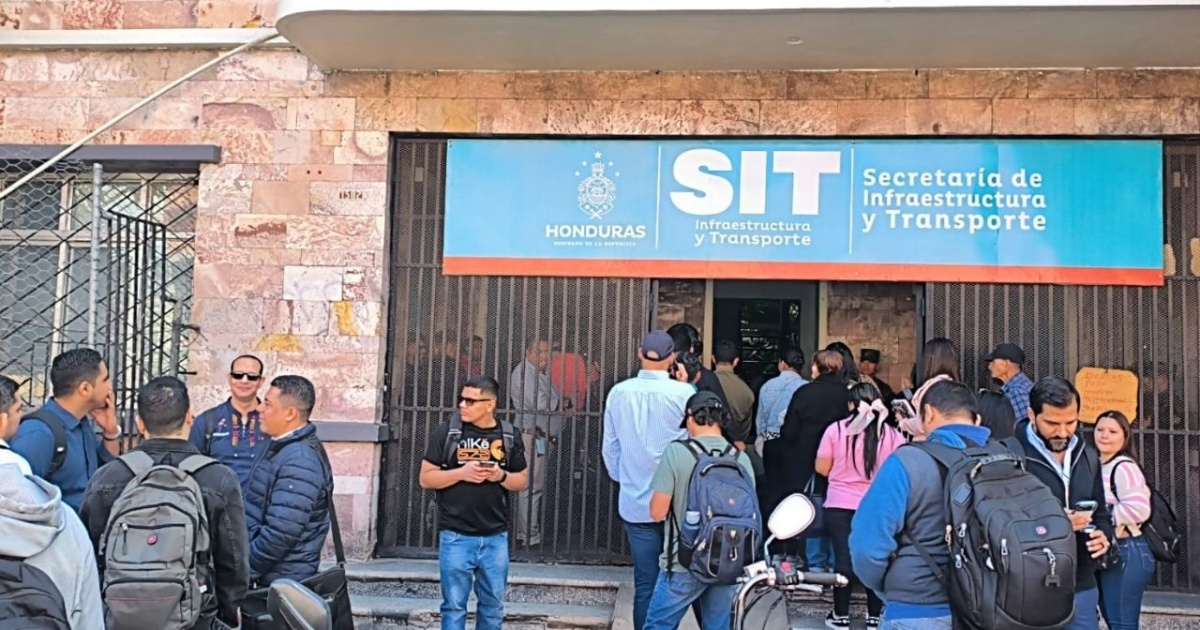
A corruption scandal has erupted in Honduras, centering around the Secretary of Infrastructure and Transportation (SIT). It has been uncovered that Cuban citizens were listed on official payrolls as employees of the institution, despite not performing any duties, failing to show up for work, and even residing outside the country.
While Venezuelans were also found to be involved in the same fraudulent setup, the spotlight has particularly fallen on the Cubans implicated in this ghost payroll scheme. This has raised significant concerns over the misuse of state funds and a longstanding pattern of fake employment that went unchecked for years.
According to SIT Minister Aníbal Ehrler, the scandal came to light following an institutional census aimed at verifying the actual presence of staff members. Early in the investigation, discrepancies were noted: names on the payroll did not match any office records, supposed employees merely showed up to sign in, and some lived outside Honduras yet continued to receive a monthly salary.
"We discovered individuals who neither show up for work nor live in the country," Ehrler stated to local media, explaining that the audit enabled them to "cross-check data and gather evidence for legal action and institutional restructuring."
Despite the scale of the scandal, authorities have not disclosed the number of Cubans involved, nor have they revealed identities, amounts paid, or the exact timeframe of the operation. As of now, there are no confirmed arrests, raids, or formal criminal proceedings. Honduran officials have indicated that the final report will be forwarded to the Public Ministry to determine criminal responsibility.
As reported by La Tribuna, some individuals, including Cubans, appeared on payrolls without legal contracts, did not adhere to work schedules, yet still received public funds as active staff.
Root Causes of the Issue: Years of Lax Oversight
The SIT, tasked with managing and maintaining Honduras' 2,000 kilometers of national road network, has historically struggled with structural weaknesses in managing its human resources. Outsourcing services, contracting with private firms, and subcontracting mechanisms made direct payroll supervision difficult, allowing phantom workers to remain undetected for extended periods.
Infobae highlighted that this irregular setup "reflects a longstanding issue related to public resource management and oversight in the country," emphasizing that weak controls paved the way for ghost positions allotted to foreigners with no real ties to the institution.
Temporary Closure and Comprehensive Audit
In a bid to address the crisis and confirm the legitimacy of personnel, the minister ordered a temporary shutdown of SIT offices in the La Bolsa neighborhood, with audit teams and internal control staff present. This move allowed the observation of which employees genuinely attended work and provided physical evidence of unjustified absences.
This action is part of a broader effort to reorganize the internal structure, trim the payroll, and cleanse the entry and retention mechanisms that enabled the infiltration of ghost workers.
As an immediate response, SIT has implemented a new registration protocol requiring employees to sign in by 9:00 a.m. Those arriving later will be unable to perform duties that day. This measure aims to eliminate the practice—seen in several Cuban and Venezuelan cases—of merely showing up to sign or not appearing at all, despite receiving their salary promptly.
Ehrler emphasized that these steps aim for "a significant shift in staff supervision" and stressed the need for a technically skilled workforce: "What SIT requires are efficient, technical employees committed to the city, not an excess of personnel without real functions."
The minister announced that once the institutional assessment is completed, the report will be sent to the Public Ministry, which will need to initiate the appropriate legal processes and determine if the irregularities constitute crimes like fraud, abuse of authority, embezzlement, or document falsification.
Understanding the Corruption Scandal in Honduras
What triggered the corruption investigation in Honduras?
The investigation was triggered by an institutional census conducted by the SIT to verify the actual presence of employees, which uncovered discrepancies in the payroll.
How did the SIT respond to the ghost payroll issue?
To tackle the issue, the SIT temporarily closed its offices for a comprehensive audit, implemented a new registration protocol, and is working on restructuring its internal processes.
What are the potential legal implications of this scandal?
The legal implications may include charges of fraud, abuse of authority, embezzlement, and document falsification, pending the Public Ministry's investigation and findings.