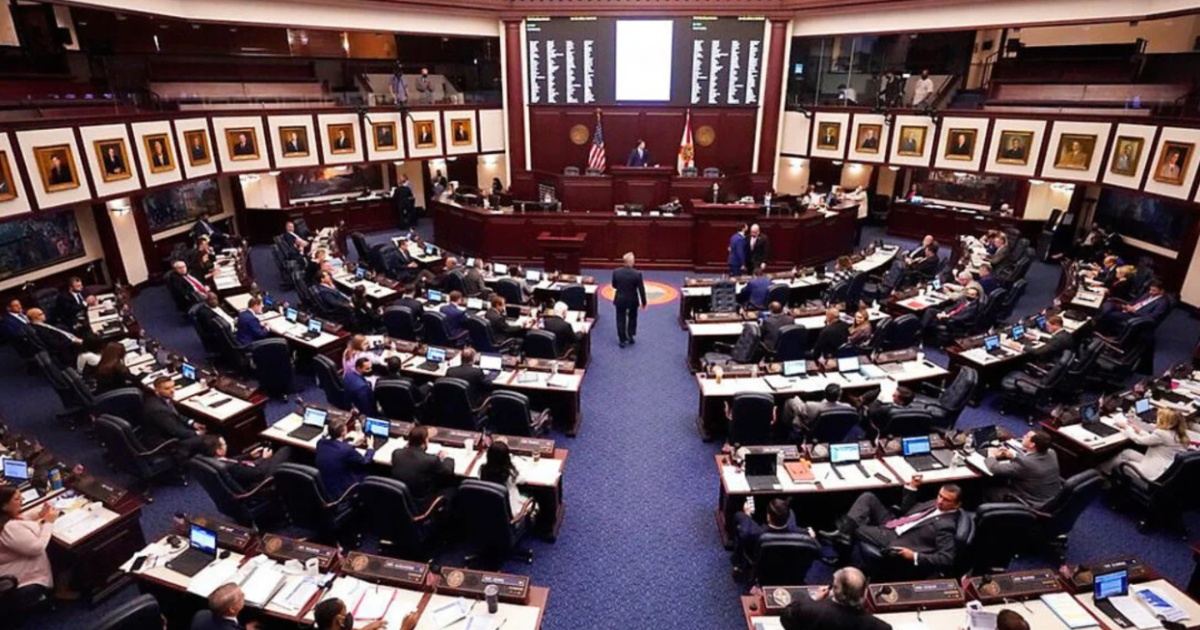
Florida's House of Representatives has introduced a proposal to significantly limit Governor Ron DeSantis's ability to utilize the Emergency Preparedness and Response Fund for immigration law enforcement operations.
This move creates an unusual political alignment in Tallahassee and reignites the power struggle between the Legislature and the governor, as reported by the Miami Herald.
According to the legislative draft, the fund—managed by the Executive Office of the Governor—would be reestablished before its constitutional expiration date of February 17, 2026, extending until July 1, 2030. However, its use would be more restricted, primarily focusing on natural disasters.
The proposal specifies that the fund should serve as the "primary source" of financing for the governor solely to "prepare for or respond to" a legally defined natural emergency declared as a state of emergency, which exceeds regularly allocated funding sources.
Additionally, the proposal imposes new limitations and controls, including:
- Notice, review, and objection procedures for expenses related to renewed natural emergency states.
- A ban on using the fund to purchase aircraft, boats, or motor vehicles.
- A prohibition on depositing federal emergency reimbursement funds into the fund; these should be directed to the General Revenue Fund.
- Quarterly reports to the Senate President and the House Speaker, including projected balances, cash flow, inventory/assets per event, and an attestation under penalty of perjury by the director of the Division of Emergency Management regarding the accuracy of the information.
- Retroactive application to February 17, 2026.
Background: The Fund's Use for Immigration
The initiative follows DeSantis's 20 renewals of the illegal immigration state of emergency since January 2023, which, according to the Herald's report, allowed continuous access to the fund without prior legislative approval.
During this period, the governor reportedly spent over $573 million on immigration enforcement, including $405 million in the past six months, with allocations for temporary detention centers, private flights, and restaurant accounts, according to the same report.
Critics cited in the report argue that repeated renewals transformed a fund intended for hurricanes and disasters into a permanent financing source for immigration policy.
The proposal emerges as the fund approaches a crucial date: it will expire on Monday unless both chambers pass identical legislation and send it to the governor.
If no agreement is reached, the remaining funds would revert to general revenue, and DeSantis would lose immediate access to one of his broadest emergency spending tools, at least until a new mechanism is created.
The debate also rekindles previous tensions: last spring, the governor and House Republicans clashed over comprehensive immigration legislation, a dispute that—according to the report—left fractures within the Republican supermajority.
Whether the House’s restrictive approach prevails or is diluted in negotiations with the Senate, the outcome will not only determine the fund's future but also how much unilateral spending power the governor retains as Florida approaches the next hurricane season.
Navigating Florida's Emergency Fund Legislation
What is the main purpose of the proposed changes to the Emergency Fund in Florida?
The proposed changes aim to restrict the use of the Emergency Fund to natural disasters only, preventing it from being used for immigration enforcement and other non-emergency expenditures.
How much has Governor DeSantis spent on immigration enforcement using the fund?
Governor DeSantis has spent over $573 million on immigration enforcement, with $405 million spent in the last six months alone.
What happens if the proposed legislation is not passed?
If the legislation is not passed, the remaining funds will revert to general revenue, and the governor will lose immediate access to the Emergency Fund until a new mechanism is established.