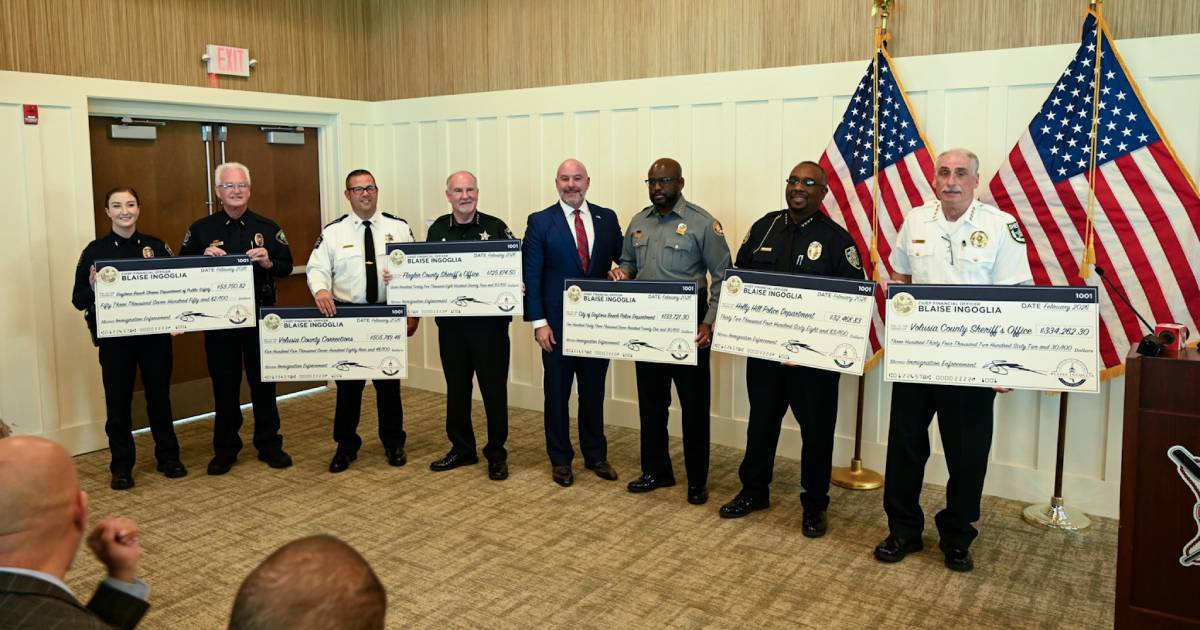
Law enforcement agencies in Volusia and Flagler counties have been reimbursed over $1.7 million by the state of Florida for their participation in immigration enforcement operations, as reported by the local news outlet, The Observer.
During a press conference held in Daytona Beach, Florida's Chief Financial Officer, Blaise Ingoglia, justified these measures as part of a strategic effort to "create deterrence" and curb illegal immigration within the state.
The Flagler County Sheriff's Office received the largest share of funds, over $725,000. Officials explained that the money is used to train officers to assist ICE, acquire rapid identification technology linked to federal databases, and provide stipends to officers involved in immigration operations.
However, it is not just the financial figures that have sparked concern, but also the tone of the messaging.
"Unlike what is seen in some cities and counties across the country, the Flagler County Sheriff's Office will always cooperate with our federal partners... If you come to Flagler County, commit a crime, expect to be arrested, and if you are illegal, we will turn you over to ICE," stated Sheriff Rick Staly.
During the conference, Staly cited recent cases to emphasize his stance, including that of a Cuban national convicted in 2025 of sexual assault on a minor, who was sentenced to six years in prison and will be deported after serving the sentence. He also mentioned the arrest of another Cuban accused of stealing nearly $4,000 worth of meat from a Publix supermarket last month.
Since February 2025, the Volusia County Sheriff's Office has logged approximately 220 encounters with individuals referred to ICE or the Border Patrol for immigration-related arrests. Part of the funds received was allocated to purchasing biometric identification equipment directly linked to federal databases.
Ingoglia also announced new legislative proposals aimed at further tightening restrictions. These include barring individuals without legal status from obtaining commercial driver's licenses and suspending non-English language exams. Additionally, he revealed plans to expand the state HALO law to prohibit citizens from filming federal agents within 25 feet, with violations classified as misdemeanors.
Florida is home to one of the largest Cuban communities in the United States. Many individuals have pending asylum cases, expired paroles, I-220A supervision orders, or unresolved processes. While authorities emphasize that actions are targeted at criminal offenders, the intensified local cooperation with ICE and the use of technology connected to federal systems heighten fears of arrests leading to deportation proceedings.
The Chief Financial Officer was firm in stating that to deter illegal immigration, "you have to remove the magnets," asserting that state reimbursements ensure agencies have the resources to enforce immigration laws.
"Florida is not Minnesota," Ingoglia remarked, contrasting the situation with other states where there have been protests against federal operations.
Florida's Immigration Enforcement and Cuban Community Concerns
Why did Florida reimburse law enforcement agencies $1.7 million?
Florida reimbursed law enforcement agencies to support their collaboration with ICE in immigration enforcement operations, aiming to deter illegal immigration.
How are the reimbursed funds being used by the agencies?
The funds are used for officer training to support ICE, acquiring rapid identification technology, and providing stipends to officers involved in immigration operations.
What are the concerns raised by the cooperation with ICE?
The cooperation has raised concerns about the potential for arrests leading to deportation, especially within the Cuban community, and the tone of the enforcement messaging.