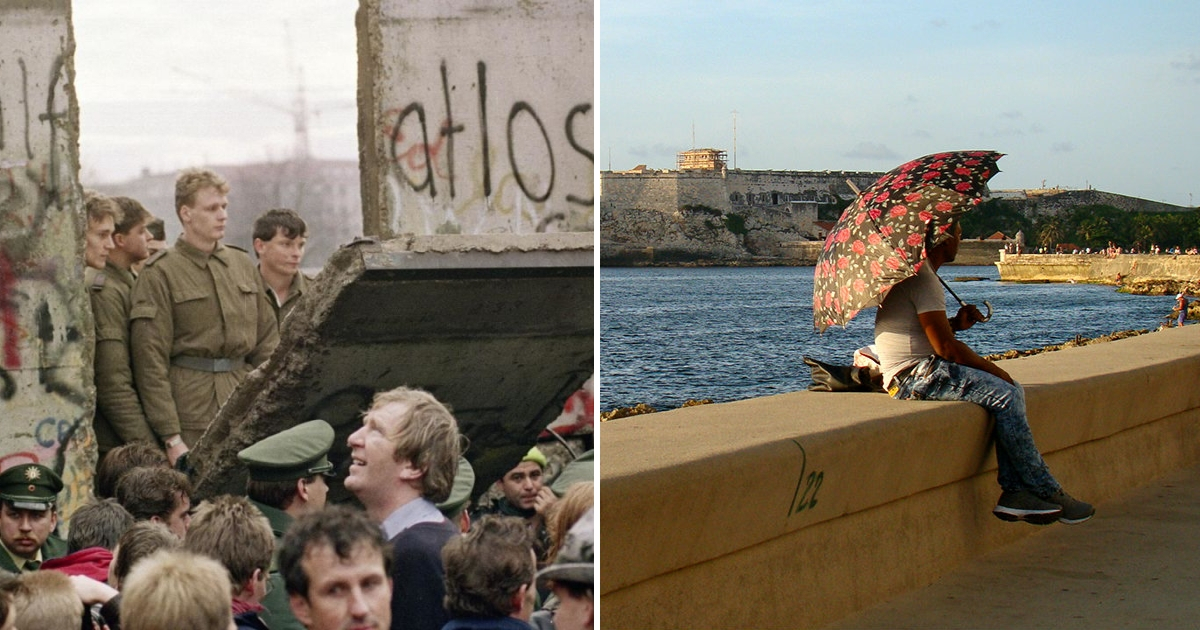
For those Cubans who managed to watch it on television—despite power outages, shortages, and a strictly controlled programming—the fall of the Berlin Wall was a distant reality. We witnessed Eastern Europe leaving communism behind and embarking on a journey—imperfect and challenging—towards freedom. We never had such a moment. It was taken from us.
However, history doesn't pause. Today, on February 13, 2026, Cuba is engulfed in a crisis that can no longer be hidden behind empty speeches or facades. The nation is worn out. Power cuts are not exceptions; they're a daily expectation. Shortages aren't temporary; they are ingrained. Fear isn't incidental; it's state policy.
The regime keeps trying to sell the notion of resilience while the people struggle to survive. They blame external factors even as power stations collapse, hospitals fall into disrepair, and countless young Cubans view the airport as their only escape. The truth is undeniable: the model has failed. And they know it.
Every clanging pot, every peaceful protest in a shadowy neighborhood, every accusation on social media reveals a vital truth: fear is no longer the same. People are weary. And when fear dissipates in a populace, totalitarian regimes start to crumble.
Defining a Historic Moment
This is not merely a crisis; it is a defining moment in history.
The Castro regime, as a political project, is in its twilight. Not because they admit it, but because they can no longer offer prosperity, stability, or hope. All they can offer is control. And no system can endure indefinitely on repression alone.
Unity for Change
This is why, now more than ever, unity is essential.
Unity among those inside and outside the country. Unity across generations. Unity among those who differ in opinion but agree on one essential point: Cuba cannot remain a nation held hostage by an unaccountable elite.
To Cubans on the island: you are not alone. Every civic gesture matters. Every act of dignity builds the future.
To the diaspora: it's time for coordination, strategy, and tangible support for civil society. The rebuilding of Cuba will begin the day the system falls, but planning must start now.
To the international community: this is no time for half-measures. Cuba requires firm pressure, genuine support, and backing for a democratic transition that ensures free elections, the release of political prisoners, and respect for human rights.
We cannot afford to waste another second. Every day under this regime is a day stolen from the future of our children.
We missed Berlin. We cannot let this moment slip away.
Change in Cuba isn't a utopian dream. It's a historical necessity.
And when history arrives, it waits for no one.
Key Questions About Cuba's Current Crisis
What factors have led to the current crisis in Cuba?
The crisis is a result of systemic failures, including constant power outages, ingrained shortages, and state-induced fear. External factors are often blamed, but the truth lies in the ineffectiveness of the regime's model.
How can the Cuban diaspora support those on the island?
The diaspora can assist by coordinating efforts, strategizing, and providing concrete support to civil society. Planning for Cuba's future should begin now, even before the regime changes.
What role should the international community play in Cuba's situation?
The international community should exert firm pressure and offer real support for a democratic transition. This includes advocating for free elections, the release of political prisoners, and the upholding of human rights.