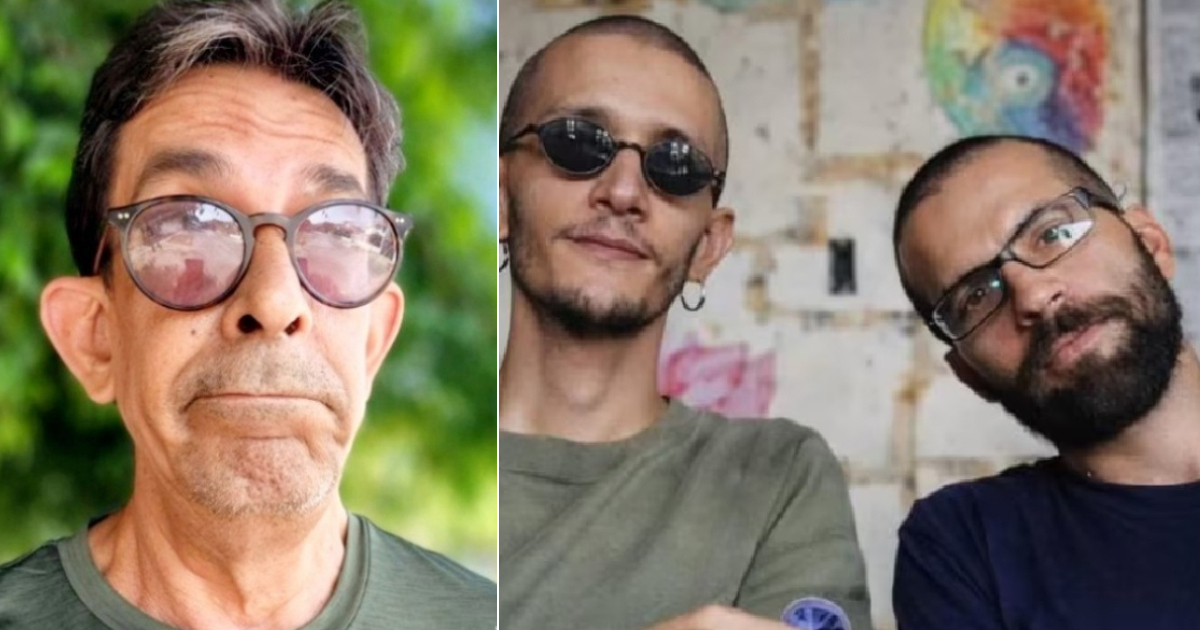
The comedian Ulises Toirac has publicly criticized the decision by the Holguín Provincial Court to reject a habeas corpus petition for the young individuals associated with the independent project El4tico. He contends that the ruling is based on a discretionary interpretation of the law.
"Setting a dangerous precedent. It's not about fairness, but about what's expected. The Holguín court denies habeas corpus for the #el4tico boys, hiding behind a law that bends to convenience. Subjective interpretation. The battle of ideas is a bloodbath," Toirac remarked Thursday on his Facebook page.
The artist's statement followed the court's dismissal of the petition for Ernesto Ricardo Medina and Kamil Zayaz Pérez, who are being held in provisional detention while under investigation for alleged crimes of "propaganda against the constitutional order" and "incitement to commit crimes," linked to content shared via their digital platform.
Ongoing Legal Proceedings in Holguín
On Thursday, the Holguín Provincial Prosecutor's Office announced that it is upholding the provisional detention under the Criminal Procedure Law and continues to conduct investigative procedures. According to the official statement, the youths' alleged publications "encourage the public, members of the Revolutionary Armed Forces, and the Ministry of the Interior to alter the constitutional order of the Republic of Cuba," and defame political and social institutions.
Numerous public figures have previously commented on this case. In an earlier response, Toirac himself suggested that the arrest of these youths is evidence of Cuba's fear and repression of free expression.
Public Outcry and Social Media Reaction
After the arrests, Kamil Zayaz Pérez released a letter stating, "If you're seeing or reading this, it means they finally found a way to lock me up, to try and silence me temporarily." He argued his detention was due to "the only crime a dictatorship does not tolerate: daring to face it and loudly voicing what we all see: its glaring failures, chronic inefficiencies, systemic injustices, and the oppression crushing an entire people's dignity."
Toirac's post sparked numerous reactions across social media. Several users disagreed with the court's decision, questioning the justice system's credibility on the island. "They are a disgrace. They openly violate Human Rights," remarked one user. Another added, "There is no justice in a dictatorship, that's known." Calls for "Freedom for those boys" and "Down with the dictatorship, long live a free Cuba" were also prevalent.
Legal Implications and Broader Impact
The denial of habeas corpus not only prolongs the provisional detention of the youths but also reignites discussions about the real protections available to those who publicly criticize in Cuba. According to independent activists, artists, and legal experts, legal charges like "propaganda against the constitutional order" or "incitement to commit crimes" are frequently used as tools against dissent, especially when the underlying motives are political, and legal recourses rarely succeed.
Understanding Legal and Human Rights Challenges in Cuba
What is the significance of habeas corpus in legal proceedings?
Habeas corpus is a legal procedure intended to protect against unlawful detention, allowing individuals to challenge the legality of their arrest or imprisonment. Its denial can raise concerns about judicial fairness and human rights.
Why are Ernesto Ricardo Medina and Kamil Zayaz Pérez under investigation?
They are being investigated for allegedly distributing content that promotes "propaganda against the constitutional order" and "incitement to commit crimes," actions deemed to threaten the constitutional integrity of Cuba.
How has the public reacted to the court's decision in the El4tico case?
The public has expressed significant criticism and disapproval, with many questioning the justice system's integrity and voicing support for the detained youths, calling for their release and condemning the government's actions.