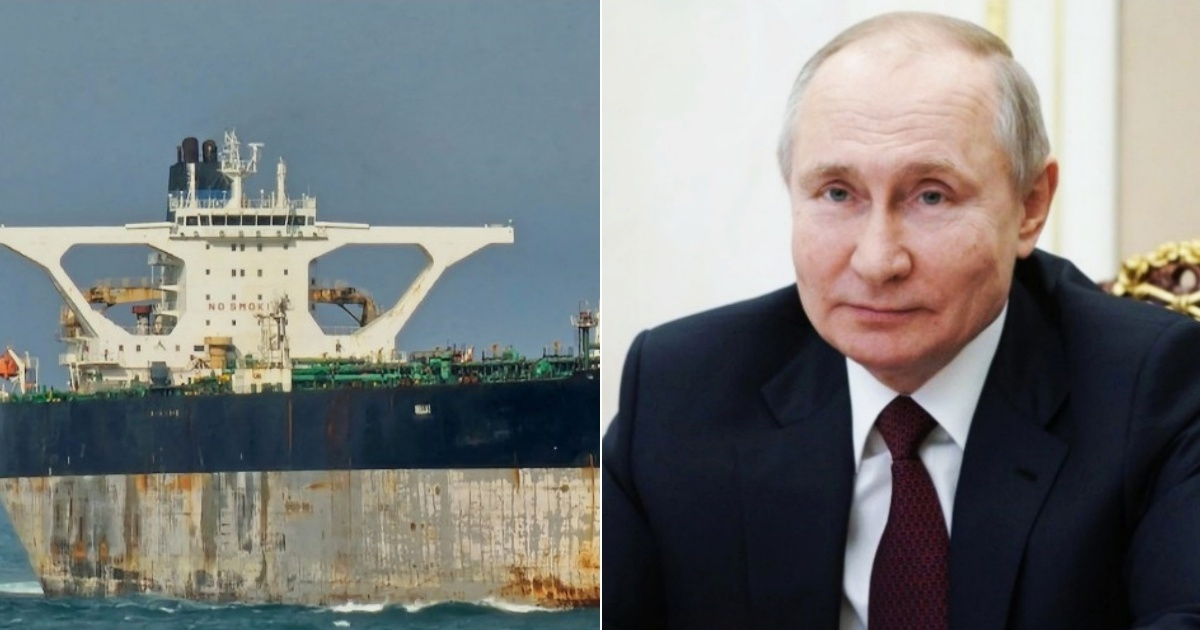
Amid an unprecedented energy crisis in Cuba, the Russian Federation's embassy in Havana has confirmed that the Kremlin is set to provide crude oil and refined products to the island as part of a "humanitarian aid" package, according to Russian news outlet Izvestia.
This announcement comes as a response to the desperate energy shortages faced by the Caribbean nation, which is on the brink of a power collapse, lacking reliable oil partners and under mounting U.S. sanctions pressure.
“Crude and petroleum product supplies from Russia to Cuba are expected soon as humanitarian aid,” a Russian diplomat in Havana told Izvestia.
The planned delivery would be the first since February 2025, when Moscow sent 100,000 tons of oil to Cuba through a $60 million state loan. While the volume of the upcoming shipment has not been confirmed, experts warn that if it matches the previous amount, it would only suffice to keep the island running for 19 to 20 days. With Cuba's average consumption at 37,000 barrels a day, the situation allows no room for error.
Kremlin's Stance and Potential Risks
Although the Kremlin has avoided directly confirming the operation, spokesperson Dmitri Peskov hinted at ongoing communication with Havana. “We do not wish for any escalation. However, at this point, we practically have no trade with the U.S.,” he remarked. “We would rely on constructive dialogue and the resolution of existing issues through conversation.”
Russian Foreign Minister Sergei Lavrov also commented, condemning the "neocolonial pressure practices by the U.S." and affirming Moscow's solidarity with the governments of Cuba and Venezuela.
Nevertheless, the shipment involves risks. Izvestia warns that such humanitarian aid could bring economic and political costs for Russia, especially if the United States follows through on its threat to intercept Russian oil tankers in international waters, as happened with vessels from Iran and Venezuela.
Cuba's Energy Crisis: Blackouts and Flight Cancellations
The energy emergency has had a ripple effect on crucial sectors of the Cuban economy. Havana's José Martí Airport has warned of running low on jet fuel, resulting in international flight suspensions by airlines such as Air Canada and WestJet.
Meanwhile, the electrical grid is experiencing prolonged blackouts, particularly in eastern provinces like Guantanamo and Santiago de Cuba. Authorities have mandated remote work, closed hotels, suspended classes, and urged residents to “save everything, even water and food.” In many neighborhoods, charging a mobile phone has become a luxury.
Experts cited by Izvestia suggest that the island's fuel reserves could be depleted in under three months, if not sooner. “With some flight cancellations, Cuba might endure for three more months. Worse forecasts estimate only 15 days' worth of fuel reserves, according to the Financial Times,” warned researcher Viktor Kheifets.
U.S. Intensifies Oil Blockade on Cuba
On January 29, 2026, President Donald Trump signed an executive order labeling Cuba an "unusual and extraordinary threat" to national security, imposing punitive tariffs on any country selling or transporting oil to the island.
Washington justifies the sanction by alleging that Havana "hosts transnational terrorist groups like Hamas and Hezbollah" and allows "the deployment of Russian and Chinese military and intelligence capabilities." Cuba has vehemently denied these accusations, condemning the executive order as a "brutal, fascist, and genocidal act of aggression," according to President Miguel Díaz-Canel.
Foreign Minister Bruno Rodríguez warned of a "tough scenario requiring great sacrifice," denouncing the criminalization of energy trade with the island.
Who Can—and Will—Help Cuba?
With Venezuela sidelined after Nicolás Maduro's government's collapse, and Mexico yielding to U.S. pressure, regional allies are scarce. The government of Claudia Sheinbaum halted crude shipments under tariff threats, though it continues humanitarian aid via Mexican Navy vessels.
Theoretically, other BRICS members could offer support, especially as Cuba became an official member in January 2025. However, their energy sector capabilities are limited. Neither China nor India are net oil exporters, and “it's unlikely Brazil will risk its trade relationship with the U.S. for Cuba,” explains analyst Viktor Kheifets.
The current energy situation surpasses even the worst years of the Special Period. Izvestia describes the context as an "energy blockade," marked by long gasoline lines, dollar sales, and prices "double the minimum wage." Many hotels have closed, and tourism, one of the few economic lifelines, has plummeted.
The Russian embassy in Havana noted that “unfortunately, power outages in Cuba are not new,” but acknowledged the critical nature of the current situation. It advised Russian tourists to avoid traveling to the island and operators to suspend tour package sales.
Understanding the Cuban Energy Crisis
What is the purpose of Russia's oil shipment to Cuba?
Russia's oil shipment to Cuba is intended as "humanitarian aid" to assist the island amid its severe energy crisis, which has left it on the verge of a power collapse.
Why is Cuba facing an energy crisis?
Cuba's energy crisis stems from a lack of reliable oil partners, compounded by the impact of U.S. sanctions. The island's energy infrastructure is struggling to meet its consumption needs, leading to widespread shortages and blackouts.
How has the U.S. responded to Cuba's energy situation?
The U.S. has intensified its stance by declaring Cuba a national security threat and imposing punitive tariffs on countries selling or transporting oil to the island, further complicating Cuba's energy challenges.
What are the potential risks for Russia in sending oil to Cuba?
Sending oil to Cuba could bring economic and political risks for Russia, especially if the U.S. intercepts Russian oil tankers, as it has done with vessels from Iran and Venezuela, escalating tensions further.