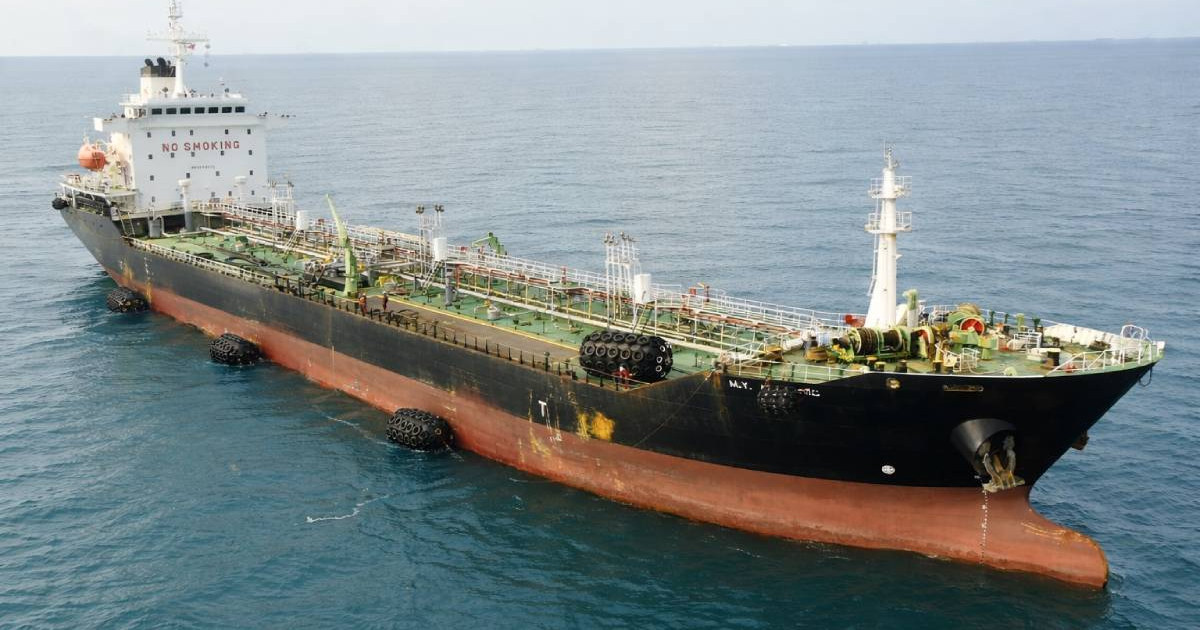
The oil tanker MT Caribbean Alliance (IMO 9359923), sailing under the Panamanian flag, was observed navigating north of Cuba's eastern coastline, heading towards Matanzas after completing operations at the port of Moa in Holguín province, as revealed by maritime tracking data (AIS).
With a capacity of roughly 129,086 barrels and built in 2006, the vessel was moving at a speed of 11 knots at the time of the record, timestamped on February 11.
Information about the tanker was shared on the social media platform X by a user known as Falcon (@FlconEYES), who tracks ship movements related to energy supply in Cuba.
According to AIS data, the ship currently has a draft of 5.6 meters compared to a maximum capacity of 9 meters, indicating it is traveling in ballast, meaning without significant cargo, after unloading fuel in Moa following a stop at the port of Santiago de Cuba.
The vessel's recent history shows visits to strategic ports such as Cienfuegos, Mariel, and Matanzas, which are key hubs for hydrocarbon storage and distribution in the nation. The Moa–Matanzas route supports the theory that the tanker is redistributing fuel within the country.
This movement occurs amidst a prolonged energy crisis. Since December, there have been no recorded crude oil shipments from Venezuela, and the last delivery from Mexico reportedly arrived on January 9.
The shortage has severely affected public transportation, economic activities, and air connectivity. Meanwhile, Cuban leader Miguel Díaz-Canel asserts that the government is taking steps to secure fuel supplies, amid financial constraints and challenges in maintaining steady fuel imports.
Understanding Cuba's Fuel Distribution Challenges
Why is the MT Caribbean Alliance sailing in ballast?
The tanker is sailing in ballast, meaning it is not carrying a full load of cargo, likely because it has unloaded its fuel at the port of Moa and is now heading to Matanzas for possible redistribution within Cuba.
What has caused the current energy crisis in Cuba?
Cuba's energy crisis is largely due to the absence of crude oil shipments from Venezuela since December and a lack of recent deliveries from other countries, impacting transportation and economic operations nationwide.