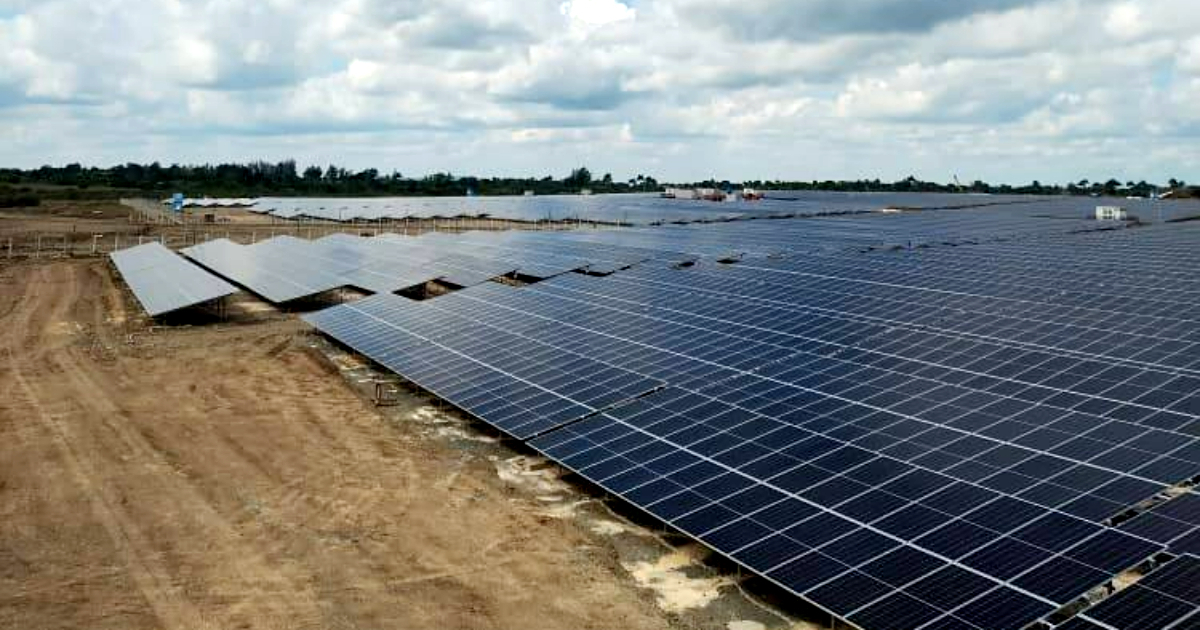
The Cuban regime marked February 10th by hailing an alleged "record" in solar energy production, achieving over 800 megawatts (MW) during a midday interval.
This figure was presented by Félix Estrada Rodríguez, the director of the National Load Dispatch of the Unión Eléctrica (UNE), and was enthusiastically echoed by state media and provincial electrical companies. They also highlighted the goal of installing more than 1,000 MW in solar energy by 2025.
Amid this announcement, Cuba grapples with its most severe energy crisis in years, facing power outages lasting up to 24 hours, peak hour deficits exceeding 1,800 MW, and thermoelectric plants frequently breaking down. Despite this, the official narrative chose to spotlight the midday solar achievement.
The daylight "record" — limited to just a snippet of solar hours — starkly contrasts with the nighttime reality faced by millions of Cubans. During the night, demand surpasses 3,000 MW while availability barely hits 1,200 or 1,300 MW. Even the UNE has acknowledged recent disruptions exceeding 1,900 MW.
Indeed, 800 MW from solar is a significant contribution, and expanding solar capacity could be part of a long-term solution. However, the sun inevitably sets each day. When night falls, the system relies on an aging thermoelectric infrastructure plagued by inadequate maintenance and chronic fuel shortages.
Celebrating a midday generation peak while the nation braces for another night of extensive blackouts seems less like an energy triumph and more like a propaganda exercise.
The issue isn't the installation of solar parks; the true problem lies in portraying isolated achievements as milestones when they still fail to ensure consistent electrical stability.
In Cuba, the sun shines brightly at noon. The real challenge remains keeping the lights on after dark.
Understanding Cuba's Energy Challenges
Why is Cuba facing such severe blackouts?
Cuba is experiencing severe blackouts due to an aging thermoelectric infrastructure, inadequate maintenance, and chronic fuel shortages, which are compounded by the country's economic struggles.
How significant is the 800 MW solar contribution?
The 800 MW contribution from solar energy is significant as it represents a substantial addition to Cuba's energy mix. However, it is limited to daytime hours and does not address the nighttime energy deficit.
What steps are being taken to improve Cuba's energy situation?
Cuba is working on expanding its solar energy capacity, with plans to install more than 1,000 MW in solar power by 2025. However, addressing the broader issues with thermoelectric plants and fuel supplies remains critical.